Global News Update: Moscow Vodka Row and Russian Wealth
This Global News Update looks at a disputed account of a 2017 diplomatic lunch and the risks Russian business owners could face under a future leader. Former UK prime minister Boris Johnson says Russian Foreign Minister Sergei Lavrov pressured him to drink vodka during a Moscow visit. Russian Foreign Ministry spokeswoman Maria Zakharova says he drank willingly and asked for more.
The exchange brought attention back to a visit that took place when Johnson was Britain’s foreign secretary. Separately, a future change in Russian leadership raises questions about how wealthy business owners might protect their companies. Much depends on where their money is held and how closely their businesses depend on the state.
Global News Update on Johnson’s Moscow visit
Johnson travelled to Moscow on 22 December 2017 for talks with Lavrov. It was the first visit to Russia by a British foreign secretary since 2012. The official agenda covered issues including Iran’s nuclear programme and preparations for the 2018 football World Cup in Russia. The two ministers also spoke publicly about the state of relations between their countries.
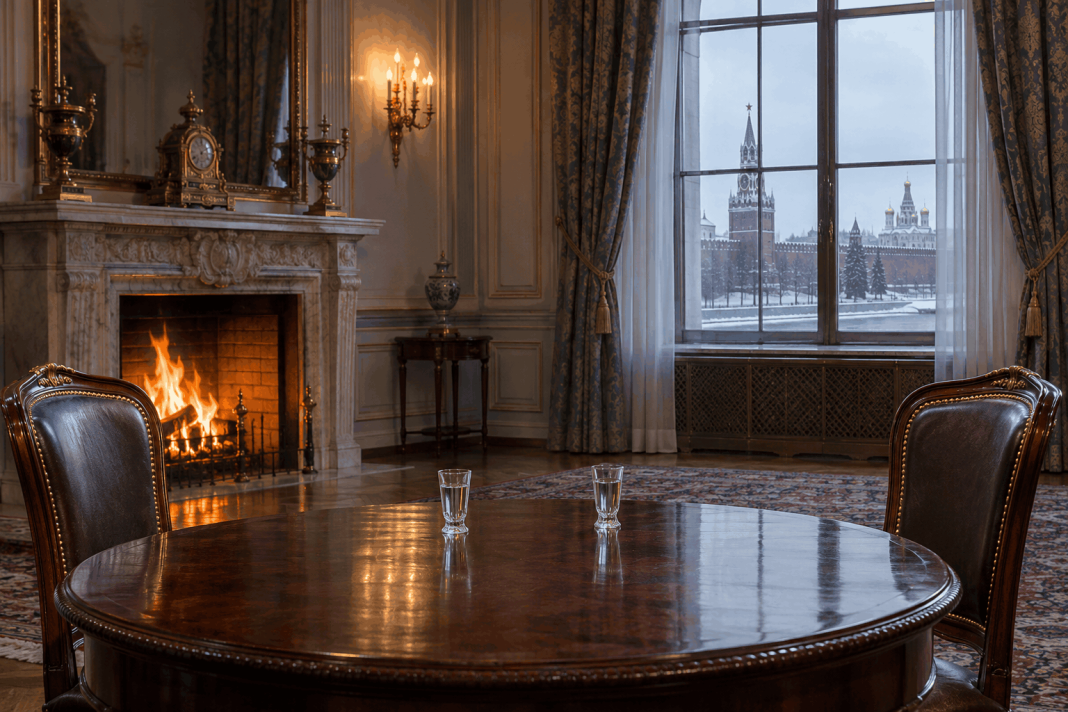
Years later, Johnson described a more uncomfortable scene during an interview with former Colombian president Iván Duque. He said Lavrov made him drink a large amount of vodka while he sat beside a blazing fireplace. Johnson compared the experience to a punishment at a Victorian boarding school. He also said his attempt to improve relations with Moscow ended in failure. Read the public statement from the 2017 visit.
The official statement shows why Britain kept talking to Moscow even when relations were strained. Johnson acknowledged serious disagreements and pointed to areas where both governments had reasons to work together. One practical concern was the safety of British football fans travelling to Russia the following summer. Those public remarks provide context for Johnson’s later account of the meeting.
How Moscow responded in this Global News Update
Zakharova disputed Johnson’s description of the lunch. She said wine was available and Johnson chose to drink vodka. According to her account, he then repeatedly asked for his glass to be refilled. Her recollection directly challenges his claim that he felt pressured to drink. Read the details of Zakharova’s response.
The two accounts differ on a specific point. Johnson described the drinking as something his host made him do. Zakharova said he decided for himself how much to drink. The public record confirms that the ministers met and discussed official business, while what happened over lunch remains disputed.
The story resurfaced because Johnson chose to tell it publicly years after the trip. It offers a glimpse into how he remembers an attempt to improve a strained relationship. Zakharova’s response also shows how quickly a personal recollection can draw an official rebuttal. For readers following the wider relationship, the visit’s public agenda explains why the two sides were at the table in the first place.
Global News Update on Russian wealth after Putin
A separate question concerns what a future change in leadership could mean for Russia’s wealthy business owners. Companies that rely on public contracts may face uncertainty if a new administration reviews spending or changes its priorities. The risk can be especially large for firms with one main customer. Losing a major contract could affect their ability to pay staff, service debt or invest.
Cash and other assets that owners can sell quickly offer more room to respond. For example, a company with cash reserves could keep paying employees while it looks for new buyers. A company whose wealth sits mainly in factories, machinery or property has fewer immediate options. Selling those assets can take time, especially if buyers are also waiting to see how policy changes.
Sanctions add another layer for owners with international holdings. UK rules can restrict dealings with designated people and entities or freeze assets covered by the regulations. The details depend on who owns or controls the assets and which rules apply. Where money is held can therefore matter as much as the amount on paper. An owner could hold valuable assets and still have difficulty raising funds for day-to-day expenses. That distinction matters when a business needs to respond quickly to a change in policy. Read the UK’s Russia sanctions guidance.
Global News Update on risks for Russian companies
For businesses that sell to the state, one sign to watch would be a change in how contracts are awarded or renewed. A new administration could revise budgets or move spending to different sectors. However, companies would feel those effects at different times. A firm bidding for work next month faces a more immediate decision than one with years left on a contract.
Ownership rules would also matter. Clearer rules could give some investors more confidence about making long-term commitments. At the same time, a review of existing contracts could raise uncertainty for firms that grew through close ties to the state. Any effects would depend on the actual decisions a future government makes and how consistently it applies them.
For now, the clearest evidence on the diplomatic story is the record of the 2017 visit and the two conflicting accounts of the lunch. On the business side, changes in public spending, ownership rules and sanctions could affect which companies have room to adapt. Those details offer a way to assess the consequences if a leadership transition eventually takes place.

I’m an Online Media & PR Strategist at BusinessFits, passionate about digital storytelling and media impact. As a journalist, blogger, and SEO specialist, I create content that connects, informs, and ranks.