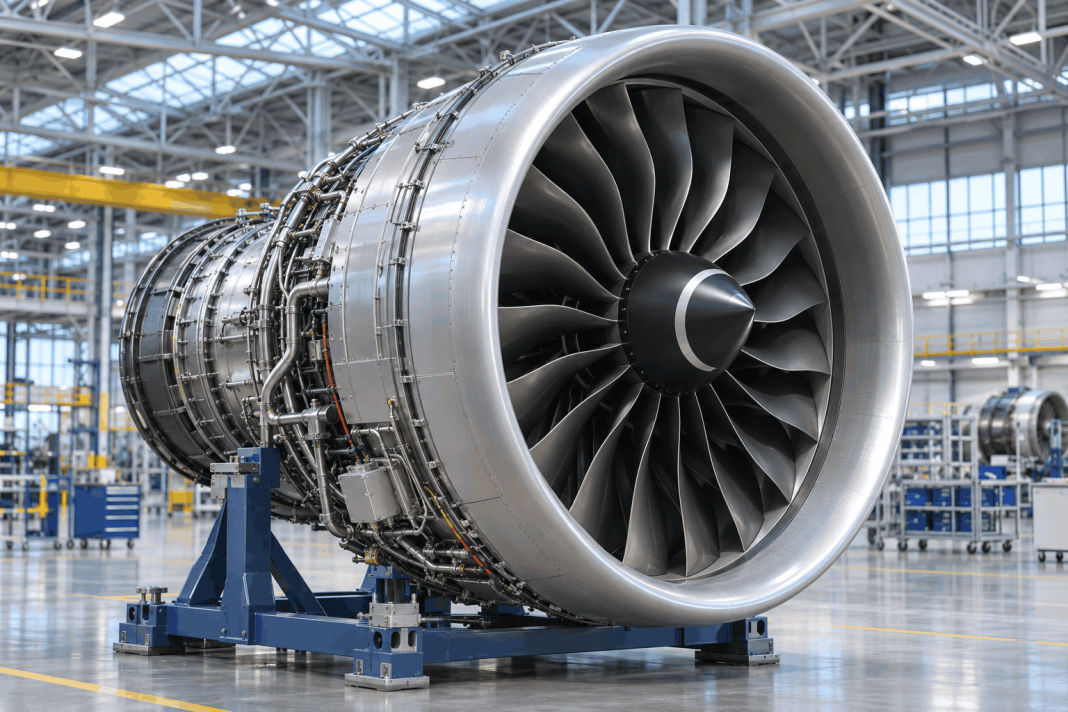
Rolls-Royce Financial Performance Supports £1.5bn Buyback
Rolls-Royce financial performance gave the UK engineering group confidence to bring forward a £1.5 billion share buyback. In its 12 November 2026 trading update, the company kept its full-year profit and cash flow forecasts steady. Demand for aircraft engines and data centre power systems helped lift order books. The group plans to complete the new buyback tranche by 25 February 2027, when it publishes its full-year results.
The update showed how demand is building across two different markets. Airlines and leasing firms are ordering engines for widebody aircraft, while data centre operators need equipment to keep servers running. Meanwhile, the company reported continued demand across its defence business. These customers place orders on different timelines, giving the group several sources of future work.
Aircraft Orders Strengthen Rolls-Royce Financial Performance
The Civil Aerospace division’s large engine backlog reached about 2,500 units. Orders in the second half included 70 Trent 7000 engines for aircraft leasing company Avolon and 22 for Cathay Group. Air China and Philippine Airlines also selected Trent XWB engines. The Avolon order alone covers engines for 35 Airbus A330-900 aircraft. Related coverage of the Avolon engine deal
A larger backlog gives the company a clearer view of future production needs. Rolls-Royce still has to build and deliver the engines, and the delivery schedule helps determine when the orders contribute to sales. Once the aircraft enter service, they can generate years of maintenance work. How often airlines fly those aircraft also affects demand for parts, repairs and overhauls.
Large engine flying hours rose 4% year on year in the first ten months of 2026. That took them to 114% of their 2019 level. For the full year, the company expects flying hours to finish near the lower end of its 115% to 120% range. Fuel costs led some airlines to trim capacity temporarily, even as engine usage continued to grow overall. Flying-hour figures and outlook
Data Centre Demand Lifts Rolls-Royce Financial Performance
Power Systems recorded a 62% rise in orders in the first nine months of 2026 compared with the same period a year earlier. Its order backlog reached a record £8.6 billion at the end of September, up from £8 billion at the half-year mark. Power generation and government customers helped drive the increase. Gas engine orders nearly tripled as data centre operators sought equipment for their main electricity supply.
Data centres need both a dependable source of electricity and a way to keep running during outages. Gas engines can provide regular power at sites that need on-site generation. Diesel backup engines serve a different purpose and can step in if the main supply fails. Rolls-Royce also reported strong demand for those backup units.
The group said it was finalising a multi-year deal to supply backup engines to a large cloud computing operator. It was also working on a framework agreement running through 2031. The proposed deal highlights how orders can stretch beyond the opening of a single data centre. For the division, a growing base of installed engines also creates demand for parts and ongoing service.
Rolls-Royce Financial Performance and the 2026 Outlook
Rolls-Royce expects underlying operating profit of £4.7 billion to £4.9 billion for 2026. The group had raised that range earlier in the year from £4 billion to £4.2 billion. It also maintained its forecast for free cash flow of £3.8 billion to £4 billion. The November announcement reaffirmed those figures as management pointed to progress in the second half. Reporting on the earlier guidance increase
Operating profit shows how much the business earns from its operations. Free cash flow tracks how much cash it generates after spending on items such as equipment and facilities. That cash helps fund share buybacks and other uses, including debt repayment. The timing of customer payments and delivery costs can affect cash flow even when orders grow.
February’s results will also provide a full-year basis for comparison. Rolls-Royce reported £3.46 billion in underlying operating profit for 2025. Even the low end of its current forecast would put 2026 profit more than £1.2 billion above that figure. The final result will show how much of that improvement came from each division.
The company also pointed to an improvement in its credit rating. In September, S&P Global raised the rating to A− with a stable outlook. Credit ratings assess a company’s ability to meet its debt obligations, so the upgrade offers another way to track progress on the balance sheet. Related coverage of a UK company’s results and guidance
What the Buyback Means for Rolls-Royce Financial Performance
The £1.5 billion interim tranche forms part of the existing £7 billion to £9 billion share buyback programme for 2026 through 2028. Rolls-Royce said it had substantially completed the £2.5 billion buyback it previously announced for 2026. The new tranche brings some purchases forward within the three-year programme. Chief executive Tufan Erginbilgic linked the decision to confidence in the company’s ability to keep growing free cash flow.
A buyback uses company cash to purchase its own shares. If those purchases reduce the number of shares outstanding, each remaining share represents a larger stake in the company. The effect on earnings per share also depends on how much profit the business generates. For shareholders following the programme, the pace of purchases matters alongside the overall amount.
The next update comes on 25 February 2027, when Rolls-Royce plans to publish its 2026 results and review its medium-term targets. Those results will show where profit and cash flow landed within the forecast ranges. They should also give investors more detail on aircraft engine deliveries and the conversion of Power Systems orders into sales. Together, those figures will help explain how recent demand is feeding through to the group’s results. Buyback and full-year results timetable

Nuwan Wackwella is a digital creator passionate about technology, creativity, and sharing inspiring moments from everyday life.