AI Stock Rally Lifts Wall Street After CoreWeave Earnings
The AI stock rally lifted Wall Street on Wednesday, 11 November, after CoreWeave reported stronger-than-expected quarterly revenue. Shares in the cloud computing company jumped about 25%, while several chipmakers also gained. The rebound eased fears that demand for AI computing might slow. However, CoreWeave’s wider quarterly loss kept the cost of expansion in focus. Read the market recap.
The Nasdaq Composite gained 1.6%, while the S&P 500 rose 1.3% and the Dow Jones Industrial Average added 0.5%. The move brought the S&P 500 close to recovering the ground it lost in the previous week’s sell-off. Tech shares led the way as investors returned to companies tied to AI infrastructure. See how the major indexes closed.
CoreWeave Revenue Drives the AI Stock Rally
CoreWeave reported third-quarter revenue of $3.66 billion, up from $1.37 billion a year earlier. Its revenue backlog reached $132.5 billion at the end of September, compared with about $104 billion at the end of June. Together, the figures showed that the company was earning more from cloud services and adding to its pipeline of future work. See the quarterly earnings release and the previous quarter’s backlog comparison.
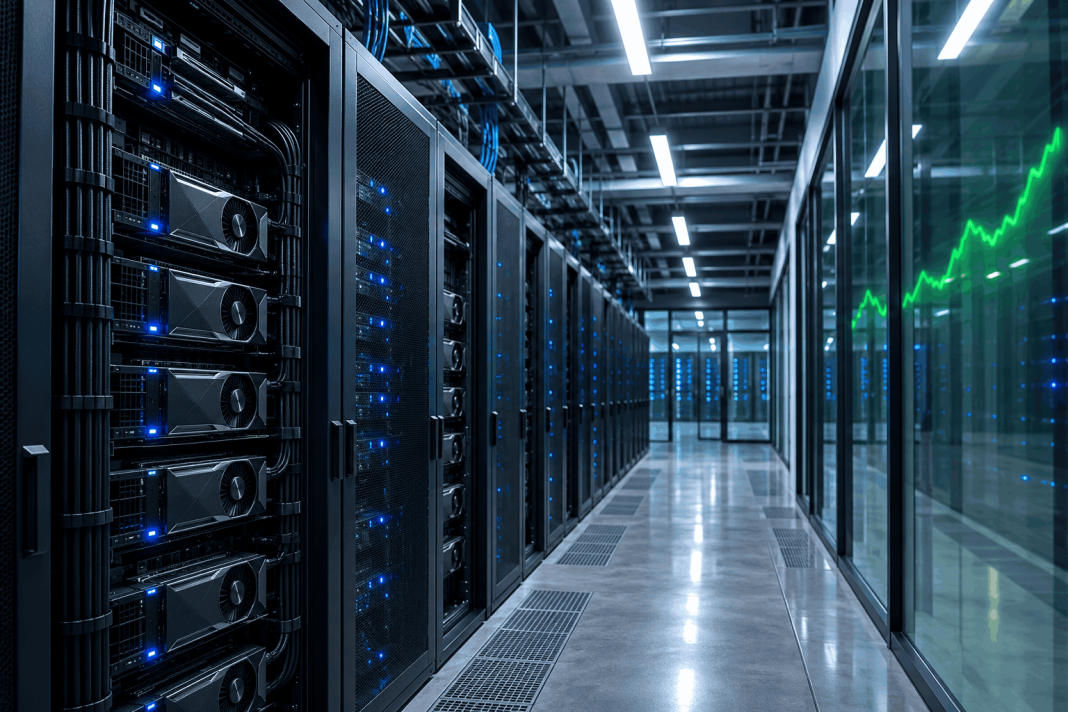
CoreWeave rents access to powerful chips that customers use to train and run AI models. Renting gives customers access to computing capacity without building a data centre of their own. It also gives them a way to add computing power when a project grows or when an AI service starts serving more users.
Backlog helps investors judge how much future business the company expects from customer contracts. CoreWeave can recognise that revenue as it meets delivery and service requirements. A customer may sign for capacity in advance, but the provider still needs to install the equipment and make it available. The timing matters because much of the cost comes before the revenue.
The report also showed a net loss of $709 million, up from $110 million a year earlier. Operating income rose to $207 million, while net interest expense reached $846 million. The gap shows how borrowing costs can weigh on the bottom line even as a cloud provider sells more computing capacity. Review the financial statements.
Chipmakers Join the AI Stock Rally
The rebound spread beyond the companies that rent out computing power. Broadcom, Micron, AMD and Intel also gained on Wednesday. Results and updates from CoreWeave, TSMC and Alibaba helped lift sentiment across the sector.
Cloud providers need more than AI processors to bring new capacity online. Servers also need memory and fast connections so that chips can work together. That gives a range of hardware suppliers a stake in the pace of construction. When cloud companies signal stronger demand, investors pay attention to the suppliers that could fill those orders.
There was already a sign of growing cloud demand in Amazon’s October results. Amazon Web Services posted a 39.3% increase in third-quarter net sales from a year earlier. AWS also sells storage, databases and other cloud services, so the segment’s growth reflects a wider market than AI computing alone.
Financing Questions Follow the AI Stock Rally
CoreWeave said financing backed by customer contracts would help fund its expansion. Management also expected about $9 billion in customer prepayments and deposits over the following three months. When customers pay upfront, that cash can help cover some costs before new capacity starts earning revenue. Read management’s financing update.
Still, large data centres require spending on land, power, cooling and equipment. The timing of those expenses can affect cash flow well before customers start using a new site. A delay in connecting to the power grid, for example, can push back the start of service even if the servers are ready. Related coverage on data centre infrastructure.
The company’s spending shows how much money is at stake. CoreWeave spent $14.5 billion on capital projects and equipment in the quarter, up from $9.4 billion in the previous three months. That figure gives investors a way to measure the scale of the buildout alongside its faster sales growth.
Capacity also takes time to fill. If a site opens with fewer customers using it than expected, the operator still has to cover costs such as leases and maintenance. Higher usage can help spread those costs across more computing hours. For investors, that makes usage and operating margins important alongside revenue growth.
What Could Sustain the AI Stock Rally?
Upcoming earnings will show whether the momentum extends across the sector. Cloud providers can report how quickly they are adding capacity and turning signed agreements into sales. Meanwhile, chipmakers can show whether the stronger demand has translated into orders and shipments. Those updates will help investors judge how much of the buildout is already underway.
The pace of those deliveries matters for chipmakers as well. A cloud provider may reserve equipment in advance, then install it in stages as each site comes online. That can put months between a purchase commitment and the point when customers start using the new computing capacity.
Cash flow will draw close attention, too. A provider can report rising sales while spending heavily on new facilities and equipment. Free cash flow shows how much cash the business generates after that investment. It gives investors another way to assess how much of the next stage of growth the business can fund itself.
For now, CoreWeave’s results gave Wall Street a reason to revisit fears of a slowdown. Customers are signing contracts, cloud sales are growing and chip stocks have recovered some ground. The next round of results will show how quickly providers can deliver the capacity they’ve sold and what it costs to bring it online.

I’m an Online Media & PR Strategist at BusinessFits, passionate about digital storytelling and media impact. As a journalist, blogger, and SEO specialist, I create content that connects, informs, and ranks.