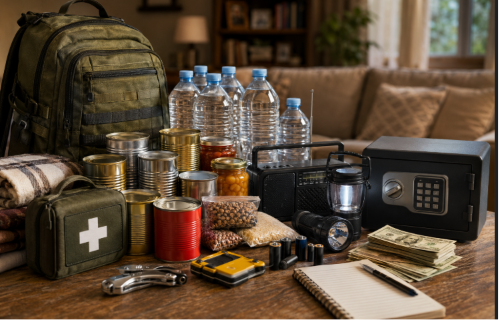
Worried Britons Prepping has become a growing trend across the UK as more households prepare for possible disruptions. Families are stocking tinned food, storing emergency cash, and buying backup supplies in response to fears about cyber-attacks, power outages, extreme weather, and banking failures.
A recent survey reveals that millions of people no longer fully trust modern systems to stay operational during a crisis. Instead, they are taking practical steps to ensure they can cope if digital payments stop working or essential services fail temporarily.
The movement reflects changing attitudes after years of global uncertainty. Events like the Covid pandemic, wars overseas, rising cyber threats, and climate-related disasters have encouraged more Britons to think seriously about emergency planning.
Why Worried Britons Prepping Is Growing Rapidly
The rise of Worried Britons Prepping comes from a desire for security rather than panic. Many people simply want reassurance that they can manage basic needs if daily life is interrupted.
The survey conducted by Link, the UK’s ATM network, highlights how public concerns are shifting. More households now see emergency supplies as common sense instead of extreme behavior.
Almost half of respondents said they already keep battery-powered torches at home. Others maintain power banks, radios, and extra food supplies to prepare for potential blackouts or communication problems.
Cash has also regained importance. Even in an increasingly digital economy, people recognize that card machines and online banking may fail during cyber incidents or power cuts.
This renewed interest in resilience reflects wider concerns about national infrastructure. Reports of cyber threats targeting energy networks and financial systems have made emergency preparation feel more realistic for ordinary households.
Worried Britons Prepping with Cash and Emergency Food
One of the clearest findings from the survey is how strongly people value emergency cash reserves. Around 17 percent of respondents said they keep cash hidden at home specifically for emergencies.
If card payments stopped functioning, more than half said their first response would be visiting an ATM. Others would immediately rely on their home food supplies until services returned.
Extra tins of food remain one of the most popular preparations. Nearly half of surveyed households store canned goods such as beans, soup, vegetables, and fruit because these items last long and require little preparation.
Portable cooking equipment is also becoming more common. Around 20 percent own gas hobs or small camping stoves that can work without electricity. This gives families the ability to prepare meals even during extended outages.
The trend shows how people are focusing on practical survival rather than expensive survivalist gear. Small, affordable actions are proving most popular.
Worried Britons Prepping Matches Government Guidance
Interestingly, official government advice strongly supports many of these preparations. The UK government’s emergency planning campaign encourages households to keep essential items ready for unexpected disruptions.
Recommended supplies include:
- Bottled water
- Tinned and long-life foods
- Battery-powered torches
- Spare batteries
- First aid kits
- Power banks
- Wind-up or analogue radios
These recommendations closely match what many families are already doing. UK Government Prepare Campaign.
The government also advises keeping communication devices charged and ensuring households can access information during emergencies. Radios remain important because internet or mobile services may not always work during major disruptions.
Experts say emergency kits do not need to be expensive. A small collection of essential supplies can help families remain comfortable and calm during short-term problems.
Detect Cyber Threats Faster With Vega’s $120M AI Funding
How Worried Britons Prepping Reflects Modern Fears
The growth of Worried Britons Prepping reveals broader anxieties about the modern world. Many people feel daily life has become more unpredictable over recent years.
Extreme weather events have increased across Europe. Storms and floods regularly disrupt transport and electricity networks. At the same time, cyber-attacks against companies and governments continue making headlines.
Concerns about digital dependence also play a role. Modern banking systems rely heavily on internet connectivity, making people aware that technical failures could affect access to money.
Global instability adds another layer of concern. International conflicts, economic pressures, and energy disruptions create uncertainty about how quickly normal services could recover during a crisis.
Rather than expecting catastrophic collapse, most households simply want enough preparation to handle temporary disruptions calmly and safely.
Edinburgh Power Outages Disrupt Hogmanay Trade
Simple Worried Britons Prepping Tips for Families
Starting an emergency plan does not require major spending. Many experts recommend beginning with small, manageable steps.
First, check your kitchen for foods with long shelf lives. Adding a few extra tins during normal shopping trips can slowly build a useful supply.
Next, ensure you have reliable lighting options. Battery-powered torches or wind-up flashlights are inexpensive but extremely useful during power cuts.
Keeping a small amount of emergency cash at home is another practical step. This can help cover essential purchases if digital payments stop working temporarily.
Families should also test power banks regularly and keep phones charged whenever severe weather warnings appear.
Other helpful steps include:
- Storing bottled drinking water
- Keeping spare medication supplies
- Having warm blankets available
- Writing down emergency contact numbers
- Checking batteries in radios and torches
These actions provide peace of mind without dramatically changing daily life.
Worried Britons Prepping Could Continue Rising
Analysts believe the Worried Britons Prepping trend may continue growing as awareness increases. More people now understand that short-term disruptions can happen unexpectedly.
Cash, once seen as outdated, is again viewed as an important backup during emergencies. Likewise, traditional items like radios and canned food are regaining value in a highly digital society.
Retailers specializing in emergency supplies have already reported stronger demand since the pandemic years. Consumers appear more willing to invest in practical readiness rather than assuming services will always function normally.
The trend also reflects a shift toward personal responsibility. Many households now believe it is sensible to prepare independently instead of relying entirely on public systems.
Ultimately, preparation is less about fear and more about resilience. Families want confidence that they can handle temporary disruptions calmly, safely, and comfortably.
Polymarket Fundraising Talks Push $15B Valuation
Final Thoughts on Worried Britons Prepping
The rise of Worried Britons Prepping shows how attitudes toward emergency readiness are changing across the UK. What once seemed unusual is becoming increasingly normal for ordinary households.
Simple actions like storing tins, keeping cash available, and charging power banks help families feel more secure in uncertain times. These practical preparations offer reassurance without requiring extreme lifestyle changes.
As cyber threats, climate events, and infrastructure concerns continue making headlines, more Britons may adopt similar habits in the months ahead. Preparedness is now viewed less as panic and more as sensible planning for modern life.

I’m an Online Media & PR Strategist at BusinessFits, passionate about digital storytelling and media impact. As a journalist, blogger, and SEO specialist, I create content that connects, informs, and ranks.