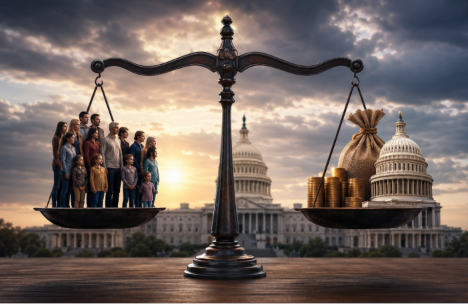
The Middle Class Tax debate is becoming one of the biggest political fights in America ahead of the 2026 midterm elections. After losing ground in the 2024 election cycle, Democrats are trying to reclaim a message Republicans have dominated for decades: tax relief for working Americans.
Many Democratic leaders now believe voters want direct financial help instead of broad policy promises. As a result, lawmakers are proposing new tax cuts focused on middle-income households. However, critics argue this strategy may weaken long-term government funding and fail to solve deeper economic problems facing American families.
Senator Chris Van Hollen recently introduced a proposal aimed at households earning up to $80,500 annually, while married couples earning up to $161,000 could also qualify. Supporters say the plan would give meaningful relief to workers squeezed by inflation, healthcare costs, and housing expenses.
At the same time, opponents warn the proposal could create new financial pressures for the federal government. The debate highlights a larger question: should America focus on lower taxes or stronger public services?
Why Middle Class Tax Plans Appeal to Democrats
The new Middle Class Tax proposal is designed to counter recent Republican tax victories. President Donald Trump previously signed tax legislation that included breaks on overtime pay, tips, and business income. Democrats argue many of those benefits favored wealthier Americans more than average workers.
Democratic lawmakers now want to shift that narrative. Their proposal could save many middle-income households roughly $1,500 annually starting in 2026. To fund the plan, lawmakers would place a surtax on Americans earning more than $1 million each year.
Progressive figures such as Bernie Sanders support the idea because it combines tax relief for workers with higher contributions from top earners. Supporters believe this creates a fairer system while helping Democrats reconnect with frustrated voters.
Political strategists also see another advantage. Republicans have long branded themselves as the party of lower taxes. Democrats hope a targeted Middle Class Tax strategy could challenge that reputation and attract suburban and working-class voters. Peter G. Peterson Foundation Tax Analysis.
Why Middle Class Tax Policies Create Concerns
Despite its popularity, the Middle Class Tax approach raises serious economic concerns among policy experts. The United States already collects relatively low tax revenue compared with many developed nations.
According to data from the OECD, America ranks near the bottom among wealthy countries for total tax collection as a share of economic output. Yet federal spending obligations continue growing rapidly due to programs like Social Security, Medicare, and rising interest payments on national debt.
Critics argue that additional tax cuts could leave fewer resources available for essential public services. Healthcare, education, infrastructure, and housing support programs all require stable government funding.
Many economists also point out that tax savings alone rarely solve structural financial problems. Families may receive a temporary boost from lower taxes, but rising healthcare costs can quickly erase those gains. For many Americans, out-of-pocket medical expenses already exceed the proposed annual tax savings.
As a result, some analysts believe Democrats risk focusing too heavily on short-term political messaging instead of long-term economic reform. British Airways Ticket Prices Rise Amid £1.7bn Fuel Shock.
How Middle Class Tax Policies Affect Inequality
The Middle Class Tax debate also connects to broader questions about inequality in America. Research consistently shows that direct government programs often reduce inequality more effectively than tax adjustments alone.
Countries such as Sweden collect far more tax revenue than the United States. Swedish taxes account for roughly 42% of GDP, significantly higher than American levels. However, those funds support extensive healthcare, education, childcare, and welfare systems.
Studies suggest government transfers and public services account for nearly 90% of inequality reduction in developed economies, while tax structure changes contribute far less. That means public investment often matters more than small adjustments in tax brackets.
Supporters of stronger government programs argue America should focus less on delivering modest refunds and more on building systems that reduce long-term financial stress. Affordable healthcare, childcare assistance, and housing support may provide greater economic security than temporary tax reductions.
The debate over Middle Class Tax proposals therefore reflects two very different visions for economic policy. Barclays Financial News: Profits Hit by Key Risks.
The Political Stakes Behind Middle Class Tax Messaging
The political impact of the Middle Class Tax fight could shape the direction of both major parties. Democrats believe voters increasingly care about take-home pay, inflation, and affordability. Offering direct tax relief may help reconnect with frustrated middle-income households.
Meanwhile, Republicans continue emphasizing tax reduction as a core economic principle. They argue lower taxes encourage investment, business growth, and job creation.
Polls show economic anxiety remains high across the country. Housing costs continue climbing, grocery prices remain elevated, and healthcare expenses strain household budgets. Both parties therefore see tax policy as a powerful political tool.
However, Democrats face a difficult balancing act. Many progressive voters support expanded government services and stronger public investment. Excessive focus on tax cuts could create tension within the party’s own coalition. Nationwide Bank Switching Drives UK Customer Surge.
Some analysts believe Democrats would benefit more from combining targeted relief with broader investments in healthcare affordability, education access, and wage growth. Penn Wharton Budget Model.
What Middle Class Tax Debates Mean for Families
For ordinary Americans, the Middle Class Tax discussion goes beyond politics. Families want financial stability, affordable healthcare, and confidence about the future.
A yearly tax reduction may help cover groceries, utility bills, or school costs. Yet many households still struggle with rising insurance premiums, childcare expenses, and housing payments.
Experts say real economic security usually comes from a combination of strong wages, affordable services, and reliable social support systems. Tax relief can help, but it rarely solves every financial challenge.
The coming months will reveal whether Democrats continue pushing tax-focused messaging or shift toward broader economic reforms. Either way, tax policy will remain central to the national political conversation heading into 2026.
For now, the Middle Class Tax battle highlights a deeper national debate about fairness, government responsibility, and how best to support working families in a changing economy.
Suggested Internal Links
-
- AI Credit Risks Surge and Private Investment Concerns
- Nationwide Bank Switching Surge Explained
- British Airways Fare Increase and Consumer Costs
- Shell Profit Surge During Energy Market Volatility
- NHS AI Support and Public Service Funding

I’m an Online Media & PR Strategist at BusinessFits, passionate about digital storytelling and media impact. As a journalist, blogger, and SEO specialist, I create content that connects, informs, and ranks.