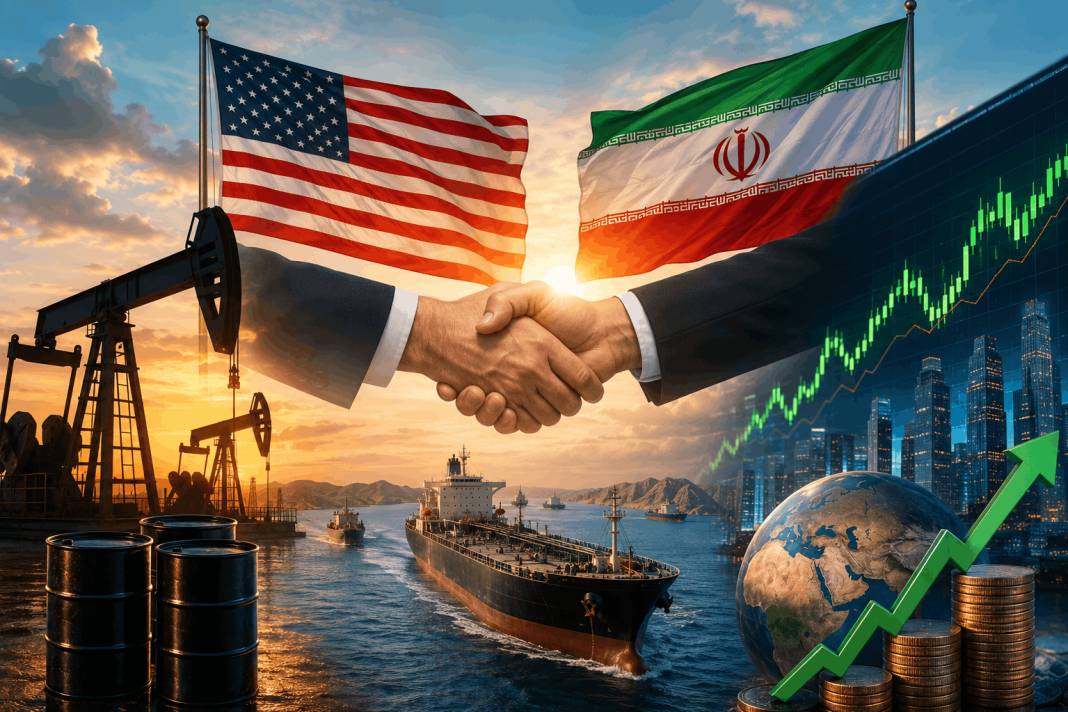
US Iran Deal Drives Oil Prices Lower and Global Markets Higher
The US Iran Deal has delivered a major boost to financial markets worldwide. Investors welcomed the breakthrough as oil prices dropped sharply and stock markets surged. The agreement also paves the way for the reopening of the Strait of Hormuz, one of the world’s most important energy shipping routes.
For months, conflict in the Middle East created uncertainty across global markets. Energy supplies were disrupted, shipping costs increased, and inflation concerns returned. Now, the latest diplomatic breakthrough offers hope for greater stability. While challenges remain, the announcement has already changed market sentiment around the world.
US Iran Deal Sparks a Strong Market Rally
Financial markets reacted immediately to news of the agreement. Investors moved back into stocks as fears of a prolonged regional conflict eased.
Across Europe, major indexes climbed higher. The pan-European Stoxx 600 reached fresh highs as investors embraced a stronger risk appetite. Travel, banking, and industrial stocks recorded some of the largest gains.
In the United Kingdom, the FTSE 100 advanced to its highest level in weeks. Airlines, retailers, and mining companies benefited from expectations of lower energy costs. Meanwhile, oil producers experienced some pressure as crude prices declined.
Wall Street also prepared for gains. Futures linked to the S&P 500 and Nasdaq moved higher as traders anticipated stronger economic conditions and reduced geopolitical risk.
The positive reaction highlights how closely global markets are tied to energy security and stability in the Middle East.
US Iran Deal Brings Oil Prices Down
One of the most significant outcomes of the agreement has been the rapid decline in oil prices.
Brent crude fell by roughly 5%, while West Texas Intermediate crude dropped below key resistance levels. Both benchmarks touched their lowest levels in several months as traders priced in the return of normal energy shipments.
The Strait of Hormuz remains critical to the global economy. Around one-fifth of the world’s oil and liquefied natural gas exports pass through this narrow waterway. When conflict disrupted shipping routes, markets feared major supply shortages.
Now, the reopening of the strait has eased those concerns. Although full operations may not resume immediately, the expectation of improved supply has already reduced pressure on energy markets.
Lower oil prices could eventually translate into cheaper petrol, diesel, and transportation costs for consumers. Businesses that rely heavily on fuel may also benefit from reduced operating expenses.
US Iran Deal Supports Global Economic Recovery
The economic implications extend well beyond energy markets.
Central banks around the world have been struggling to balance inflation and economic growth. Rising oil prices earlier in the year increased costs across multiple sectors, making inflation harder to control.
With energy prices now falling, policymakers may gain additional flexibility. The possibility of future interest rate increases could diminish if inflation pressures continue to ease.
Consumers could also benefit. Lower fuel costs often reduce transportation expenses, which can help bring down prices for goods and services. Over time, households may experience some relief from the cost-of-living pressures that have affected many economies.
Manufacturing industries stand to gain as well. Lower energy expenses can improve profitability and encourage new investment. Companies involved in logistics, shipping, and transportation are particularly likely to welcome the change.
US Iran Deal Helps Stabilize Global Supply Chains
The reopening of shipping routes could improve global trade conditions.
Over recent months, many vessels avoided the region due to security concerns. This forced companies to seek longer and more expensive shipping routes. As a result, transportation costs increased and delivery schedules became less predictable.
With the agreement in place, businesses are hoping for smoother trade flows. Shipping companies may gradually restore regular operations, reducing delays and lowering freight costs.
The benefits extend beyond oil. Products such as aluminium, chemicals, industrial materials, and consumer goods all move through critical trade corridors connected to the Gulf region.
A more stable shipping environment could strengthen supply chains and support economic growth across Europe, Asia, and North America.
US Iran Deal Encourages Energy Security Planning
The recent conflict highlighted the vulnerability of global energy markets.
Many countries have already begun investing in strategies that reduce dependence on a single shipping route. Nations in the Gulf region continue expanding pipeline networks that bypass maritime chokepoints.
Governments are also increasing strategic oil reserves and diversifying energy sources. Renewable energy projects, nuclear power investments, and alternative transportation infrastructure remain key priorities.
While the current agreement offers relief, policymakers recognize that long-term energy security requires broader solutions. The lessons learned during the disruption are likely to influence future investment decisions.
US Iran Deal Still Faces Important Challenges
Despite the optimism, significant hurdles remain.
The current framework represents an important diplomatic achievement, but implementation will take time. Security concerns continue to affect shipping operations, and some areas require extensive clearance efforts before normal traffic can fully resume.
Insurance premiums for vessels operating in the region remain elevated. Shipping companies and traders are likely to proceed cautiously until stability is fully restored.
Analysts also note that diplomatic agreements can face unexpected obstacles. Future negotiations and monitoring efforts will play a crucial role in maintaining momentum.
For now, markets appear willing to focus on the positive developments rather than potential risks.
Conclusion: US Iran Deal Brings Relief but Recovery Takes Time
The US Iran Deal marks a significant turning point for global markets. Falling oil prices, rising stock indexes, and the reopening of the Strait of Hormuz have improved investor confidence and reduced concerns about energy shortages.
Businesses, consumers, and governments all stand to benefit if stability continues. Lower fuel costs could support economic growth, ease inflation pressures, and strengthen supply chains worldwide.
However, full recovery will not happen overnight. Shipping routes must be restored, security measures maintained, and diplomatic commitments honored. While challenges remain, the agreement provides a foundation for greater stability and economic confidence in the months ahead.

Nuwan Wackwella is a digital creator passionate about technology, creativity, and sharing inspiring moments from everyday life.