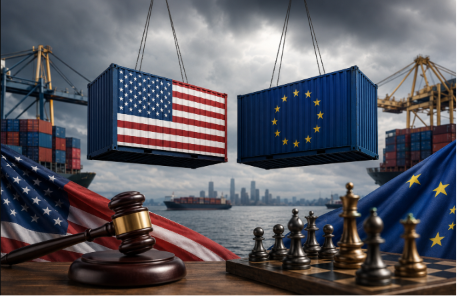
The latest Trump Tariff Threat has once again placed transatlantic trade relations in the spotlight. Former U.S. President Donald Trump warned that any European country imposing digital services taxes on American technology companies could face 100% tariffs on goods exported to the United States. While the statement grabbed headlines worldwide, investors and business leaders reacted far more calmly than they did during previous trade disputes. The reason lies in recent legal limits on presidential tariff powers and expectations that negotiations will ultimately prevail.
Unlike previous tariff announcements that rattled financial markets, this latest warning reflects a changing political and legal landscape. Businesses are still watching developments closely because any future trade restrictions could affect prices, exports, and international supply chains. U.S. Congressional Research Service – International Trade Reports.
Why the Trump Tariff Threat Targets European Digital Taxes
Trump’s latest statement focused on European governments that either have implemented or are considering digital services taxes. These taxes are designed to ensure large multinational technology companies contribute more tax revenue in countries where they generate significant business.
Companies such as Google, Amazon, Meta, and other American technology giants are the primary targets of these taxes because they earn billions of dollars across Europe while often paying relatively low corporate taxes under existing international tax rules.
Posting on Truth Social, Trump argued that these policies unfairly discriminate against American businesses. He warned that any country applying these taxes could immediately face tariffs of up to 100% on exports entering the U.S.
Supporters of digital services taxes argue they create a fairer tax system for multinational corporations. Critics, however, believe they unfairly single out successful U.S. technology firms.
How the Trump Tariff Threat Was Received by Financial Markets
One of the biggest surprises following the announcement was the muted market response.
In previous years, similar trade threats triggered sharp declines across global stock markets. Investors feared escalating trade wars that could damage economic growth and disrupt global commerce.
This time, however, major financial markets remained relatively stable.
The primary reason is a recent U.S. Supreme Court decision that significantly limits the president’s authority to impose broad tariffs using emergency powers.
The ruling made it clear that Congress must authorize sweeping trade restrictions rather than allowing presidents to impose them unilaterally.
Because of these legal safeguards, investors appear less concerned that immediate 100% tariffs will actually take effect.
Legal Limits Shape the Trump Tariff Threat
A major difference between today’s situation and Trump’s first administration is the legal framework governing tariffs.
Earlier this year, the Supreme Court ruled that the International Emergency Economic Powers Act cannot be broadly used to justify large-scale tariffs without clear congressional approval.
Legal experts say this decision reduces the likelihood of immediate tariff actions.
Instead, any future trade restrictions would likely require additional investigations, public reviews, and congressional involvement before implementation.
This slower legal process gives businesses more time to prepare and reduces the possibility of sudden disruptions to international trade.
For that reason, analysts believe the latest warning carries more political significance than immediate economic impact. U.S. Market Outlook: Tariffs, Jobs Report, and Investor Sentiment.
What Options Remain After the Trump Tariff Threat
Although the Supreme Court ruling limits emergency tariff powers, the administration still has several legal tools available.
One option is launching new Section 301 investigations into foreign trade practices considered unfair to American businesses.
These investigations examine whether foreign governments discriminate against U.S. companies and can eventually lead to targeted tariffs.
However, Section 301 investigations usually require months of evidence gathering, consultations, and negotiations before any duties are imposed.
During Trump’s first presidency, similar investigations into European digital taxes often became bargaining tools that encouraged diplomatic discussions instead of immediate trade penalties.
Canada, for example, eventually withdrew its digital services tax proposal after facing pressure from Washington.
Why the Trump Tariff Threat Matters Beyond Technology
Although the dispute centers on digital taxes, the economic consequences could extend well beyond the technology industry.
If broad tariffs were eventually introduced, imported European products such as automobiles, wine, cheese, luxury goods, pharmaceuticals, and industrial equipment could become significantly more expensive for American consumers.
Higher import costs often force businesses to either raise prices or absorb additional expenses, reducing profit margins.
European exporters could also experience weaker demand in the U.S. market, while American exporters might face retaliatory measures from affected countries.
Global supply chains that rely on smooth international trade could also experience renewed uncertainty. UK Market Shock: Budget Policy Shift Hits Investors
How the Trump Tariff Threat Could Affect Consumers
Trade disputes often reach consumers through higher prices.
If tariffs increase the cost of imported goods, retailers frequently pass part of those additional costs to shoppers.
Families could pay more for everyday products that depend on European imports.
Businesses may also reconsider where they manufacture products, source materials, or invest in future production facilities.
Technology companies could face increased regulatory uncertainty as governments continue debating how multinational digital businesses should be taxed.
While immediate changes appear unlikely, consumers and businesses alike continue monitoring future developments.
What the Trump Tariff Threat Means for Future Trade Policy
This latest dispute highlights how international trade policy has evolved.
Presidents still play an important role in shaping trade negotiations, but courts and Congress now exercise greater oversight over major tariff decisions.
Many analysts expect future disagreements over digital taxation to be resolved through negotiations rather than sudden trade sanctions.
International organizations continue working toward long-term agreements on taxing multinational technology companies fairly across different jurisdictions.
Although political rhetoric may remain strong, legal requirements make rapid policy changes much more difficult than before.
Businesses, investors, and governments are therefore likely to focus on diplomatic negotiations while preparing for possible regulatory changes.
Final Thoughts on the Trump Tariff Threat
The latest Trump Tariff Threat demonstrates that trade disputes between the United States and Europe remain far from settled. Digital services taxes continue to divide policymakers, technology companies, and governments seeking a fair balance between taxation and international competitiveness.
Despite the strong language surrounding possible 100% tariffs, recent court rulings have reduced the likelihood of immediate action. Investors appear confident that legal processes, congressional oversight, and diplomatic negotiations will shape the final outcome.
For businesses and consumers, the key message is clear: stay informed. While major disruptions are not expected immediately, future trade discussions involving digital taxation could still influence prices, investment decisions, and global economic relations in the months ahead.

Hello there! I’m Online Media & PR Strategist at BusinessFits | Passionate Journalist, Blogger, and SEO Specialist