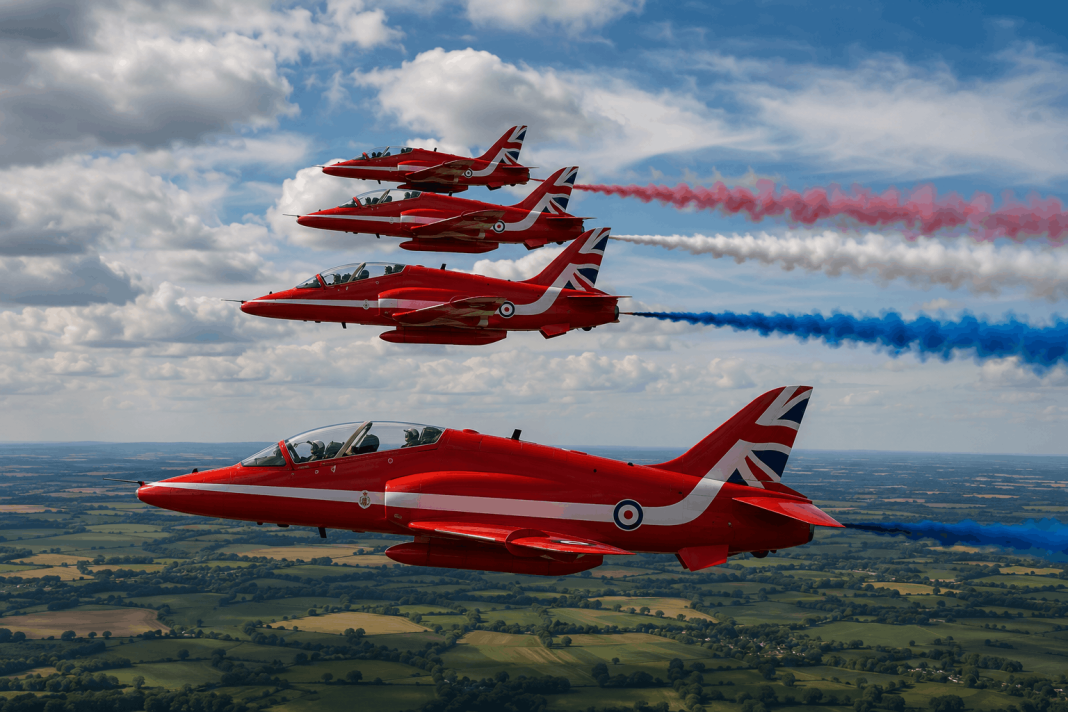
Red Arrows Jets Confirmed in Major UK Defence Investment
The future of the Red Arrows Jets is now clearer after the UK government confirmed plans to replace the Royal Air Force’s ageing Hawk aircraft. The announcement forms part of a wider defence investment programme designed to modernise military capabilities while protecting one of Britain’s most recognised aviation teams. Alongside improved pilot training, the move is expected to support aerospace jobs, strengthen national defence, and ensure the Red Arrows continue inspiring audiences for decades.
For more than 40 years, the Hawk T1 has been the aircraft behind the Red Arrows’ famous aerobatic displays. While the aircraft has served with distinction, its age means a replacement has become increasingly necessary. The government’s latest investment provides a clear path toward that goal.
Why Red Arrows Jets Matter for Britain’s Future
The Red Arrows are far more than an air display team. They represent the professionalism of the Royal Air Force while showcasing British aviation expertise around the world. Every year, millions watch their performances at air shows, national celebrations, and international events.
Replacing the Hawk fleet helps maintain high safety standards while ensuring the aircraft remain suitable for modern pilot training. New trainer aircraft will also support future RAF pilots before they transition to frontline fighter aircraft.
Officials believe the investment protects an important national symbol while strengthening military readiness for future generations.
Red Arrows Jets Included in £360 Million Programme
As part of a broader increase in defence spending, the government has allocated £360 million for a new British Jet Trainer System. This programme includes the replacement aircraft for the Red Arrows alongside improved training capabilities for RAF pilots.
The investment sits within a much larger defence package that includes billions of pounds for military modernisation across the UK.
Government leaders say modern training aircraft are essential because today’s pilots must prepare for increasingly advanced combat systems and technologies. New trainers will provide improved performance, better reliability, and lower maintenance requirements than the ageing Hawk fleet.
How Red Arrows Jets Replace the Ageing Hawk Fleet
The Hawk T1 entered RAF service during the late 1970s and has remained the Red Arrows’ aircraft since 1979. Although continuous upgrades have extended its operational life, the fleet is expected to retire around 2030.
To preserve the aircraft, the Red Arrows previously reduced the number of jets used during displays and training. While these measures extended service life, they also highlighted the growing need for a long-term replacement.
The new aircraft will provide improved reliability, enhanced safety systems, and modern avionics that better match current RAF training requirements.
Former Red Arrows pilots have welcomed the announcement, describing it as an important investment that protects both the team’s future and Britain’s aviation heritage.
Red Arrows Jets Support Wider RAF Modernisation
The trainer replacement programme is only one part of a much larger defence strategy.
Additional funding has been announced for upgrades to Typhoon fighter aircraft, improvements at RAF bases including RAF Coningsby, and infrastructure projects designed to strengthen overall air capabilities.
These improvements aim to ensure the Royal Air Force remains prepared for future operational demands while maintaining high-quality pilot training throughout every stage of a pilot’s career.
At the same time, defence planners have accepted that some older aircraft will be retired earlier than originally planned. Officials say these difficult decisions allow funding to focus on equipment that delivers the greatest long-term value.
Questions Remain About Red Arrows Jets Manufacturer
Although funding has now been confirmed, one major question remains unanswered: which aircraft will replace the Hawk?
Several international aerospace companies are expected to compete for the contract. British manufacturers have also expressed interest, although industry changes have affected some previous proposals.
The government has indicated that supporting the UK’s aerospace sector remains an important consideration during the procurement process.
Manufacturing locations such as Warton have been mentioned as potential assembly sites if particular aircraft designs are selected. Any final decision could create skilled jobs while strengthening Britain’s position within the global aerospace industry.
Industry experts believe the programme also presents opportunities for exports if the selected trainer aircraft attracts overseas customers.
How Red Arrows Jets Benefit Local Communities
The impact extends well beyond the RAF.
RAF Waddington, home of the Red Arrows, plays a major role in Lincolnshire’s local economy. New investment could support engineering apprenticeships, technical education, and specialist aerospace careers throughout the region.
Colleges and training providers already work closely with defence employers to prepare future engineers and technicians. Continued investment helps ensure young people have access to skilled careers within the UK’s growing aerospace industry.
The programme also supports supply chains involving hundreds of British companies providing engineering, maintenance, manufacturing, and specialist aviation services.
Red Arrows Jets Preserve an Iconic National Tradition
Few military display teams enjoy the international reputation of the Red Arrows.
Their famous red, white, and blue smoke displays have represented Britain across Europe, North America, the Middle East, and Asia for decades. Millions continue to watch their performances every year, making them one of the country’s strongest ambassadors.
Modern replacement aircraft will allow the team to continue performing safely while maintaining the precision flying that has become their trademark.
The transition also ensures younger generations continue experiencing live air displays that encourage interest in aviation, engineering, science, and military careers.
What Comes Next for Red Arrows Jets
The replacement programme will now move into the planning and procurement stages before aircraft selection and production begin.
While the Hawk fleet will remain in service during the transition period, the long-term objective is to introduce a modern trainer capable of supporting both RAF pilot training and the Red Arrows display team well into the future.
The announcement removes much of the uncertainty surrounding the team’s future. Combined with broader defence investment, it demonstrates a commitment to preserving one of Britain’s most recognised aviation symbols while strengthening military capability.
For aviation enthusiasts, RAF personnel, and future pilots alike, the next chapter promises modern aircraft, improved technology, and continued world-class displays that showcase British excellence.

Nuwan Wackwella is a digital creator passionate about technology, creativity, and sharing inspiring moments from everyday life.