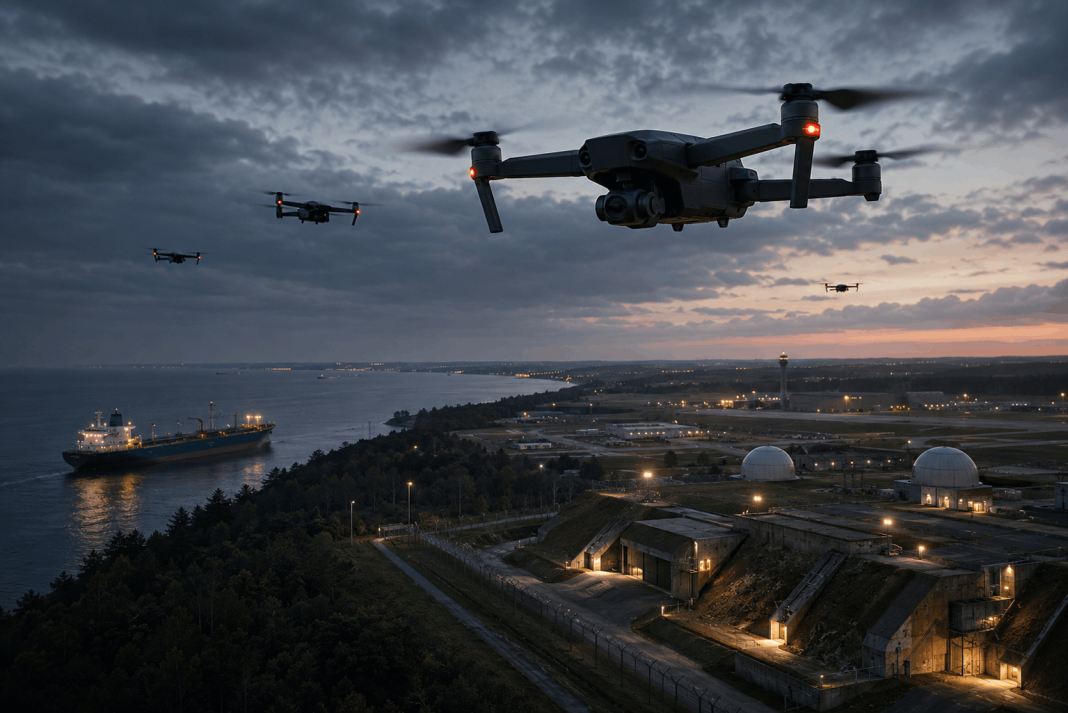
Russian Drone Incursions Reveal New Challenges for European Security
Russian drone incursions have become one of the biggest security concerns facing Europe. Over the past 18 months, mysterious drones have repeatedly appeared above military installations, nuclear-related facilities, and strategic infrastructure across multiple countries. The incidents have raised questions about NATO’s readiness and highlighted the growing role of hybrid warfare using inexpensive but highly effective technology.
Instead of relying on conventional military attacks, these operations appear designed to gather intelligence, test air defenses, and create uncertainty. Security analysts believe the coordinated nature of these flights points toward a sophisticated campaign rather than isolated events.
How Russian Drone Incursions Spread Across Europe
Researchers examined more than 140 reported drone incidents across over a dozen European nations between late 2024 and early 2026. Many of the flights occurred near military bases linked to nuclear operations or critical defense infrastructure.
Several countries experienced repeated activity, including the United Kingdom, Germany, France, Belgium, Denmark, the Netherlands, and Ireland. While authorities have rarely identified the operators publicly, investigators believe the incidents followed clear patterns that suggest careful planning.
Unlike traditional espionage, drones can gather detailed intelligence while remaining difficult to detect or intercept. Their relatively low cost also makes them attractive tools for prolonged surveillance campaigns.
Why Russian Drone Incursions Focused on Nuclear Facilities
Many reported drone sightings occurred near locations connected to NATO’s nuclear deterrence.
One of the most closely watched locations was RAF Lakenheath in the United Kingdom, where preparations were underway to support the possible return of U.S. nuclear weapons. Similar drone activity was also reported near France’s Île Longue naval base, home to the country’s nuclear submarine fleet.
Belgium and the Netherlands also experienced incidents near military facilities believed to store U.S. nuclear weapons under NATO arrangements.
These locations offer valuable intelligence opportunities because they contain sensitive military infrastructure, logistics networks, and operational procedures.
Shadow Fleet Supported Russian Drone Incursions
One of the most concerning discoveries involved Russia’s so-called “shadow fleet.”
Investigators believe several commercial vessels operating in international waters may have served as temporary launch or recovery platforms for drones. Many of these aging tankers regularly disable or manipulate their tracking systems, making their movements difficult to monitor.
Ships such as the Hav Dolphin attracted attention after operating near the British coastline during multiple reported drone sightings. Other suspicious vessels later appeared near German waters before additional incidents occurred.
Using civilian ships allows operators to position drones much closer to their intended targets while reducing the risk of detection.
How Russian Drone Incursions Avoided Detection
Small drones present unique challenges for modern air defense systems.
Traditional radar networks were built to identify larger aircraft, cruise missiles, or ballistic missiles. Low-flying drones often travel slowly, have small radar signatures, and can blend into background noise.
Security experts noted that despite repeated sightings, very few drones were intercepted or recovered.
Some drones reportedly had operational ranges exceeding 300 miles, allowing launches far from their surveillance targets. Recovery vessels may also have collected the aircraft after missions, limiting opportunities for investigators to examine their technology.
These tactics mirror methods previously observed during other modern conflicts where unmanned systems played a major intelligence role.
Civilian Impact of Russian Drone Incursions
Although military facilities remained the primary targets, civilian infrastructure also experienced disruptions.
Copenhagen Airport temporarily suspended operations after drone activity raised safety concerns. Danish authorities later identified several shadow fleet vessels operating nearby during the same period.
Another major development occurred when French authorities seized the tanker Boracay. Reports indicated the vessel carried Russian private military contractors, strengthening suspicions that some commercial ships supported broader intelligence operations.
These incidents demonstrate how hybrid warfare can affect civilian transportation and public confidence even without direct military engagement.
Defense Lessons from Russian Drone Incursions
The campaign exposed significant weaknesses in Europe’s counter-drone capabilities.
Many NATO members possess advanced missile defense systems, yet these platforms are not optimized for detecting inexpensive, low-altitude drones operating individually or in small groups.
Experts argue that future investments should prioritize:
- Advanced counter-drone radar systems
- Artificial intelligence-assisted detection
- Electronic warfare capabilities
- Faster intelligence sharing between allies
- Coordinated naval monitoring of suspicious commercial vessels
How Europe Responded to Russian Drone Incursions
Drone activity declined after European authorities increased naval enforcement during 2026.
Several suspect vessels connected to the shadow fleet were inspected, detained, or seized under sanctions enforcement and maritime security operations. These actions appear to have disrupted parts of the surveillance network.
Although governments remain cautious about publicly assigning responsibility, many defense analysts describe the campaign as an example of modern hybrid warfare that blends intelligence gathering, psychological pressure, and strategic ambiguity.
Officials continue strengthening cooperation through intelligence sharing and maritime surveillance to prevent similar operations in the future.
What Russian Drone Incursions Mean for Future Security
The recent drone campaign illustrates how inexpensive unmanned aircraft can challenge even highly advanced military alliances.
Rather than causing direct physical damage, these operations appear designed to collect intelligence, expose vulnerabilities, and test response capabilities. The repeated flights demonstrated that critical infrastructure remains vulnerable to evolving surveillance tactics.
Looking ahead, Europe will likely invest heavily in counter-drone technologies, stronger maritime monitoring, and improved coordination among NATO members. Rapid information sharing, advanced detection systems, and continuous training will be essential to counter future threats.
As drone technology becomes increasingly accessible, protecting military installations, transportation hubs, and critical infrastructure will require a combination of innovation, cooperation, and constant vigilance. The lessons learned from these incidents may shape European defense planning for years to come.

Nuwan Wackwella is a digital creator passionate about technology, creativity, and sharing inspiring moments from everyday life.