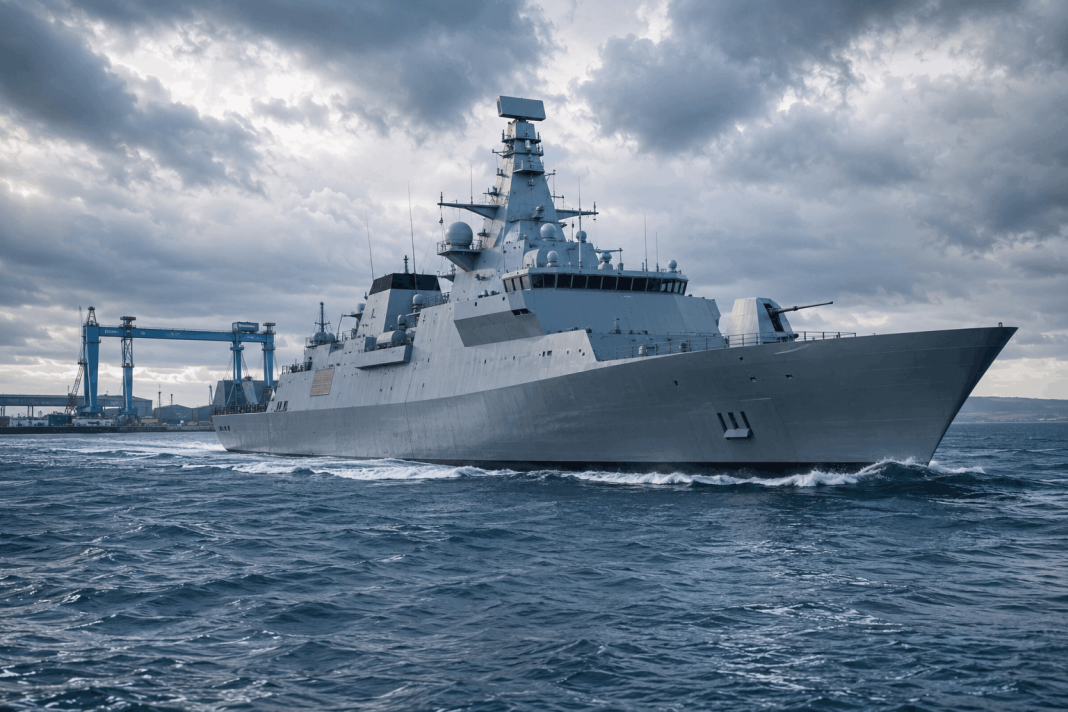
Babcock Frigate Costs Drive Profit Drop as Defence Demand Remains Strong
Babcock Frigate Costs have become a major talking point in the UK defence industry after Babcock International reported a sharp fall in annual profits. The defence engineering company faced mounting expenses linked to its Royal Navy Type 31 frigate programme, leading to a significant financial charge. Despite the setback, the company remains confident about future growth and announced a substantial share buyback programme to reward shareholders.
The latest results highlight the challenges facing large defence contractors in an environment shaped by inflation, supply chain disruptions, and labour shortages. At the same time, rising global security concerns continue to create long-term opportunities for defence businesses.
How Babcock Frigate Costs Affected Annual Profits
The biggest factor behind the profit decline was the impact of Babcock Frigate Costs associated with the Type 31 programme. For the financial year ending March 31, underlying operating profit fell 19% to £293.3 million.
The company recorded a £140 million charge against the contract, reflecting increased production expenses and revised project expectations. This charge significantly reduced earnings despite strong performances in other business divisions.
Revenue, however, continued to grow and reached £5.18 billion. This demonstrates that demand for the company’s services remains strong across multiple sectors, including defence, aviation, and nuclear engineering.
Babcock Frigate Costs Linked to Contract Challenges
The Type 31 frigate contract was awarded in 2019 and involves building five advanced warships for the Royal Navy. While the deal was seen as strategically important, Babcock Frigate Costs increased due to several unexpected factors.
First, the contract included limited mechanisms to protect against sharp increases in production costs. As economic conditions changed, the company absorbed much of the financial pressure.
Next, Brexit introduced trade complications and labour availability issues. Supply chains became more complex, increasing procurement costs and project timelines.
The COVID-19 pandemic added another layer of disruption. Manufacturing delays, workforce shortages, and logistical challenges affected operations throughout the programme.
Finally, rising raw material prices and design modifications to the first ships further increased overall project expenses.
Understanding Babcock Frigate Costs and Project Risks
Large naval construction projects often carry significant risks. In this case, Babcock Frigate Costs demonstrate how fixed-price contracts can become difficult when economic conditions change unexpectedly.
The company explained that additional production hours could create further financial pressure. For example, a 10% increase in manufacturing hours could add approximately £29 million in losses.
Defence contracts typically run over several years. During that period, inflation, labour costs, and material prices can change dramatically. Without strong escalation clauses, contractors may struggle to recover rising expenses.
These challenges highlight the importance of effective contract management and realistic cost forecasting in large-scale defence programmes.
Babcock Frigate Costs Overshadow Strong Business Performance
Although the frigate programme created challenges, other parts of the business delivered encouraging results. Excluding the contract charge, operating profit would have increased by approximately 19% to £433 million.
The company’s nuclear division continues to benefit from growing investment in submarine and defence infrastructure projects. Aviation services also generated strong performance through military support contracts and international operations.
These divisions helped offset some of the negative impact from Babcock Frigate Costs and demonstrate the value of maintaining a diversified business model.
Strong execution in these areas provides a foundation for future growth despite current shipbuilding difficulties.
Babcock Frigate Costs and the £200 Million Share Buyback
Despite lower profits, management announced a £200 million share buyback programme. The decision reflects confidence in the company’s long-term prospects and financial strength.
The board also recommended a final dividend of 7.5 pence per share, representing a 15% increase compared with the previous year.
These shareholder returns suggest the company believes current challenges are manageable and temporary. Investors often view buybacks as a sign that management considers shares undervalued.
While market reaction initially pushed shares lower, the combination of dividend growth and buybacks may help support investor confidence going forward.
Future Outlook Beyond Babcock Frigate Costs
Management remains optimistic about future opportunities. Global defence spending continues to rise as governments strengthen military capabilities and respond to geopolitical tensions.
The company expects mid-single-digit revenue growth while targeting operating margins above 9%. Its order backlog remains strong at approximately £9.8 billion, providing visibility into future earnings.
Around 70% of expected fiscal 2027 revenue is already secured through existing contracts. This level of contracted work reduces uncertainty and supports long-term planning.
Additionally, expanding partnerships in the United States and continued growth in nuclear services create new opportunities beyond naval shipbuilding.
Why Babcock Frigate Costs Matter for Investors
The impact of Babcock Frigate Costs offers important lessons for investors evaluating defence companies. While government contracts often provide stable revenue, project execution remains critical.
Cost overruns, inflation, and supply chain issues can quickly affect profitability. Investors should pay close attention to contract structures and risk management practices when assessing companies in this sector.
At the same time, defence spending trends remain favourable. Increasing military budgets across Europe, North America, and other regions continue to support long-term industry growth.
For Babcock International, the challenge will be balancing near-term contract pressures with the opportunities created by growing defence demand.
Conclusion: Managing Babcock Frigate Costs While Building for Growth
Babcock International’s latest results show how major shipbuilding projects can influence financial performance. The substantial charge related to the Type 31 programme reduced profits and highlighted the risks associated with long-term fixed-price contracts.
However, strong growth in nuclear and aviation operations, a healthy order book, and a £200 million share buyback demonstrate resilience. The company continues to benefit from favourable defence market conditions and increasing global security requirements.
While Babcock Frigate Costs remain a challenge in the short term, the broader business appears well positioned to capture future opportunities in the defence sector. Investors and industry observers will now focus on project execution and the company’s ability to convert its strong order pipeline into sustainable profit growth.

Nuwan Wackwella is a digital creator passionate about technology, creativity, and sharing inspiring moments from everyday life.