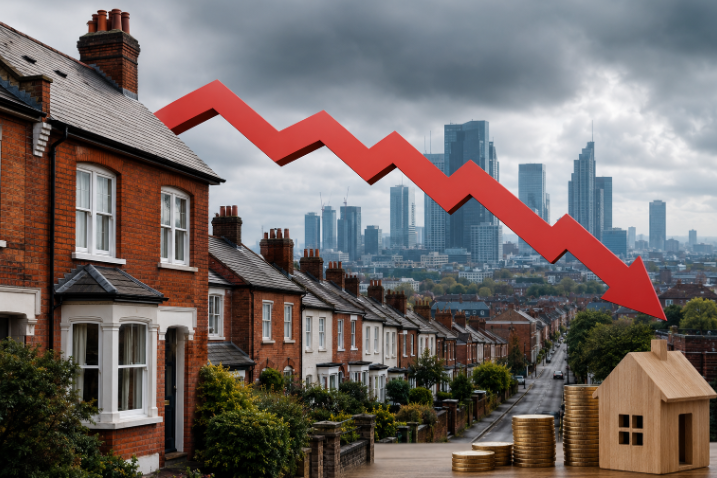
The UK Housing Slowdown is becoming more noticeable as house prices recorded their first monthly decline of 2026. After several months of growth, the property market is showing signs of cooling as higher mortgage rates and global economic uncertainty weigh on buyer confidence.
Recent figures from Nationwide reveal that average house prices fell during May. House price index.
Meanwhile, property experts have revised forecasts for the rest of the year, suggesting that the housing market may face additional challenges if borrowing costs remain elevated.
For homeowners, buyers, and investors, this shift highlights how international events and domestic economic pressures continue to influence the UK property market.
What the UK Housing Slowdown Means for the Market
According to the latest figures, UK house prices dropped by 0.6% in May compared with April. The average property value now stands at approximately £278,024.
Although annual growth remains positive at 1.7%, it has slowed considerably from the 3% recorded just one month earlier. This decline marks the first monthly fall seen this year and signals a change in market momentum.
Property analysts say affordability concerns are becoming more significant as mortgage rates remain above levels many buyers had hoped for in 2026. Mortgage Rate Impact: How the Iran War Hits UK Buyers.
Why the UK Housing Slowdown Is Happening
Several factors have contributed to the current market conditions.
First, rising interest rates have increased borrowing costs across the country. Mortgage lenders have adjusted pricing following increases in swap rates, making fixed-rate mortgage deals more expensive.
Second, global economic uncertainty has affected consumer confidence. Higher energy costs and inflation concerns continue to place pressure on household budgets.
As a result, many potential buyers are delaying purchasing decisions while waiting for greater stability in the economy and mortgage market.
Estate agents have reported a noticeable reduction in viewing activity compared with expectations for the traditional spring selling season.
UK Housing Slowdown and Rising Mortgage Costs
Mortgage affordability remains one of the biggest challenges facing buyers.
By late May, the average two-year fixed mortgage rate had risen to around 5.68%, while five-year fixed deals averaged approximately 5.63%.
These higher rates significantly increase monthly repayments, especially for first-time buyers who typically borrow larger amounts relative to income.
Many homeowners who secured low-rate deals during previous years are also approaching refinancing periods. Consequently, thousands of households may face higher monthly costs when existing mortgage agreements expire. Tracker Mortgage Deals Return as Rates Stay Uncertain.
The increase in borrowing expenses has naturally reduced purchasing power across many parts of the country.
How Experts View the UK Housing Slowdown
Property experts remain cautious about the outlook.
Analysts from Nationwide suggest that affordability pressures are influencing market activity, although conditions are not yet as severe as those experienced during previous interest-rate shocks.
Industry observers note that buyer demand has softened rather than collapsed. Therefore, most experts do not expect a dramatic property crash.
Instead, the market is likely to experience a period of slower activity, modest price adjustments, and longer selling times.
Economic forecasts indicate that confidence could improve if inflation continues easing and mortgage rates begin to stabilise later in the year. MFS Mortgage Scandal: FCA Probes £1.3bn Collapse.
Savills Revises UK Housing Slowdown Forecast
One of the most significant developments came from property consultancy Savills.
Earlier this year, the company predicted house prices would rise by around 2% during 2026. However, that forecast has now been revised dramatically.
Savills currently expects average property values to fall by approximately 2% before the end of the year. Housing Market Update – April 2026
The revised outlook reflects concerns about higher borrowing costs, reduced affordability, and weaker consumer confidence.
While a 2% decline may appear modest, it represents a substantial shift in expectations within a relatively short period.
For property investors, these revised forecasts may influence purchasing decisions throughout the remainder of the year.
Impact of the UK Housing Slowdown on Buyers
For buyers, the changing market presents both challenges and opportunities.
Higher mortgage rates undoubtedly make homeownership more expensive. However, slower demand may create additional negotiating power.
Some sellers are already adjusting asking prices to attract interest and secure sales more quickly.
Buyers with strong deposits and stable incomes may therefore find better opportunities than were available during the highly competitive market conditions of previous years.
Nevertheless, affordability remains a major concern for younger households attempting to enter the property market for the first time.
Careful financial planning is becoming increasingly important before committing to a mortgage.
Impact of the UK Housing Slowdown on Sellers
Sellers are also adjusting expectations.
Properties are generally taking longer to sell compared with earlier periods of strong market growth. In some regions, sellers may need to accept lower offers than initially anticipated.
However, market conditions vary considerably across the country.
Areas with limited housing supply continue to attract interest, particularly where employment opportunities remain strong.
Consequently, sellers should work closely with local estate agents to understand realistic pricing strategies and current buyer demand.
A well-presented property priced competitively can still achieve successful results despite broader market challenges.
Regional Trends During the UK Housing Slowdown
Different regions often experience housing market changes at varying speeds.
London and parts of southern England typically respond more quickly to shifts in borrowing costs because of higher average property prices.
Meanwhile, some northern regions have demonstrated greater resilience due to comparatively stronger affordability levels.
Regional performance throughout the second half of 2026 will provide a clearer picture of where price pressures are strongest and where demand remains healthy.
Local economic conditions, employment growth, and housing supply will continue influencing outcomes across different parts of Britain.
Interest rates and Bank Rate: our latest decision
Preparing for the UK Housing Slowdown Ahead
Whether you are buying, selling, or refinancing, preparation remains essential.
Homeowners should review upcoming mortgage renewals early and explore available options before existing deals expire.
Buyers should compare mortgage products carefully and obtain professional advice before making significant financial commitments.
Furthermore, monitoring economic developments can help individuals make informed decisions regarding property purchases and investments.
While uncertainty remains, the UK property market has historically demonstrated resilience through periods of economic disruption.
Conclusion: UK Housing Slowdown Signals a Market Reset
The UK Housing Slowdown reflects growing affordability pressures and changing economic conditions. House prices have recorded their first monthly decline of the year, mortgage costs remain elevated, and forecasts have become more cautious.
Even so, most experts expect a gradual adjustment rather than a severe downturn. Buyers may benefit from improved negotiating opportunities, while sellers must adapt to a more competitive marketplace. UK House Prices Rise Despite Global Conflict Concerns.
As the year progresses, interest rates, inflation trends, and consumer confidence will largely determine the direction of the housing market. For now, the UK Housing Slowdown serves as an important reminder that property values are closely linked to wider economic events both at home and abroad.

I’m an Online Media & PR Strategist at BusinessFits, passionate about digital storytelling and media impact. As a journalist, blogger, and SEO specialist, I create content that connects, informs, and ranks.