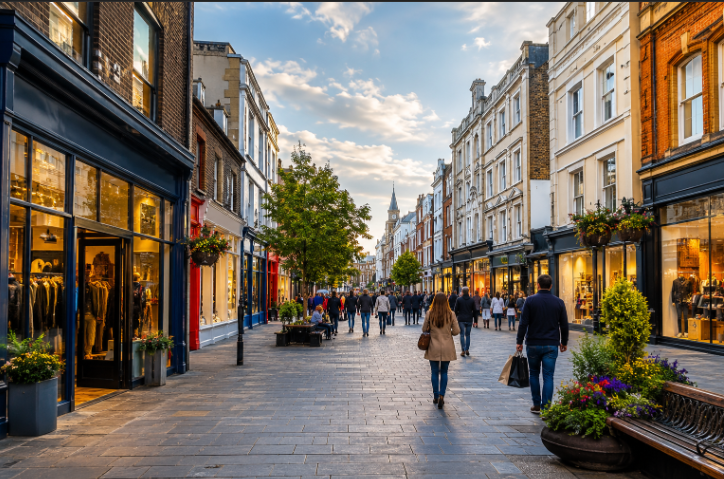
The UK is witnessing a surprising high street revival as more retailers open stores despite years of economic pressure and changing shopping habits. Across England and Wales, new shops are appearing in town centres every week. At the same time, many empty units and closed stores remain visible reminders of the challenges that hit retail during and after the pandemic.
Still, the latest figures suggest optimism is slowly returning. Retailers are finding smarter ways to use space, attract customers, and reshape town centres for modern lifestyles. This new phase of the high street revival could redefine how communities shop, work, and spend time in the years ahead.
High Street Revival Creates New Shop Growth
Recent figures reveal encouraging momentum for the retail sector. More than 13 new stores opened every week during the past year, leading to a net increase of 723 retail premises by the end of 2025.
The total number of retail sites across England and Wales climbed to more than 507,000. This marks one of the clearest signs yet that the high street revival is gaining traction after years of decline.
Retail property experts say much of this growth comes from rethinking old retail spaces. Former department stores and oversized units are now being divided into several smaller shops. This approach allows landlords to fill previously empty buildings while offering flexible spaces for independent retailers and growing brands.
Many consumers now prefer smaller, more specialised shopping experiences. As a result, local boutiques, cafes, beauty stores, and convenience retailers are helping drive this phase of the high street revival.
High Street Revival Still Faces Pandemic Losses
Despite the recent growth, retail has not fully recovered from the damage caused by COVID-19 and rising living costs. Since the end of 2020, a net total of 6,045 retail sites have disappeared across the UK.
London suffered the biggest losses, followed by the South East and North East regions. Many units were converted into flats, offices, gyms, or mixed-use developments instead of remaining retail stores.
The pandemic accelerated long-term changes that were already reshaping the retail industry. Online shopping became a daily habit for millions of consumers, while hybrid working reduced foot traffic in many city centres.
These trends continue to challenge the high street revival, especially in areas that depended heavily on office workers and large chain stores.
However, analysts believe the retail market is stabilising. The pace of closures has slowed compared to previous years, while some regions are now reporting modest gains in store numbers.
High Street Revival Drives Retail Innovation
Retailers are adapting quickly to survive in the changing economy. Large shopping centre owners are redesigning spaces to attract different types of tenants and create more vibrant town centres.
Companies like John Lewis and Hammerson have explored new strategies for using large retail properties more efficiently. Instead of relying on traditional department store layouts, many sites now include leisure spaces, restaurants, healthcare services, and smaller independent shops.
This flexible approach is becoming central to the high street revival. Consumers increasingly want convenience, experiences, and community-focused destinations rather than rows of identical chain stores.
Modern high streets are evolving into mixed-use environments where people can shop, socialise, work, and relax in one location. Cafes, fitness studios, entertainment venues, and local services now play a bigger role in attracting foot traffic. UK Food Inflation Surge to 9% Amid Iran Energy Crisis.
Retailers are also using technology to support physical stores. Click-and-collect services, loyalty apps, and online stock checking help bridge the gap between digital shopping and in-store experiences.
High Street Revival Meets Rising Cost Pressures
Although growth is returning, financial pressures remain a serious concern for many retailers. Business rates continue to create major costs, especially for small independent shops trying to survive in competitive locations.
Higher energy prices, wage increases, and cautious consumer spending have added extra strain to the sector. Many shoppers still limit non-essential spending because of inflation and economic uncertainty.
Retail sales data from recent months has shown occasional slowdowns, reminding businesses that the recovery remains fragile. Some experts warn that the high street revival could stall if consumer confidence weakens further.
Independent retailers often face the greatest pressure because they lack the financial resources of major chains. Yet many local businesses continue to adapt creatively through pop-up stores, events, and community partnerships. Iran War Costs Push UK Prices Higher, Markets Fall Fast.
Experts suggest that reviewing business rate assessments and improving local support programmes could help strengthen the ongoing high street revival.
High Street Revival Changes Community Spaces
The transformation of high streets affects more than shopping alone. Town centres play a major role in local identity, employment, and social interaction.
Empty shops can damage community confidence and reduce visitor numbers. In contrast, new openings often create energy, jobs, and investment opportunities for local residents.
The current high street revival reflects changing lifestyles as much as economic recovery. Consumers increasingly value convenience, local experiences, and walkable town centres over large out-of-town shopping destinations.
Morrisons Store Closures Hit UK High Streets Hard
Many councils are also supporting regeneration projects designed to improve public spaces, encourage independent businesses, and attract visitors back into town centres.
Communities benefit when high streets remain active and attractive. Successful retail areas can increase tourism, support nearby businesses, and improve local property values.
High Street Revival Signals Cautious Optimism
The retail industry still faces uncertainty, but recent growth offers genuine encouragement. New shops continue opening across most regions, showing that businesses still believe in the future of physical retail.
The modern high street revival is not about returning to old shopping habits. Instead, it reflects a broader transformation in how town centres operate and serve communities.
Retailers that embrace flexibility, customer experience, and mixed-use development appear best positioned for long-term success. Smaller stores, independent brands, and creative retail concepts are likely to remain important parts of this evolving landscape.
Consumers can also help support the high street revival by shopping locally and visiting independent businesses whenever possible. Every purchase contributes to keeping town centres active and sustainable.
Overall, the latest data paints a picture of cautious optimism. While the sector still faces obstacles, the steady return of new shops suggests Britain’s high streets are adapting rather than disappearing.

Hello there! I’m Online Media & PR Strategist at BusinessFits | Passionate Journalist, Blogger, and SEO Specialist