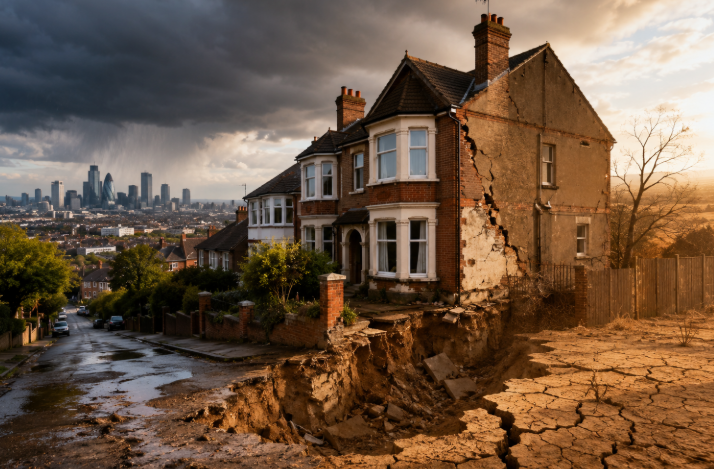
The growing Climate Subsidence Risk facing homeowners in southern England is becoming one of the most serious property challenges linked to climate change. Experts warn that millions of homes across London, Essex, and Kent could face structural damage as hotter summers and changing rainfall patterns cause the ground beneath buildings to shrink and shift.
Recent research from the British Geological Survey (BGS) shows that climate-driven subsidence could affect an increasing number of properties over the coming decades. Areas built on clay-rich soils are particularly vulnerable because these soils expand when wet and contract when dry. As weather extremes become more common, the threat to homes, infrastructure, and property values continues to grow.
Climate Subsidence Risk and the Changing Climate
Climate change is creating conditions that increase the likelihood of subsidence across southern England. Extended periods of hot, dry weather remove moisture from clay soils, causing them to shrink significantly. When wetter conditions return, the soils expand again.
This repeated cycle places stress on building foundations. Over time, the movement can cause cracks in walls, uneven floors, and damage to underground services.
Scientists say these weather patterns are becoming more frequent as global temperatures rise. The combination of longer heatwaves and heavier rainfall events creates ideal conditions for ground movement in vulnerable regions.
UK Housing Slowdown: House Prices Fall as Rates Rise
According to BGS researchers, London, Essex, and Kent contain large areas of shrink-swell clay soils, making them some of the most exposed regions in the country.
Why Climate Subsidence Risk Is Higher in London, Essex and Kent
Many parts of southern England sit on geological formations such as London Clay. These soils are known for their ability to change volume depending on moisture levels.
Urban areas face an additional challenge. Dense housing developments, aging infrastructure, and limited green space can amplify the effects of soil movement. Boroughs including Camden, Barnet, and Islington have already experienced subsidence-related issues. UK Climate Change Committee
Trees can also contribute to the problem. During dry periods, large trees absorb significant amounts of water from the ground, further reducing soil moisture around nearby foundations.
Many homes in these regions were built decades ago and may not have foundations designed to withstand future climate conditions. As a result, older properties are likely to face greater risks.
Climate Subsidence Risk Could Affect Millions of Properties
The latest projections paint a concerning picture for homeowners and insurers alike.
Researchers estimate that by 2070, more than 1.8 million properties across Great Britain could face some degree of subsidence exposure under a medium-emissions climate scenario. London alone could see over one-quarter of homes affected.
However, the outcome is not fixed. Under a lower-emissions pathway aligned with international climate targets, the number of affected homes could be significantly reduced.
These findings highlight the importance of both climate mitigation and adaptation measures. Reducing emissions can help limit future risks, while property improvements can reduce damage to existing homes.
UK Rent Crowdfunding Rises as Housing Costs Soar
The growing number of claims already demonstrates the financial impact. Subsidence-related insurance claims reached substantial levels during recent periods of extreme weather, putting pressure on insurers and homeowners alike.
Warning Signs of Climate Subsidence Risk in Your Home
Recognizing early signs of subsidence can help homeowners address issues before they become severe.
Common indicators include:
- Diagonal cracks around windows and doors
- Doors and windows becoming difficult to open
- Cracks appearing in interior walls
- Uneven or sloping floors
- Separation between walls and ceilings
- Damaged drainage or utility pipes
Not every crack indicates subsidence. However, homeowners should seek professional advice if multiple warning signs appear simultaneously.
A qualified structural survey can identify whether foundation movement is occurring and recommend appropriate solutions. Association of British Insurers
How Homeowners Can Reduce Climate Subsidence Risk
Although climate change cannot be stopped overnight, there are practical steps homeowners can take to reduce potential damage.
First, regular property inspections can help identify early problems. Small cracks are often easier and cheaper to repair than major structural issues.
Second, maintaining drainage systems is essential. Leaking pipes can destabilize soil conditions and worsen foundation movement.
Third, managing vegetation around buildings may help. Professional advice should be sought before removing trees, as they can also provide important environmental benefits.
In severe cases, underpinning may be necessary. This engineering process strengthens foundations and improves structural stability.
Property owners planning renovations should also consider soil conditions before construction begins. Ground investigations can identify risks and inform safer building designs.
Climate Subsidence Risk and the Housing Market
The implications extend beyond structural repairs. Subsidence can significantly affect property values and mortgage availability.
Homes with unresolved subsidence issues may become difficult to sell. Mortgage lenders often require evidence that repairs have been completed and monitored before approving loans.
Insurance costs may also rise in high-risk locations. Some homeowners could face higher premiums or additional policy conditions as insurers respond to growing climate-related claims.
For buyers, understanding local geological conditions is becoming increasingly important. Property surveys now play a critical role in assessing long-term risks.
As awareness grows, climate resilience could become a major factor influencing future property prices.
Preparing for Climate Subsidence Risk by 2070
Experts believe that planning ahead will be essential as climate conditions continue to evolve.
Local authorities can update planning regulations to ensure new developments are designed for future weather patterns. Builders can incorporate stronger foundation designs and improved drainage systems into construction projects.
Governments can also support research and adaptation strategies that help communities manage increasing environmental risks. UK Government Climate Adaptation Reports.
Meanwhile, homeowners should stay informed and monitor changes affecting their properties. Early intervention remains one of the most effective ways to reduce long-term repair costs.
The challenge is significant, but proactive action can make a meaningful difference.
The Bigger Picture Behind Climate Subsidence Risk
The threat of subsidence demonstrates how climate change is increasingly affecting everyday life. What was once considered a rare geological issue is becoming a growing concern for homeowners, insurers, lenders, and local authorities.
As temperatures rise and weather patterns become more extreme, protecting homes from future damage will require cooperation between policymakers, scientists, builders, and residents.
Addressing Climate Subsidence Risk today can help safeguard millions of homes tomorrow. By combining climate action with smarter planning and resilient construction practices, communities can better prepare for the challenges ahead.

Hello there! I’m Online Media & PR Strategist at BusinessFits | Passionate Journalist, Blogger, and SEO Specialist