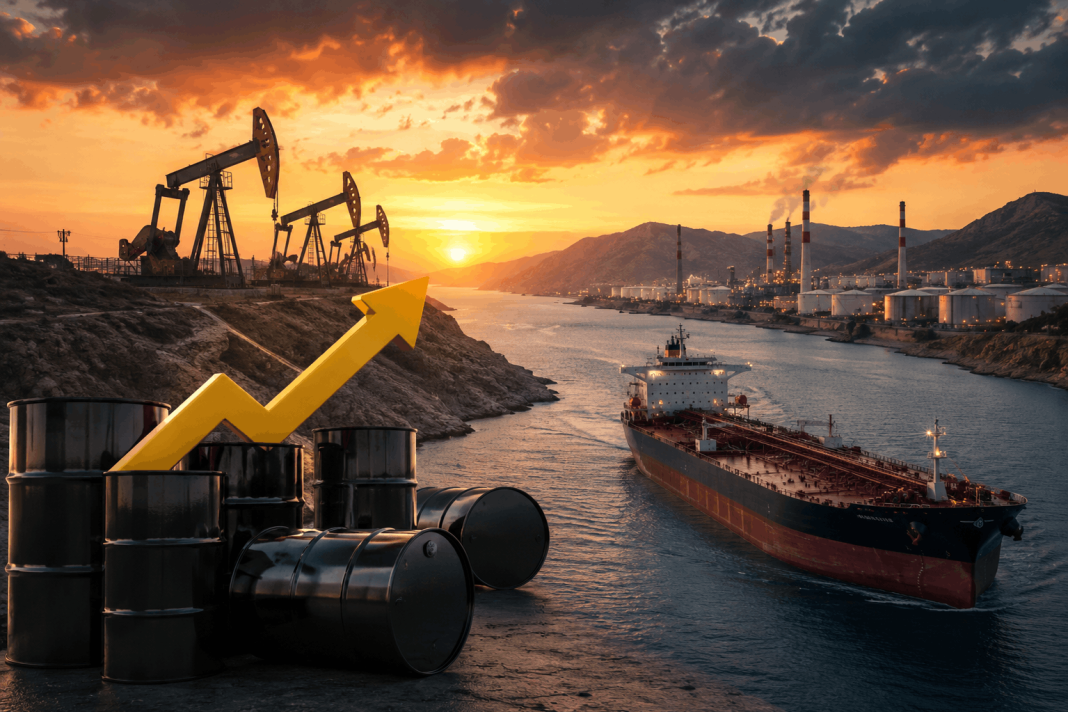
Rising Oil Prices Surge as US-Iran Tensions Escalate Again
Rising Oil Prices are back in focus after renewed tensions between the United States and Iran unsettled global energy markets. Fresh military action, tighter sanctions, and concerns over shipping routes have pushed crude oil higher, leaving investors, businesses, and consumers watching every new development. The latest surge highlights how quickly geopolitical events can influence energy costs worldwide.
Brent crude climbed more than 3% during early trading, reaching roughly $76 per barrel after recovering from lower levels seen only days earlier. Meanwhile, West Texas Intermediate (WTI) crude also posted solid gains as traders reacted to growing fears over potential supply disruptions.
Rising Oil Prices Trigger Fresh Supply Concerns
The latest market rally began after reports of attacks on several commercial tankers operating near the Strait of Hormuz. This narrow shipping lane remains one of the world’s most important energy corridors, carrying nearly one-fifth of globally traded crude oil.
Whenever security concerns emerge in the region, markets respond immediately. Even limited disruptions can reduce confidence, increase shipping costs, and create uncertainty for energy buyers worldwide.
Insurance premiums for vessels operating through the Gulf have already increased, while shipping companies continue reviewing their routes to reduce operational risks.
Rising Oil Prices Follow Renewed US-Iran Actions
The situation intensified after the United States launched fresh military strikes targeting Iranian assets while also removing a temporary waiver that had allowed limited Iranian oil exports under specific conditions.
These actions came shortly after earlier diplomatic efforts had reduced regional tensions. However, the renewed military response has once again raised questions about stability across the Middle East.
Although officials stated that the objective was to safeguard international shipping and regional security, financial markets viewed the developments as another potential threat to global oil supplies.
Rising Oil Prices Increase Costs for Consumers
Higher crude prices rarely stay confined to financial markets. They eventually reach households through higher fuel prices, transportation costs, and increased prices for everyday goods.
When diesel and gasoline become more expensive, businesses often pass those costs to consumers. Delivery services, manufacturers, airlines, and logistics companies all face higher operating expenses during periods of elevated energy prices.
For households already managing inflation, another increase in fuel and utility bills can place additional pressure on monthly budgets.
Rising Oil Prices Shake Global Financial Markets
The geopolitical uncertainty quickly spread beyond energy markets. Several Asian stock markets moved lower as investors shifted toward safer assets.
Technology stocks, despite reporting encouraging earnings, also experienced selling pressure as broader market sentiment weakened. Investors generally become more cautious whenever geopolitical conflicts threaten global economic stability.
Commodity markets experienced increased volatility, with traders adjusting positions based on expectations of future supply disruptions.
Rising Oil Prices Disrupt Global Shipping
Shipping companies operating near the Strait of Hormuz have responded carefully to the changing security environment.
Some oil and liquefied natural gas tankers temporarily altered their routes or delayed voyages while monitoring regional developments. Others continued through the waterway but under enhanced security measures.
Although the strait remains open, uncertainty alone increases freight charges, insurance costs, and delivery times. These higher transportation expenses often ripple throughout global supply chains.
Rising Oil Prices Complicate Inflation Outlook
Central banks closely monitor energy prices because oil remains one of the largest contributors to inflation.
If crude continues climbing, policymakers may face additional challenges in balancing economic growth with inflation control. Higher energy costs can slow consumer spending while simultaneously pushing prices higher across multiple sectors.
Investors are now watching upcoming economic reports, including inflation data and statements from the US Federal Reserve, for clues about future interest rate decisions.
Rising Oil Prices Depend on Future Diplomatic Efforts
Energy analysts remain divided about where prices will move next.
Some believe continued military tensions could push Brent crude significantly higher if shipping disruptions worsen. Others argue that prices could retreat quickly should diplomatic negotiations resume and supply concerns ease.
History shows that oil markets often react sharply to geopolitical headlines before stabilizing once uncertainty begins to fade.
Additional production from other major oil-exporting nations could also help offset potential supply shortages if disruptions remain limited.
Rising Oil Prices Encourage Long-Term Energy Changes
Recent events once again demonstrate why many countries continue investing in energy diversification.
Governments are expanding renewable energy projects, strengthening domestic production, and improving energy security to reduce dependence on vulnerable international supply routes.
Businesses are also investing in greater fuel efficiency while exploring alternative energy technologies that can reduce exposure to future oil price shocks.
Although these transitions require significant investment, periods of geopolitical instability often accelerate long-term energy planning.
Rising Oil Prices Create Winners and Losers
Oil-exporting countries generally benefit from stronger crude prices through higher export revenues and improved government income.
However, oil-importing nations face increased import costs, larger trade deficits, and additional inflationary pressures. Industries such as aviation, manufacturing, agriculture, and transportation often experience higher operating expenses that eventually affect consumers.
Financial markets continue balancing these competing economic effects while monitoring every update from the Middle East.
Rising Oil Prices: What Consumers Can Do
Although global events remain outside individual control, consumers can reduce the impact of higher energy costs by taking practical steps:
- Drive efficiently to reduce fuel consumption.
- Compare fuel prices before filling up.
- Review home energy plans for better rates.
- Maintain vehicles regularly for improved fuel economy.
- Follow trusted financial and energy news for market updates.
Small savings become increasingly valuable during periods of elevated fuel and energy prices.
Final Thoughts on Rising Oil Prices
The latest increase in crude oil demonstrates how quickly geopolitical events can reshape global markets. Military actions, sanctions, and uncertainty surrounding key shipping routes continue influencing oil prices, inflation, transportation, and consumer spending across the world.
While energy markets remain highly sensitive to developments between the United States and Iran, future diplomatic progress could help stabilize prices. Until then, businesses, investors, and households should expect continued volatility as markets respond to each new headline.

Nuwan Wackwella is a digital creator passionate about technology, creativity, and sharing inspiring moments from everyday life.