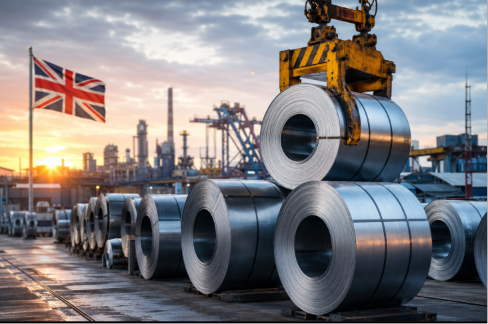
Steel Import Quotas are at the center of a major UK trade policy change designed to strengthen the domestic steel industry. From July 1, 2026, the government will reduce tariff-free steel imports by 51% to limit the impact of low-cost overseas steel, particularly from China. The move aims to support British manufacturers, safeguard thousands of jobs, and create fairer competition for local producers.
The announcement comes as steelmakers continue to face pressure from global oversupply and falling prices. By tightening import limits and increasing tariffs on steel exceeding the quota, the government hopes to give UK producers more room to compete while maintaining supply chain stability. UK Government Steel Trade Measures
Why Steel Import Quotas Are Changing
The UK government believes global steel markets have become unbalanced due to significant overproduction. China remains the world’s largest steel producer and continues to manufacture far more steel than its domestic market requires. Much of this excess supply is exported at lower prices, placing pressure on producers worldwide.
According to OECD estimates, global steel production reaches almost 2 billion tonnes each year, while excess capacity stands at around 600 million tonnes. By comparison, the UK produces only around 3 million tonnes annually, making it difficult for domestic manufacturers to compete with heavily discounted imports.
The government says the updated safeguards are needed because previous post-Brexit measures are ending. The new system replaces those protections with stricter limits that better reflect current market conditions.
How Steel Import Quotas Will Work
Beginning on July 1, 2026, the UK’s tariff-free allowance for imported steel will fall by 51%, leaving approximately 3.2 million tonnes eligible to enter without additional duties.
Imports exceeding this allowance will face a 50% tariff, double the previous rate. Officials believe the higher tariff will discourage excessive imports while encouraging buyers to source more steel from UK producers whenever possible.
The revised system is slightly less restrictive than the government’s original proposal, which suggested a 60% reduction. After consultations with manufacturers and trading partners, ministers opted for a more balanced approach.
Most of the remaining tariff-free allocation will continue to be available for steel imported from the European Union, reflecting the close relationship between UK and EU manufacturing supply chains.
Steel Import Quotas Support British Steelmakers
The UK’s steel industry has welcomed stronger protections after warning that cheap imports threatened the long-term future of domestic production.
Industry leaders have argued that many British plants struggle to compete with imported products sold at significantly lower prices. While modernisation and investment remain important, many businesses believe trade safeguards are necessary until global market conditions improve.
The government says the updated measures are designed to protect local production without creating unnecessary disruption for manufacturers that rely on imported materials.
Some steel products will remain exempt from the new tariffs. Eleven specialist categories have been excluded because UK manufacturers cannot currently produce sufficient quantities to meet domestic demand.
These exemptions are intended to prevent shortages while allowing businesses to continue operating efficiently.
How Businesses Could Be Affected
Manufacturers that depend on imported steel will need to monitor quota availability carefully. Once the annual allocation is filled, additional imports will become significantly more expensive because of the new 50% tariff.
Industries including construction, automotive manufacturing, engineering, household appliances, and infrastructure projects could see higher material costs if import volumes exceed the available quota.
However, UK steel producers may benefit from increased domestic demand as buyers look for local alternatives. Higher domestic sales could support investment, improve production levels, and help preserve skilled manufacturing jobs across the country.
Businesses are expected to review procurement strategies to minimise additional costs while maintaining reliable supply chains. World Trade Organization (WTO)
Steel Import Quotas Reflect Global Trade Trends
The UK’s decision follows similar actions by several major economies seeking to protect their steel industries from global overcapacity.
The European Union is introducing comparable safeguard measures, and both sides have worked together through discussions held under World Trade Organization rules to align their approaches where possible.
Demand for steel inside China has weakened due to slower construction activity and reduced industrial growth. As domestic consumption falls, exporters increasingly target overseas markets, adding further pressure to producers in Europe and the UK.
Countries including the United States have also introduced protective trade measures in recent years to shield strategic manufacturing sectors from unfair competition.
What the New Rules Mean for Consumers
Most consumers are unlikely to notice immediate changes, but higher import costs could gradually affect the price of products containing steel.
Construction materials, household appliances, vehicles, and some engineering products may become more expensive if manufacturers face increased input costs.
At the same time, stronger domestic production could improve long-term supply security, support employment, and encourage further investment in modern steelmaking technologies. UK Parliament Debates British Steel Crisis and Nationalisation
Government ministers argue that protecting the industry today will help secure future economic resilience while supporting the transition toward lower-carbon steel production.
Steel Import Quotas and the Future of UK Manufacturing
The government plans to review the new safeguard measures after 12 months to assess their effectiveness. Officials will continue consulting manufacturers, importers, and industry groups before deciding whether further adjustments are necessary.
Long-term success will depend on more than import controls alone. Continued investment in cleaner production methods, improved efficiency, workforce development, and innovation will all play important roles in ensuring the UK steel sector remains competitive.
Although challenges remain in the global marketplace, the updated trade measures provide domestic producers with greater protection during a period of significant international uncertainty.
As the new rules take effect in July 2026, businesses across the supply chain will closely monitor how the changes influence prices, investment, production, and employment. The government’s latest reforms represent one of the UK’s most significant steel trade policy changes since leaving the European Union and demonstrate its commitment to strengthening an industry that remains vital to the country’s manufacturing economy.

Hello there! I’m Online Media & PR Strategist at BusinessFits | Passionate Journalist, Blogger, and SEO Specialist