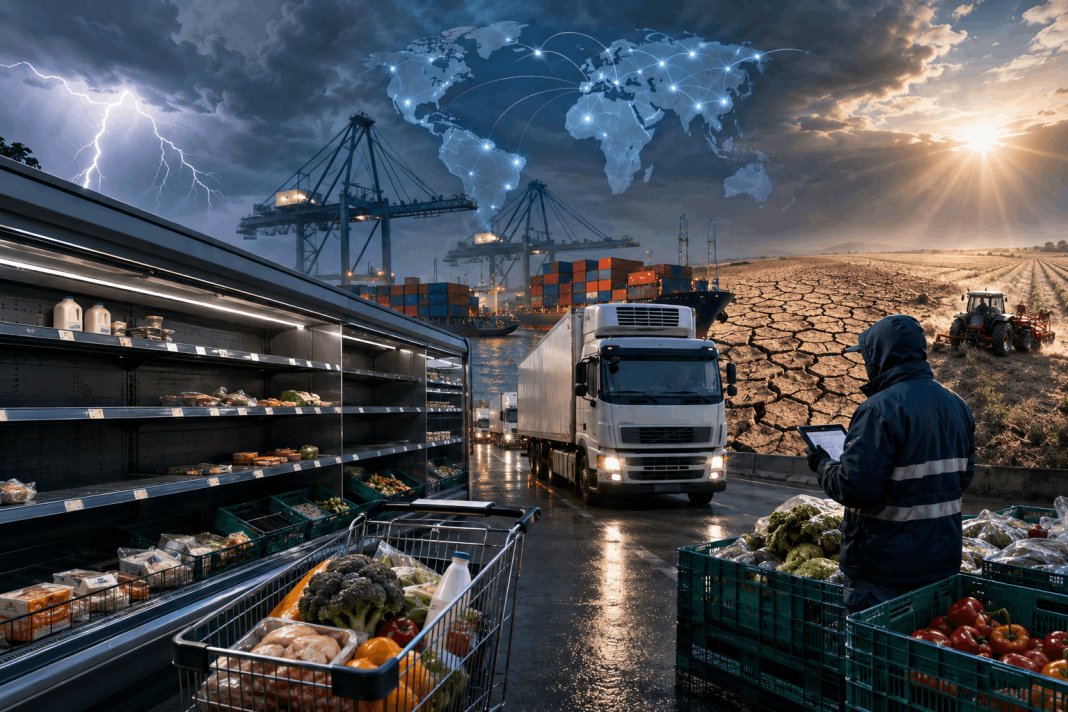
Food Supply Crisis: Why Britain Must Protect Cold Chains Now
Food Supply Crisis Threatens UK Food Security
The growing Food Supply Crisis facing Britain is becoming impossible to ignore. Empty supermarket shelves, rising prices, and supply disruptions are no longer distant possibilities. Industry experts, food security specialists, and logistics leaders are warning that the UK’s food system faces increasing pressure from climate change, cyber attacks, energy disruptions, and global instability.
Many of these risks are linked to the country’s cold chain infrastructure. This network keeps food chilled and frozen as it moves from farms and factories to warehouses, distribution centres, and supermarket shelves. While consumers rarely notice it, the cold chain plays a critical role in ensuring food remains safe, available, and affordable.
Experts now argue that protecting this infrastructure should be treated as a national security priority rather than a routine business concern.
Why the Food Supply Crisis Is Becoming More Serious
Warnings from industry leaders have become increasingly urgent. The Cold Chain Federation (CCF), which represents businesses involved in temperature-controlled logistics, has described food resilience as an immediate national priority.
According to the federation, Britain faces a combination of threats that could disrupt food availability. Fuel shortages, extreme weather events, international conflicts, labour shortages, and cyber attacks all have the potential to interrupt food distribution networks.
Unlike previous decades, modern supply chains operate with little spare capacity. Businesses have focused on efficiency and cost reduction. While this improves productivity, it also leaves less room to absorb unexpected disruptions.
As a result, a single major event can quickly create shortages across multiple regions.
How Cold Chains Support the Food Supply Crisis Response
Almost half of all food and drink consumed in the UK relies on temperature-controlled storage and transportation. This includes meat, seafood, dairy products, frozen foods, fresh vegetables, ready meals, and pharmaceuticals.
The sector contributes around £50 billion to the economy and supports thousands of jobs. Yet many experts believe it has not received enough attention in national resilience planning.
Cold storage facilities, refrigerated transport fleets, and distribution hubs remain vulnerable to power outages and fuel interruptions. If these systems fail, large quantities of food can spoil within hours.
Industry leaders argue that recognising these facilities as critical national infrastructure would improve protection, funding, and emergency planning.
Food Supply Crisis Risks Linked to Import Dependence
Britain imports more than one-third of its food. Much of that food enters the country through a limited number of major ports.
This concentration creates a significant vulnerability. Any disruption caused by industrial action, cyber attacks, border delays, severe weather, or geopolitical tensions can slow deliveries and reduce availability.
Recent global events have highlighted how quickly supply chains can be affected. Shipping disruptions, conflicts affecting trade routes, and restrictions on fertiliser exports have all demonstrated the fragility of international food systems.
Because the UK relies heavily on imported food products, these global challenges can quickly affect domestic markets.
Recent Shortages Reveal the Reality of a Food Supply Crisis
The risks are not theoretical. British shoppers have already experienced food shortages in recent years.
During 2023, poor weather conditions across Europe and North Africa reduced harvests of tomatoes, cucumbers, peppers, and other fresh produce. Several supermarkets introduced purchasing limits as supplies tightened.
These shortages provided a warning about what larger disruptions could look like. While the situation was temporary, it showed how quickly supply problems can affect consumers.
When shortages occur, prices often rise sharply. Lower-income households are typically affected first and most severely. Food banks also experience increased demand during periods of limited availability.
Cybersecurity and Energy Concerns Behind the Food Supply Crisis
Cyber threats are becoming a major concern for food logistics operators. Warehouses, transport companies, and distribution centres increasingly depend on digital systems for inventory management, route planning, and operational control.
A successful cyber attack could halt deliveries, disrupt communications, or disable critical infrastructure.
At the same time, energy security remains a serious challenge. Refrigerated warehouses require constant electricity to maintain safe temperatures. Power interruptions could result in massive food losses within a short period.
Fuel shortages would create additional problems by restricting transportation and preventing goods from reaching retailers.
Experts argue that these risks justify stronger government support and more comprehensive emergency planning.
What Experts Recommend to Prevent a Food Supply Crisis
The Cold Chain Federation has outlined several recommendations designed to improve resilience across the food system.
Key proposals include:
- Recognising cold chain facilities as critical national infrastructure.
- Providing permanent essential-worker status for cold chain employees.
- Improving emergency warning and response systems.
- Expanding strategic food storage capacity.
- Strengthening cybersecurity protection.
- Guaranteeing priority energy access during national emergencies.
- Enhancing cooperation between government agencies and industry groups.
Supporters believe these measures would help Britain respond more effectively to future disruptions while reducing the likelihood of widespread shortages.
Government Plans and the Food Supply Crisis Debate
Government officials maintain that food security remains a priority. Ministers point to investments in agricultural innovation, climate-resilient crops, and domestic food production.
Efforts are also being made to strengthen sectors such as horticulture and poultry farming. Increasing domestic production could reduce dependence on imports and improve long-term resilience.
However, critics argue that existing initiatives do not fully address the specific vulnerabilities facing cold chain operations. They believe a more coordinated national strategy is required.
Without stronger planning, Britain could remain exposed to future shocks.
The Human Impact of a Food Supply Crisis
Food shortages affect more than supermarket shelves. They influence public health, economic stability, and social wellbeing.
Families already struggling with living costs are often hit hardest when prices rise. Reduced access to nutritious food can have long-term health consequences, particularly for children and vulnerable adults.
Communities may also experience increased pressure on food banks and support services. In severe situations, prolonged shortages can damage public confidence and create wider economic disruption.
Protecting food systems is therefore about more than logistics. It is about safeguarding households across the country.
Building Resilience Against the Food Supply Crisis
The UK’s food network has delivered remarkable reliability for decades. However, changing global conditions are creating new risks that cannot be ignored.
Climate change, cyber threats, geopolitical tensions, and infrastructure vulnerabilities are reshaping the food security landscape. Industry experts believe stronger cold chain protections will play a vital role in addressing these challenges.
By investing in resilience today, policymakers can reduce future risks and strengthen national preparedness. The choice is simple: act now to build a more secure food system or wait until the next disruption exposes existing weaknesses.
The growing Food Supply Crisis should serve as a warning that food security deserves the same level of attention as energy, transport, and communications infrastructure.

Nuwan Wackwella is a digital creator passionate about technology, creativity, and sharing inspiring moments from everyday life.