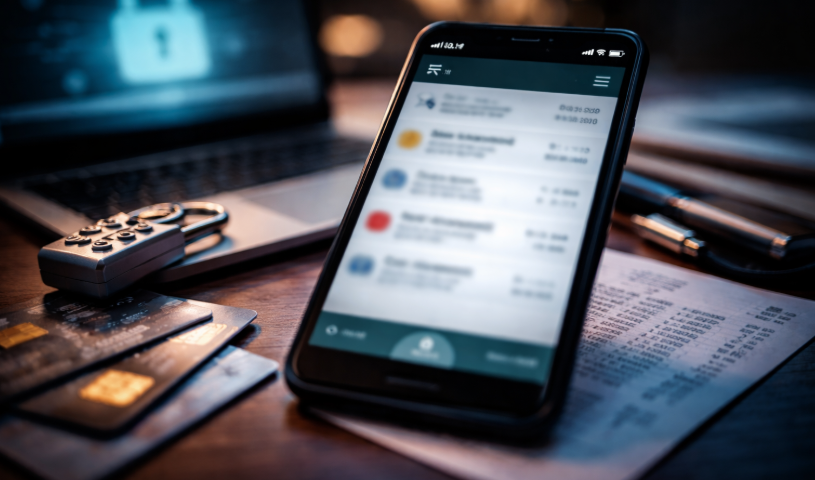
The Lloyds data breach shocked customers when a mobile banking glitch briefly exposed sensitive financial details to other users. On 12 March, a faulty update caused account data including payments and personal identifiers to appear on the wrong screens.
This incident affected up to 447,936 users across Lloyds Banking Group, Halifax, and Bank of Scotland apps. While the exposure lasted only seconds, the scale of the issue raised serious concerns about digital banking security.
The Lloyds data breach highlights how even minor technical errors can create major privacy risks in today’s app-driven banking environment.
Lloyds Data Breach Causes and Technical Failure
The root of the Lloyds data breach was a software defect introduced during a routine overnight update. This update unintentionally allowed overlapping user sessions, meaning one customer could momentarily see another’s account data.
To experience the glitch, users had to access the app at the exact same moment as someone else. Despite this narrow window, thousands encountered the issue.
Lloyds responded quickly by notifying regulators, including the Financial Conduct Authority and the Information Commissioner’s Office within required timeframes.
This technical failure shows how even well-tested updates can produce unexpected vulnerabilities.
Lloyds Data Breach: What Information Was Exposed
During the Lloyds data breach, affected users reported seeing:
- Full names
- Account numbers
- Payment references
- National Insurance numbers
In some cases, even non-customers had transaction details briefly displayed. While the exposure was not permanent, the sensitivity of the data made the incident particularly alarming.
Importantly, no hacking or external cyberattack occurred. The issue was purely internal—caused by a system display error rather than a security breach.
Lloyds Data Breach Response and Immediate Actions
Following the Lloyds data breach, the bank acted swiftly to contain the issue. The faulty update was fixed within hours, and monitoring systems were activated to detect any misuse.
Jasjyot Singh, head of consumer relationships, urged customers to delete any screenshots or shared data immediately. He confirmed that fraud detection systems showed no signs of criminal exploitation.
The bank also committed to transparency by providing updates to regulators and government committees. This proactive response helped reduce further risk and maintain some level of customer confidence.
Lloyds Data Breach Compensation and Customer Support
As part of its response, Lloyds issued compensation payments totaling £139,000 to over 3,600 affected customers.
These payments were made as goodwill gestures to address distress and inconvenience caused by the Lloyds data breach. Crucially, the bank confirmed that:
- No customers lost money
- No fraudulent transactions were linked to the incident
While compensation cannot fully restore trust, it signals accountability and responsibility from the bank.
Lloyds Data Breach Impact on Digital Banking Trust
The Lloyds data breach raises broader concerns about the safety of digital banking. As physical branches continue to close, more customers rely entirely on mobile apps for financial management.
This shift increases the stakes. Even brief technical errors can expose large volumes of sensitive data.
Meg Hillier, chair of the UK Treasury Committee, emphasized that customers place significant trust in banking apps trust that must be protected with robust systems and testing.
The incident serves as a reminder that convenience and security must evolve together.
What Customers Should Do
If you were affected by the Lloyds data breach, or want to stay safe, consider these steps:
- Check your banking app for unusual activity
- Change your passwords as a precaution
- Enable two-factor authentication
- Avoid saving or sharing sensitive screenshots
- Report suspicious activity to your bank immediately
For official guidance, visit: Financial Conduct Authority consumer advice page and Information Commissioner’s Office for data protection rights.
You can also explore internal resources like: UK Bank App Glitch Exposes Customer Data in Banking Apps.
Lessons Learned from the Lloyds Data Breach
The Lloyds data breach underscores the importance of:
- Rigorous software testing before updates
- Real-time monitoring of system anomalies
- Transparent communication with customers
- Strong regulatory compliance
Lloyds has stated it will review its update processes and implement improvements to prevent similar incidents in the future.
For a major financial institution, even a momentary glitch can have lasting reputational consequences.
Future Outlook After the Lloyds Data Breach
Looking ahead, the Lloyds data breach may influence how banks approach app development and security. Increased scrutiny from regulators and customers alike will likely push for:
- More resilient systems
- Enhanced privacy safeguards
- Faster incident response protocols
As digital banking continues to grow, institutions must balance innovation with reliability.
Conclusion
The Lloyds data breach affected hundreds of thousands of users and exposed how fragile digital systems can be under certain conditions.
Although no financial losses occurred, the incident highlights a critical truth: trust in banking depends not just on security from hackers, but also on flawless internal systems.
Lloyds acted quickly and responsibly, but the event serves as a warning for the entire banking industry.
Customers expect speed, convenience, and above all security. Delivering all three consistently remains the biggest challenge for modern banks.

Hello there! I’m Online Media & PR Strategist at BusinessFits | Passionate Journalist, Blogger, and SEO Specialist