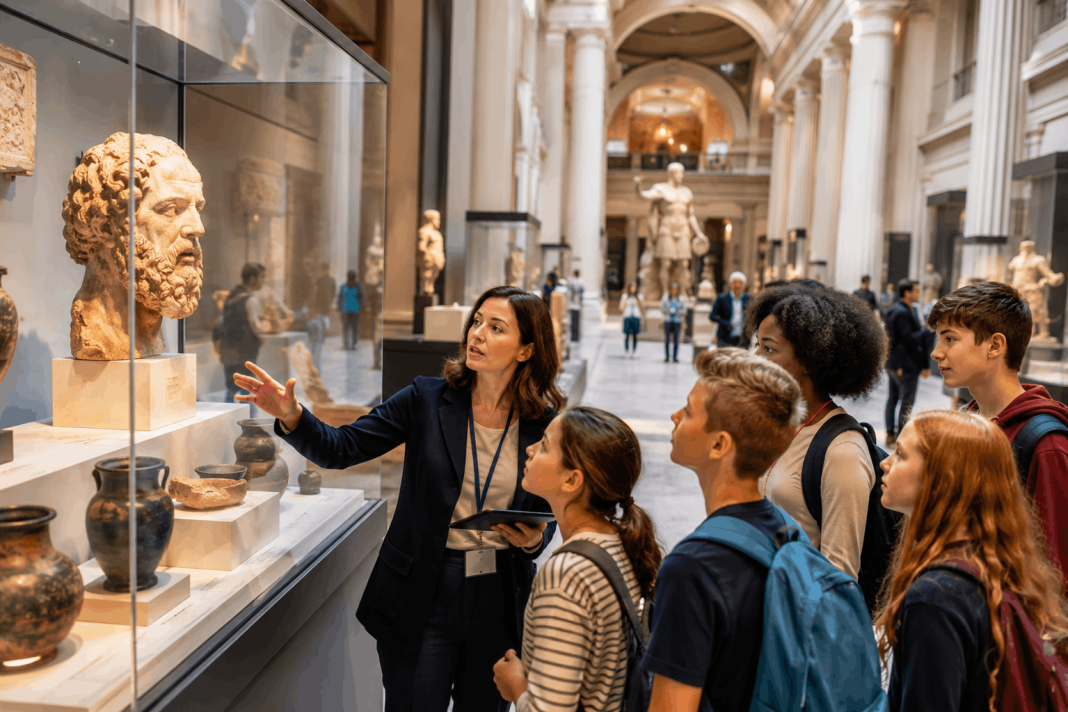
Museum Education Programs Growth and Cultural Challenges
Museum Education Programs are transforming how people learn about history, culture, science, and art. Around the world, museums are becoming active educational spaces rather than places that simply display artifacts. As demand for interactive learning rises, museums are expanding their educational offerings through technology, partnerships, and community engagement.
At the same time, cultural institutions face growing scrutiny over how they present historical topics. Recent debate surrounding the British Museum has highlighted the challenges museums encounter when balancing public engagement, historical accuracy, and open discussion.
This article explores the rapid growth of the museum learning sector, emerging trends, and what recent controversies reveal about the future of cultural education.
Museum Education Programs and Their Expanding Role
Museum Education Programs have evolved significantly over the past decade. Traditional guided tours have been joined by workshops, virtual learning sessions, educational games, and interactive exhibitions.
First, museums provide hands-on experiences that help visitors connect with complex subjects. Students can explore ancient civilizations, scientific discoveries, and artistic movements through engaging activities. This approach often creates stronger learning outcomes than classroom instruction alone.
Next, museums increasingly support formal education systems. Schools collaborate with museums to enhance lessons and provide real-world learning opportunities. These partnerships help students develop critical thinking skills while making education more engaging.
Finally, museums serve learners of all ages. From children attending workshops to adults participating in lectures, educational initiatives encourage lifelong learning and cultural awareness.
Museum Education Programs Market Growth Trends
The global market for Museum Education Programs continues to experience impressive growth. Industry forecasts suggest strong expansion through 2032 as educational institutions, governments, and private organizations invest in cultural learning initiatives.
Several factors contribute to this growth.
Rising Demand for Experiential Learning in Museum Education Programs
Modern learners increasingly prefer experiences over passive instruction. Interactive exhibits, live demonstrations, and hands-on workshops create memorable educational experiences that attract diverse audiences.
Museums are responding by designing exhibits that encourage participation rather than observation. Visitors can interact with digital displays, simulations, and educational activities that make learning more enjoyable.
Digital Innovation Driving Museum Education Programs
Technology has become a major growth driver across the museum sector. Virtual tours, augmented reality applications, and online learning platforms allow museums to reach audiences beyond their physical locations.
Digital learning became especially important during recent years when remote access gained popularity. Today, many museums offer hybrid experiences that combine physical visits with online resources.
These innovations help institutions connect with international audiences while making educational content accessible to people who cannot visit in person.
Community Engagement Through Museum Education Programs
Museums increasingly focus on serving local communities through outreach initiatives. Educational events, public lectures, and cultural programs help strengthen relationships between institutions and the communities they serve.
Many museums now provide multilingual content and specialized programs designed to reach diverse audiences. This broader accessibility contributes to growing participation rates and stronger public support.
Museum Education Programs and the British Museum Controversy
The British Museum remains one of the world’s most influential cultural institutions. Its educational initiatives attract millions of visitors and learners annually.
However, recent events involving a lecture about ancient Israel and Judah sparked widespread discussion. The museum postponed the lecture during Jewish Culture Month after concerns emerged regarding potential protests.
The decision generated significant debate among historians, educators, and cultural commentators.
Free Speech Questions in Museum Education Programs
Critics argued that postponing the event raised concerns about academic freedom and open discussion. Many believe museums should provide spaces where difficult historical topics can be explored respectfully and openly.
Supporters of the lecture emphasized that educational institutions have a responsibility to present historical evidence regardless of political disagreements. They argued that allowing outside pressure to influence programming could set a troubling precedent.
The lecture was later rescheduled and made available through livestream access, helping ensure broader participation.
Historical Representation and Museum Education Programs
The controversy also highlighted broader questions about historical representation. Museums play an important role in shaping public understanding of history. As a result, decisions about exhibitions, lectures, and educational content often attract close attention.
Educational leaders increasingly stress the importance of presenting diverse perspectives while maintaining factual accuracy. Achieving this balance remains one of the biggest challenges facing cultural institutions today.
Technology and Innovation in Museum Education Programs
Technology continues to reshape museum learning experiences.
Artificial intelligence, augmented reality, and virtual reality are creating new ways for visitors to interact with historical content. Instead of reading information panels, visitors can explore immersive environments that recreate historical settings.
Gamification is another growing trend. Educational games encourage participation while helping learners retain information more effectively.
Museums are also using data analytics to better understand visitor interests and improve educational offerings. These tools help institutions create personalized learning experiences that meet the needs of different audiences.
As technology advances, museums are likely to develop even more innovative approaches to cultural education.
Challenges Facing Museum Education Programs
Despite strong growth prospects, museums continue to face several important challenges.
Funding remains a concern for many institutions. Educational initiatives often require significant investment in technology, staffing, and content development. Smaller museums may struggle to secure the resources needed for expansion.
Accessibility also remains a priority. While digital tools increase reach, not everyone has equal access to technology. Museums must ensure educational opportunities remain available to all communities.
Measuring educational impact presents another challenge. Institutions often find it difficult to evaluate how effectively programs improve knowledge, critical thinking, and long-term engagement.
The British Museum debate demonstrates an additional challenge: managing sensitive topics while maintaining educational integrity. Museums must navigate complex social and political issues without compromising their mission to educate the public.
The Future of Museum Education Programs
The future of Museum Education Programs appears promising. Continued investment in digital technology, community engagement, and educational innovation is expected to support ongoing growth.
Artificial intelligence may help personalize learning pathways for visitors. Virtual experiences could expand access to global audiences. Partnerships between museums and educational institutions are also likely to increase.
At the same time, museums must continue protecting open inquiry and historical accuracy. Public trust depends on institutions presenting information fairly, transparently, and responsibly.
As cultural organizations adapt to changing expectations, educational programs will remain central to their mission.
Why Museum Education Programs Matter More Than Ever
Museum Education Programs help connect people with history, culture, science, and shared human experiences. They encourage curiosity, strengthen critical thinking, and support lifelong learning.
The sector’s rapid growth demonstrates strong public demand for meaningful educational experiences. However, recent debates remind us that museums also carry significant responsibilities.
Success will depend on balancing innovation with integrity, embracing technology while preserving accessibility, and encouraging open discussion while maintaining historical accuracy.
Museums have long served as guardians of knowledge. Their educational programs will continue shaping how future generations understand the world around them.

Nuwan Wackwella is a digital creator passionate about technology, creativity, and sharing inspiring moments from everyday life.