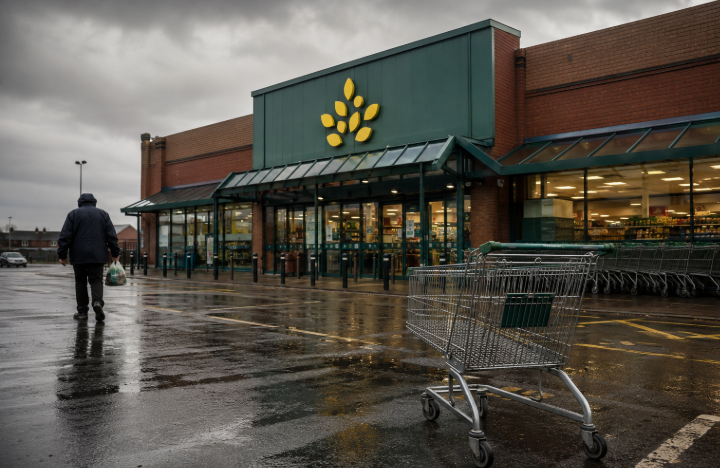
Morrisons Store Closures are creating concern across the UK as the supermarket giant prepares to shut 100 underperforming convenience stores. The decision reflects growing pressure on retailers dealing with rising wages, inflation, and changing shopping habits. Thousands of shoppers and workers now face uncertainty as one of Britain’s largest supermarket chains restructures its business.
The closures mainly affect smaller convenience outlets acquired during the 2022 McColl’s rescue deal. Morrisons says many of these locations continued to lose money despite investment and operational changes. Company leaders describe the move as difficult but necessary to protect the wider business.
Retail analysts believe this decision highlights broader challenges facing the UK high street. Rising operating costs, fierce competition, and weaker consumer spending continue to squeeze supermarket profit margins.
Morrisons Store Closures Linked to Rising Costs
The biggest reason behind the Morrisons Store Closures is the growing cost of running physical stores. Supermarkets across Britain now face higher National Insurance contributions and increased minimum wage requirements.
Energy prices and supply chain costs also remain elevated. Food retailers must absorb many of these increases while trying to keep prices competitive for customers. This creates a difficult balancing act.
Morrisons says some stores simply became unsustainable. Many convenience locations struggled to attract enough customers while operating expenses kept climbing.
Industry groups have warned that higher business costs could lead to further retail cutbacks in 2026. Several chains already reduced staffing levels, store openings, and investment plans over the past year.
Morrisons Store Closures Impact Staff and Communities
The human cost of the Morrisons Store Closures could be significant. Hundreds of employees may lose their jobs if alternative roles cannot be found within the company.
Morrisons says it will begin consultations with affected workers soon. The supermarket also promises to explore redeployment opportunities where possible. However, retail unions fear many workers may still face redundancy.
Smaller towns could feel the biggest impact. Convenience stores often provide easy access to groceries for elderly residents and families without transport. Losing local shops may force people to travel farther for everyday essentials.
Retail job losses also affect surrounding businesses. Nearby cafés, newsagents, and local services often depend on supermarket foot traffic. When stores close, local economies can weaken quickly.
Support services for affected staff include: Acas Employment Advice and UK Government Job Support.
Morrisons Store Closures Follow Earlier Cutbacks
These latest Morrisons Store Closures are not the company’s first major cost-saving measure. Over the past year, the supermarket already shut dozens of cafés and convenience locations.
Earlier restructuring plans also placed around 200 head office jobs at risk. Together, these moves show Morrisons is aggressively cutting costs to improve long-term profitability.
The supermarket sector has become increasingly competitive. Discounters like Aldi and Lidl continue gaining market share by offering lower prices. Traditional supermarkets must now compete on both price and convenience.
Online grocery shopping also changes customer behavior. Many consumers prefer home delivery or click-and-collect services instead of visiting local convenience stores.
This shift reduces foot traffic in smaller outlets, making them harder to sustain financially.
Morrisons Store Closures Contrast With Expansion Plans
Interestingly, the Morrisons Store Closures come alongside ambitious expansion plans. The company still believes convenience retail has strong long-term potential in the right locations.
Morrisons operates roughly 1,700 convenience stores across the UK. Last year alone, it opened more than 120 new franchise sites. The supermarket plans to continue expanding through franchising in 2026.
This strategy allows Morrisons to reduce direct operational risks while growing its brand presence. Franchise partners manage daily operations, helping the company lower costs.
Executives say future investment will focus on profitable regions and modern store formats. The goal is to strengthen successful locations rather than continue supporting struggling outlets.
Retail experts say this reflects a wider trend across the supermarket industry. Businesses increasingly prioritize efficiency, automation, and targeted expansion.
Morrisons Store Closures Reflect Wider UK Retail Pressure
The broader retail industry faces major challenges beyond the Morrisons Store Closures. Inflation continues affecting consumer confidence, even as headline price growth slows. UK Inflation Outlook Slows as Costs Keep Rising.
Food inflation recently climbed again, putting extra pressure on household budgets. Many shoppers now buy fewer items, switch to discount brands, or visit cheaper stores.
At the same time, retailers face:
- Higher staffing expenses
- Increased packaging costs
- Supply chain disruption
- Rising business taxes
- Expensive energy bills
These pressures reduce profitability across the sector.
Some retail leaders argue government policy changes unintentionally increased pressure on employers. Others believe businesses must modernize faster to survive changing market conditions.
Either way, the UK high street remains under strain.
Helpful retail industry resources: Office for National Statistics Retail Data and Retail Gazette.
Morrisons Store Closures Could Change Shopping Habits
For customers, the Morrisons Store Closures may change how people shop locally. Many convenience stores serve as quick-stop locations for groceries, snacks, and household essentials.
If nearby branches disappear, shoppers may turn to:
- Larger supermarkets
- Discount chains
- Online grocery services
- Independent convenience stores
Consumer habits already shifted significantly since the pandemic. More people now combine online orders with occasional in-store visits. Convenience alone no longer guarantees success for smaller retail outlets.
Location quality matters more than ever. Stores in busy urban areas continue performing strongly, while weaker sites struggle to maintain customer numbers.
Morrisons Store Closures Highlight a Difficult Future
The latest Morrisons Store Closures show how difficult the retail environment has become in Britain. Supermarkets must carefully balance customer affordability, employee wages, and long-term profitability.
Here is year ago Morrisons Store Closures update; Jobs at Risk from Morrisons Store Closures in 2025.
Morrisons hopes shutting weak locations will help strengthen its overall business. The company believes focusing on profitable stores and franchise growth offers a more sustainable future.
Still, uncertainty remains for workers and communities affected by the closures.
The coming months may reveal whether other supermarket chains follow similar paths. As operating costs continue rising, more retailers could rethink their store networks and investment strategies.
For now, the story serves as another warning sign for the UK high street. Retail businesses must adapt quickly or risk falling behind in an increasingly competitive market.

Hello there! I’m Online Media & PR Strategist at BusinessFits | Passionate Journalist, Blogger, and SEO Specialist