Table of Contents
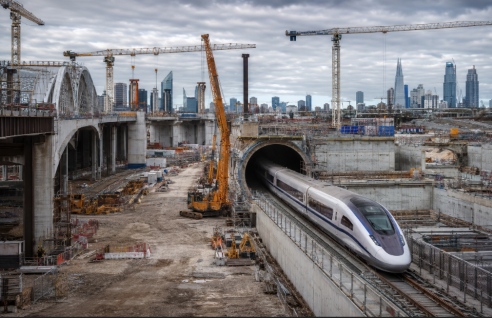
ToggleThe UK’s long-running high-speed rail project faces another major setback as HS2 project delays continue to push costs higher. The government now says the railway could cost as much as £102.7 billion, while the first trains may not run until between 2036 and 2039. What began as a flagship infrastructure investment has become one of Britain’s most controversial public projects.
Originally designed to connect London, Birmingham, Manchester, and Leeds with faster rail services, HS2 has faced years of political arguments, construction challenges, and financial overruns. Today, many taxpayers and business leaders question whether the benefits still justify the growing price tag.
Why HS2 Project Delays Keep Getting Worse
The latest update from the government paints a difficult picture. Transport Secretary Heidi Alexander told Parliament that the remaining London-to-Birmingham section alone could now cost between £87.7 billion and £102.7 billion in 2025 prices.
This represents a huge increase from the original 2012 estimate of £32.7 billion. At the same time, the opening timeline has slipped dramatically. Services between Old Oak Common and Birmingham Curzon Street may begin sometime between 2036 and 2039. Full services into London Euston are unlikely before 2040 to 2043.
The government also confirmed trains will operate at a lower top speed of 320 km/h instead of the planned 360 km/h. Officials say the reduction will lower testing, engineering, and maintenance costs.
Many observers believe these repeated setbacks have damaged public confidence. Critics argue that the project lacked realistic planning from the beginning.
How HS2 Project Delays Became So Expensive
Several problems contributed to the spiraling budget. Rising inflation explains part of the increase, but government reviews suggest deeper issues played a larger role.
The independent Lovegrove review found poor management practices, unrealistic budgeting, and weak oversight throughout different stages of construction. According to the report, project leaders often underestimated costs and failed to communicate risks early enough.
The report also criticized HS2 Ltd for operating with a “fortress mentality,” where concerns from engineers and officials were not properly addressed.
Construction itself has also become more complicated. Building tunnels, viaducts, and rail systems across heavily populated parts of England created technical challenges that were not fully understood during the early planning phase.
Meanwhile, political decisions added further disruption. The eastern route to Leeds and much of the Manchester extension were cancelled in attempts to reduce spending. Those changes forced redesigns and created uncertainty for contractors and local communities.
What HS2 Project Delays Mean for Taxpayers
British taxpayers have already contributed more than £44 billion toward HS2. Yet no complete high-speed passenger service currently operates.
Many voters now see the railway as an example of government waste. Public frustration has grown as households face higher living costs, rising taxes, and pressure on public services.
Still, ministers argue that cancelling the project would create even bigger financial problems. Government estimates suggest abandoning construction now could cost between £33 billion and £58 billion due to contract penalties, unfinished infrastructure, and compensation payments.
Because so much work is already underway, leaders believe completing the railway offers the least damaging option financially.
Supporters also argue the project could eventually improve rail capacity, reduce overcrowding, and support regional economic growth. Businesses in Birmingham and surrounding areas continue to back the scheme for its potential long-term transport benefits.
The Economic Impact of HS2 Project Delays
The broader economic impact remains heavily debated. Advocates say high-speed rail can improve productivity by connecting major cities more efficiently. Faster journeys may encourage investment, tourism, and job creation across the Midlands.
However, critics argue the economic case has weakened after the cancellation of northern extensions. Without direct routes to Manchester and Leeds, some experts believe the railway no longer delivers the transformational benefits originally promised.
There are also concerns about opportunity costs. Economists question whether the billions spent on HS2 could have delivered greater value through regional transport upgrades, hospitals, schools, or energy infrastructure.
Business groups remain divided. Some construction firms and engineering companies continue to benefit from large contracts tied to the project. Others worry ongoing uncertainty discourages private investment.
What Finished Rail Services Could Look Like After HS2 Project Delays
Even with the revised plan, HS2 would still create a new high-speed route between London and Birmingham. From there, trains would continue onto existing rail networks to reach cities further north.
The redevelopment of London Euston station remains one of the biggest unresolved challenges. Officials hope some private-sector funding could help complete the station upgrade.
Supporters say the final railway could still reduce congestion on existing lines and free up capacity for freight and regional commuter services. Faster travel times between major cities could also support business travel and tourism.
However, opponents argue Britain may end up with one of the world’s most expensive railways while receiving only part of the original vision.
Institute for Government Infrastructure Analysis
Lessons From Britain’s HS2 Project Delays
The HS2 story highlights the risks of managing large national infrastructure projects without clear cost controls and realistic timelines.
Infrastructure experts say future projects must improve early planning, transparency, and accountability. Governments also need stronger systems for identifying risks before budgets spiral out of control.
Some analysts compare HS2 to other troubled international megaprojects where political pressure encouraged overly optimistic forecasts. Once construction began, reversing course became extremely difficult.
The current government says it plans to reset the programme with stricter oversight and more realistic delivery targets. Mark Wild has said productivity improvements are already helping construction teams deliver better value.
Whether those reforms succeed will determine how history remembers HS2.
British Airways Ticket Prices Rise Amid £1.7bn Fuel Shock
The Future of HS2 Project Delays and UK Infrastructure
The future of British infrastructure policy may depend heavily on what happens next with HS2. Investors, contractors, and the public will closely watch whether the revised timetable can finally hold.
For now, construction continues across tunnels, bridges, and rail hubs despite mounting criticism. The government insists the project remains essential for long-term transport capacity and economic growth.
Yet public patience is wearing thin. After years of missed deadlines and rising costs, many people simply want proof that the railway can eventually deliver meaningful results.
Britain’s ability to complete major infrastructure efficiently now faces a major test. The success or failure of HS2 may shape public trust in future national projects for decades.

Hello there! I’m Online Media & PR Strategist at BusinessFits | Passionate Journalist, Blogger, and SEO Specialist