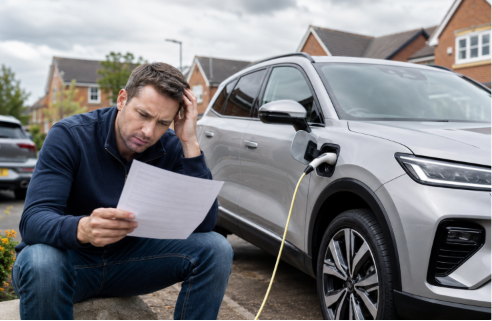
Chinese EV insurance problems are becoming a serious concern for UK motorists. Affordable electric and hybrid cars from Chinese brands attract buyers with modern features and competitive prices. However, many drivers discover a major obstacle after purchase: getting affordable insurance.
Brands such as BYD, XPeng, and Jaecoo continue expanding rapidly across the UK market. The popularity of the Jaecoo 7 especially shows how quickly consumer interest has grown. Yet insurers remain cautious about covering these newer models, leading to rejected applications and much higher premiums.
For many motorists, the low upfront purchase cost no longer tells the full ownership story.
Why Chinese EV Insurance Quotes Are So Expensive
The biggest issue behind rising Chinese EV insurance premiums is uncertainty. Insurance providers depend heavily on historical claims data when setting prices. Established brands from Europe, Japan, and Korea offer decades of repair and reliability records. New Chinese brands simply do not have that history yet.
Research by Carwow highlighted the scale of the problem. Five leading insurers reviewed quotes for a typical 27-year-old driver living in Hampshire. The study included vehicles such as the Jaecoo 7, XPeng G6, BYD Seal U, and Skywell BE11.
Several insurers declined cover altogether for certain vehicles. Only one provider offered insurance across every tested model. Others limited cover or refused quotations entirely.
The Jaecoo 7 proved especially difficult to insure. Average annual premiums reached more than £1,100. Comparable petrol-powered vehicles cost hundreds of pounds less to cover.
The same pattern appeared across other Chinese EV models. Drivers looking at the XPeng G6 or BYD Seal U also faced significantly higher premiums than owners of equivalent petrol SUVs.
Chinese EV Insurance Challenges and Repair Concerns
Another factor affecting Chinese EV insurance pricing is repair complexity. Electric vehicles already cost more to repair after accidents because of their batteries and advanced electronics. Chinese EV brands add another layer of uncertainty because replacement parts networks remain limited in the UK.
Insurers worry about:
- Long wait times for replacement components
- Limited approved repair centres
- Shortage of trained technicians
- Uncertain repair costs
- Sparse claims history
This combination makes risk calculations difficult.
Industry experts describe the situation as a “chicken and egg” problem. Insurers need more real-world claims data before lowering premiums. Yet buyers hesitate to purchase vehicles that are expensive or difficult to insure.
That slows the growth cycle for both manufacturers and insurance companies. Car Loan Compensation: FCA Faces Major Legal Battle.
Chinese EV Insurance Market Expands Despite Obstacles
Even with insurance challenges, Chinese car sales continue growing quickly in Britain. Nearly one in ten new vehicles registered in the UK last year reportedly came from Chinese manufacturers.
Companies such as Omoda and Jaecoo are investing heavily in UK expansion. Their vehicles often include premium technology, large infotainment systems, and competitive battery ranges at prices below many rivals.
Consumers clearly see value in these offerings.
However, the insurance market has not caught up with sales momentum. Drivers often compare monthly finance payments without checking insurance costs beforehand. That mistake can dramatically increase total ownership expenses.
Some buyers discover premium costs only after committing to a purchase.
Chinese EV Insurance Providers Explain Their Approach
Major insurers say caution is necessary when evaluating unfamiliar brands. Companies must assess repair availability, theft risk, battery safety, and replacement costs before offering widespread coverage.
Some insurers openly admit they currently lack enough data to confidently price policies for certain Chinese EV models.
Others continue offering cover while adjusting premiums to reflect uncertainty.
Manufacturers themselves acknowledge the challenge. Representatives from Jaecoo and Omoda say they are working closely with insurers to improve repair networks and supply chains. Defaqto
Their long-term goal is to reduce ownership barriers and improve consumer confidence.
Industry observers point out that Japanese and Korean vehicles faced similar skepticism decades ago before becoming mainstream in the UK market. Chinese manufacturers hope to follow the same path over time. Auto Trader UK
How Drivers Can Reduce Chinese EV Insurance Costs
Drivers interested in Chinese EVs should research insurance options before placing an order. A low showroom price does not guarantee affordable running costs.
To reduce Chinese EV insurance expenses, buyers should:
Compare Multiple Providers for Chinese EV Insurance
Never rely on a single insurer. Comparison websites and specialist brokers may reveal large price differences between providers.
Ask Manufacturers About Chinese EV Insurance Partners
Some brands work directly with insurance companies and may recommend preferred providers familiar with their vehicles.
Check Repair Network Availability
Drivers living near approved repair centres may receive more favourable quotes because insurers view repairs as easier and faster.
Increase Security Features
Additional tracking systems, immobilisers, and secure parking arrangements can sometimes lower premiums.
Consider Total Ownership Costs
Insurance, charging, servicing, depreciation, and finance costs all matter. A cheaper EV can become expensive if premiums remain unusually high.
Chinese EV Insurance Outlook Could Improve
The current situation may not last forever. As more Chinese EVs enter UK roads, insurers will gather larger datasets on claims, repair times, and accident costs.
That should eventually improve confidence across the industry.
Repair networks are also expanding steadily. Manufacturers continue building partnerships with garages and suppliers to improve parts availability and reduce waiting times.
Competition between insurers may also help lower premiums as the market matures.
Still, buyers should remain cautious for now. Car Finance Compensation: 2026 Payout Guide UK.
Chinese EV Insurance Remains a Key Buying Factor
The rapid growth of affordable electric cars from China is reshaping the UK automotive market. Consumers appreciate lower purchase prices and strong technology packages. Yet insurance remains one of the biggest ownership hurdles.
The rise in Chinese EV insurance costs highlights how quickly the industry is changing. Carmakers may innovate faster than supporting industries can adapt.
For drivers considering brands like Jaecoo, BYD, or XPeng, preparation matters. Checking insurance costs before buying could prevent major financial surprises later.
As the UK moves deeper into the electric vehicle era, insurers, manufacturers, and consumers will all need time to adjust. Association of British Insurers.

I’m an Online Media & PR Strategist at BusinessFits, passionate about digital storytelling and media impact. As a journalist, blogger, and SEO specialist, I create content that connects, informs, and ranks.