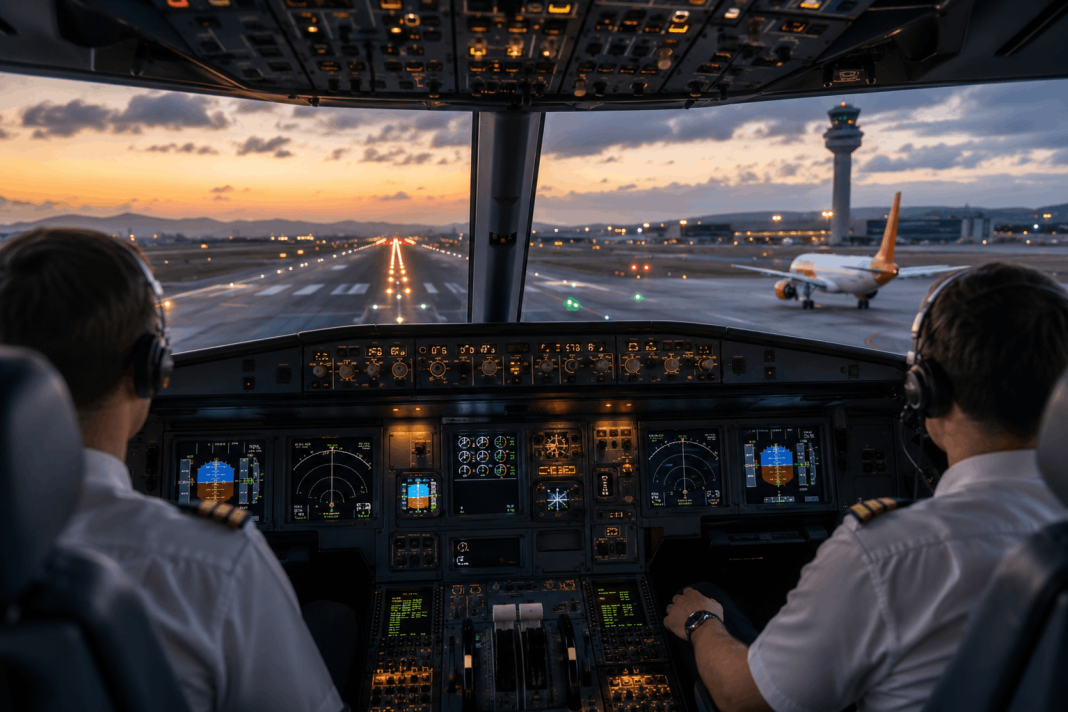
EasyJet Cockpit Error Raises Fresh Questions About Runway Safety
EasyJet Cockpit Error incidents at two major UK airports have drawn attention from aviation experts and safety investigators. While both flights landed safely and nobody was injured, the events revealed how simple human mistakes can reduce critical safety margins during takeoff. These cases demonstrate why airlines continue to refine procedures and strengthen cockpit cross-checks.
Modern aviation remains one of the safest forms of transport. However, even experienced crews can be influenced by habit, assumptions, and distractions. The recent investigations provide valuable lessons for pilots, airlines, and regulators across the industry.
EasyJet Cockpit Error at London Luton Airport
The first EasyJet Cockpit Error occurred on June 13, 2025, at London Luton Airport. An Airbus A320 operating flight EZY2335 was preparing to depart for Málaga, Spain, carrying 180 passengers and six crew members.
Before departure, the crew initially planned to take off from Intersection Alpha. Performance calculations showed the aircraft did not have enough runway available from that location because of its relatively heavy takeoff weight of 68.9 tonnes.
As a result, the pilots recalculated performance using the full length of Runway 25 and received approval to use the complete runway. However, despite those calculations, the aircraft entered the runway from Intersection Alpha rather than from the beginning of the runway.
This meant the aircraft had approximately 211 metres less runway available than planned. Flight data later showed the aircraft became airborne with only about 310 metres of runway remaining and crossed the runway end at a height of around 65 feet.
Although the aircraft departed safely, flight data monitoring systems identified the event and triggered a review.
EasyJet Cockpit Error and the Human Factors Behind It
Investigators found that several human factors contributed to the event. The most significant was habit.
The captain frequently used intersection departures at the airport. When air traffic control requested confirmation, the captain instinctively confirmed Intersection Alpha without fully recognizing that the flight’s calculations had been changed to a full-runway departure.
Another factor was confirmation bias. Earlier aircraft had departed from the same intersection, reinforcing the crew’s expectation that they would do the same. Once that mental picture formed, both pilots became less likely to question it.
The investigation also highlighted the dangers of workload management. Although there was no significant time pressure, the crew was managing several departure tasks simultaneously. This reduced the likelihood of identifying the mismatch between the calculated takeoff data and the actual runway entry point.
Importantly, investigators concluded that the aircraft still had sufficient performance margins to complete the departure safely. Nevertheless, the event demonstrated how quickly small assumptions can create operational risks.
EasyJet Cockpit Error Reappears at Manchester Airport
A second EasyJet Cockpit Error occurred less than a month later at Manchester Airport on July 6, 2025.
The Airbus A320 was scheduled to operate a flight from Manchester to Kos, Greece. Air traffic control cleared the aircraft to depart from Runway 23R using Intersection J1, which provided more than 2,500 metres of runway for takeoff.
Instead, the aircraft entered the runway at Intersection J2, a point farther down the runway. As a result, the aircraft began its takeoff roll with less runway available than expected.
The incident happened during nighttime operations, when identifying taxiway positions can become more challenging. Investigators noted that both pilots believed they were in the correct location.
The aircraft departed safely, but the event was classified as a serious runway occurrence because it involved an unintended reduction in available takeoff distance.
EasyJet Cockpit Error Highlights Common Aviation Risks
These events demonstrate that even highly trained flight crews can make mistakes when routine operations become overly familiar.
Several common risk factors appeared in both incidents:
- Habitual decision-making
- Confirmation bias
- Reduced situational awareness
- Complex airport layouts
- Assumptions about aircraft position
- Inadequate cross-checking procedures
The aviation industry has long recognized these risks. Most modern safety systems are designed to prevent a single mistake from leading to a serious accident.
However, runway-related incidents remain a focus area because reduced runway length can significantly affect aircraft performance, especially during adverse weather conditions, heavy takeoff weights, or emergency situations.
EasyJet Cockpit Error Prompts Safety Improvements
Following both investigations, EasyJet worked closely with the UK Air Accidents Investigation Branch (AAIB) to identify corrective actions.
The airline reviewed its departure procedures and introduced additional safeguards. One important change requires pilots to clearly record and verify the exact runway intersection used when calculating takeoff performance data.
This creates another opportunity for crews to compare their planned departure point with their actual position before entering the runway.
Enhanced briefing procedures and additional emphasis on runway verification have also been incorporated into operational guidance.
These measures aim to reduce the likelihood of similar incidents occurring in the future.
EasyJet Cockpit Error Shows Why Continuous Learning Matters
Aviation safety has improved dramatically because the industry learns from every event, no matter how minor.
Investigations like these are not about assigning blame. Instead, they help identify weaknesses in procedures, training, and human performance. The findings are then shared across airlines worldwide, helping prevent similar situations elsewhere.
Flight data monitoring programs also play a critical role. These systems continuously analyze operational data and can detect unusual events long before they become larger problems.
As a result, airlines can address safety concerns proactively rather than reactively.
Why EasyJet Cockpit Error Cases Matter to Passengers
For passengers, these incidents should reinforce confidence rather than create concern.
The flights involved landed safely, investigations were conducted thoroughly, and lessons were quickly incorporated into airline procedures. This process reflects the strength of modern aviation safety systems.
Every incident provides an opportunity to improve standards, strengthen procedures, and increase awareness among flight crews.
The combination of pilot training, technology, regulatory oversight, and continuous learning helps ensure commercial aviation remains exceptionally safe.

Nuwan Wackwella is a digital creator passionate about technology, creativity, and sharing inspiring moments from everyday life.