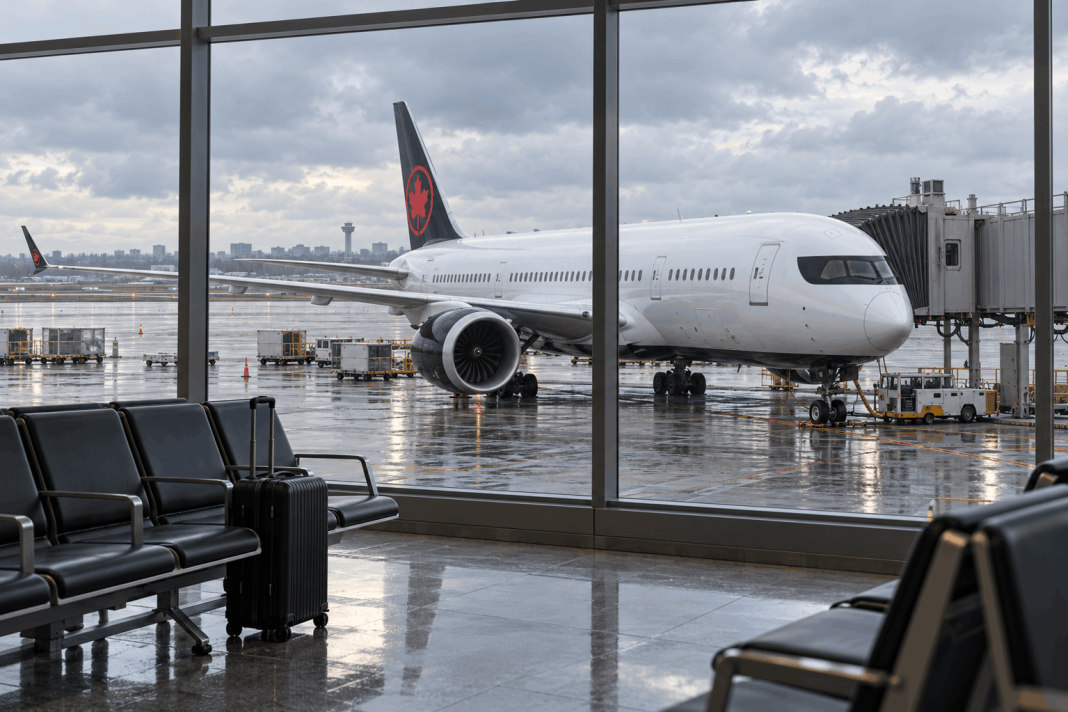
Air Canada Cancellations: How Route Changes Affect Travellers
Air Canada Cancellations have disrupted some cross-border travel plans, leaving passengers checking routes, connections and booking options. However, the changes affect specific services and travel periods, rather than the airline’s entire North American network. Understanding that distinction helps travellers respond calmly and avoid changing flights that remain scheduled.
Reports published in July 2026 described winter suspensions on three Midwest routes and later starts for selected Florida services. Meanwhile, an October announcement outlined new US routes for summer 2027. Passengers should therefore check their exact departure date before assuming earlier reports apply to their booking.
Which Routes Face Air Canada Cancellations?
July reporting identified winter suspensions between Montreal and Detroit, Montreal and Minneapolis, and Toronto and Indianapolis. These changes continued suspensions announced for the previous winter. Selected seasonal services connecting Canadian cities with Florida were also scheduled to begin in December instead of October.
For passengers, the practical effect depends on the original itinerary. A suspended nonstop service may require a connection through another airport. A delayed seasonal launch may mean choosing different travel dates or another available route.
However, an old route announcement cannot confirm whether an individual flight will operate. Airlines revise schedules, and available connections can change. Check the booking itself before adjusting hotels, airport transfers or other reservations.
Also, distinguish a seasonal suspension from a permanent withdrawal. Both can remove a flight from your preferred dates, but they describe different network decisions.
Why Air Canada Cancellations Happen
Reporting on the 2026 reductions linked network adjustments to weaker cross-border demand and higher fuel costs. These pressures can make certain services harder to operate profitably. However, travellers should avoid assuming every cancelled flight has the same cause.
An advance schedule change differs from an unexpected disruption on departure day. Weather, maintenance and operational problems can affect individual flights even when a route remains available.
That difference also matters when discussing passenger support. The explanation provided for your specific disruption helps determine which rules and remedies apply.
For broader background, read our guide to rising oil prices and transport costs. Understanding fuel pressures adds context, although oil prices alone cannot explain every airline scheduling decision.
How Air Canada Cancellations Affect Regional Travel
Losing a nonstop flight can make a short journey considerably less convenient. Passengers may need an earlier departure, a longer connection or an additional overnight stay. Consequently, the cheapest replacement ticket may not offer the best overall value.
Business travellers should compare arrival times against meeting schedules. Families should consider connection lengths, luggage arrangements and the difficulty of changing terminals with children.
Regional businesses may also worry about reduced convenience for visiting customers and tourists. However, measuring any local economic impact requires evidence from the affected airport or community.
Before switching airports, calculate the full journey cost. Include parking, ground transport, baggage charges and possible accommodation. A lower airfare can lose its advantage once these expenses enter the calculation.
Rebooking After Air Canada Cancellations
First, open your reservation through the airline’s official website or app. Review any proposed replacement carefully, including travel dates, airport codes and total journey time.
Air Canada provides an official rebooking help page explaining available booking-management options. Fees for voluntary changes depend on ticket rules, so distinguish your own requested change from an airline-initiated disruption.
Next, check every flight segment. A replacement outbound journey may affect a separately booked connection or leave too little time before an important event.
If you booked through a travel agency, contact the original seller about the process. Keep your booking reference, ticket number and cancellation notice ready.
Finally, save the revised itinerary. Confirm any accessibility assistance, seating requests and other arrangements that matter to your journey.
Refund Rights Following Air Canada Cancellations
A refund and compensation are different remedies. A refund concerns money paid for eligible unused travel. Compensation addresses inconvenience when the relevant eligibility conditions apply.
The Canadian Transportation Agency explains that passenger entitlements depend partly on whether a disruption falls within airline control. Safety-related situations and events outside airline control receive different treatment. Review its official flight cancellation guidance before making a claim.
The agency also states that compensation for qualifying disruptions involves specific notice and arrival-delay conditions. Therefore, an advance route suspension does not automatically create a compensation entitlement.
Check Air Canada’s refund and cancellation policy for the applicable process. Keep written records of requests and responses, especially when several bookings form part of the same holiday.
Before accepting a voucher, read its expiry date and restrictions. Compare those terms with any refund option available for your circumstances.
Planning Ahead Despite Air Canada Cancellations
The network outlook includes additions alongside reductions. On October 16, 2026, Air Canada announced summer 2027 services connecting Toronto with Louisville, Montreal with Indianapolis, and Edmonton with Newark. It also outlined additional capacity between Edmonton and San Francisco. These plans provide useful context when assessing claims of a general withdrawal from US travel.
For upcoming trips, keep contact details current and check your reservation periodically. Leave sensible connection time, particularly when travelling for weddings, cruises or important business events.
Review insurance wording before relying on disruption cover. Check covered events, exclusions and claim requirements. Buying a policy after a known problem arises may not provide the protection you expect.
Our travel budget planning guide can help you compare replacement journeys and unexpected expenses.
Ultimately, focus on your confirmed itinerary, the airline’s written explanation and the available alternatives. Accurate information makes it easier to choose between rebooking, changing dates and requesting an eligible refund.

I’m an Online Media & PR Strategist at BusinessFits, passionate about digital storytelling and media impact. As a journalist, blogger, and SEO specialist, I create content that connects, informs, and ranks.