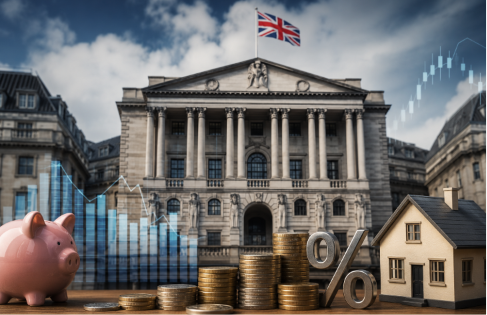
The latest Bank of England Interest Rates decision has brought relief to millions of homeowners and borrowers across the UK. Policymakers voted to keep the base rate unchanged at 3.75%, choosing caution over immediate action. The decision comes as inflation remains above target and uncertainty continues around global energy markets.
The move was widely expected by economists. However, the decision highlights the difficult balancing act facing the central bank. Officials must control inflation without causing further damage to economic growth.
Why Bank of England Interest Rates Remained Unchanged
First, the Monetary Policy Committee voted 7-2 to keep rates at 3.75%. Two members supported a quarter-point increase because they remain concerned about inflation pressures. Most policymakers preferred to wait for more economic data before making any changes.
The Bank said uncertainty linked to recent Middle East tensions continues to affect energy markets. Although oil prices have eased recently, officials believe inflation risks have not completely disappeared.
Governor Andrew Bailey stressed that the Bank remains ready to act if inflation begins rising faster than expected. For now, stability remains the priority. Interest Rates Hold Impact on UK Economy and Jobs
How Bank of England Interest Rates Affect Households
Next, the decision will have different effects depending on the type of borrowing people have.
Homeowners with tracker mortgages are likely to see no immediate change in monthly payments. Variable-rate borrowers may also avoid further increases for now. Meanwhile, many fixed-rate mortgage holders will continue watching future Bank decisions closely.
Savers could continue benefiting from higher savings rates compared with previous years. However, competition among banks will determine how much of the base rate benefit reaches customers.
Consumers already facing higher food, energy, and household costs may welcome the pause. Many families remain under pressure despite inflation slowing from earlier peaks.
Inflation Remains the Main Concern for Bank of England Interest Rates
Inflation remains above the Bank’s 2% target. Recent forecasts suggest inflation could rise above 3.25% later this year, although that would be lower than previous expectations.
Energy prices remain a major factor. Disruptions linked to conflict in the Middle East pushed costs higher earlier this year. While recent diplomatic progress has eased some concerns, policymakers remain cautious.
The Bank believes inflation pressures may take time to fully disappear. That is one reason officials resisted calls for immediate rate cuts. UK Inflation Rise Explained: Causes, Impact, and Outlook
Labour Market Data Supports Current Bank of England Interest Rates
The latest employment figures provided some encouraging signs.
UK unemployment edged down to 4.9%, while wage growth remained stronger than expected. However, job vacancies continued to decline, suggesting the labour market is gradually cooling.
This mixed picture helped support the Bank’s decision. Strong wage growth can fuel inflation, but weaker hiring activity suggests demand is slowing. Policymakers therefore decided to maintain their current position.
Markets React to the Bank of England Interest Rates Decision
Financial markets reacted quickly after the announcement.
The pound weakened against the US dollar following the decision. Investors interpreted the Bank’s statement as slightly less aggressive than some had expected. UK government bond yields moved higher, while the FTSE 100 also slipped during trading.
Analysts believe markets are now focused on whether inflation will force another rate increase later this year. Others argue that weaker economic growth could eventually lead to rate cuts in 2027.
What Happens Next for Bank of England Interest Rates?
Finally, attention now turns to upcoming inflation, wage, and growth data.
The Bank has made clear that future decisions will depend on economic conditions. If inflation remains stubbornly high, policymakers could still raise rates. If price pressures ease and growth weakens further, rate cuts may return to the agenda.
UK Inflation Falls: Rates, Costs, and UK Economy Outlook Guide
For now, the message is simple. The Bank of England is taking a cautious approach. It wants stronger evidence that inflation is under control before making its next move.

Hello there! I’m Online Media & PR Strategist at BusinessFits | Passionate Journalist, Blogger, and SEO Specialist