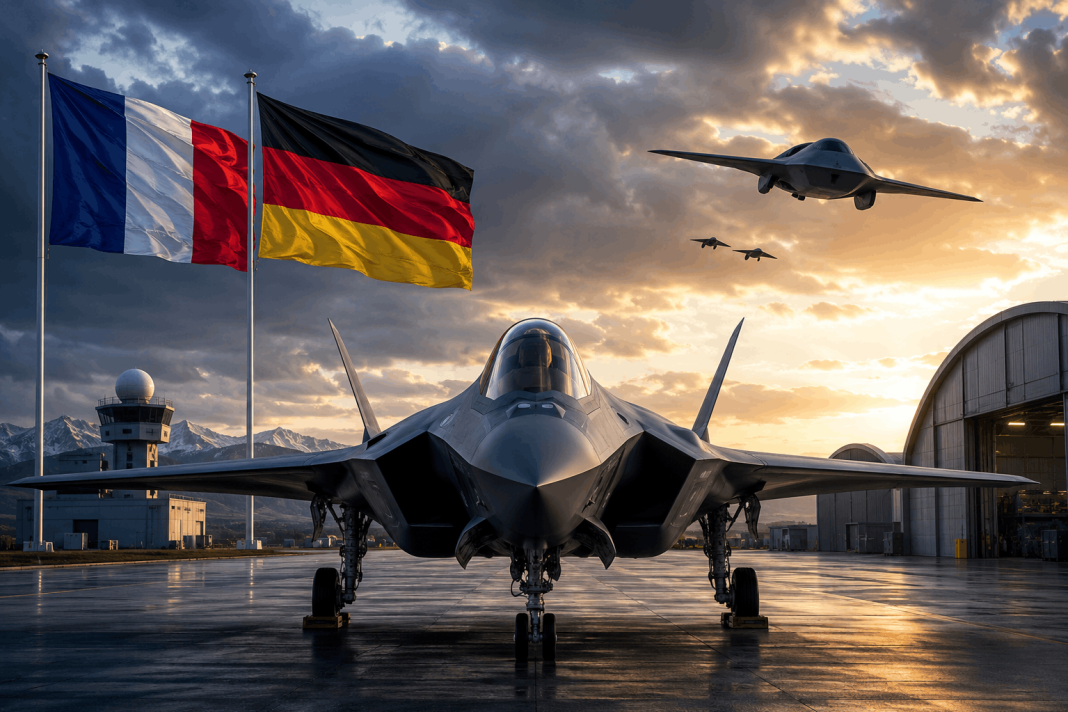
European Fighter Program Ends as France and Germany Split
The European Fighter Program has reached an unexpected end after years of development and political support. France and Germany have officially abandoned their joint Future Combat Air System (FCAS) project, dealing a major blow to Europe’s ambitions for defense independence. The decision comes during a period of growing security concerns across the continent.
The collapse of the initiative raises important questions about the future of European military cooperation. It also highlights the challenges of managing large multinational defense projects where political, military, and industrial interests often compete.
European Fighter Program Origins and Ambitions
The European Fighter Program began in 2017 when France and Germany announced plans to develop the Future Combat Air System. Spain later joined the partnership, expanding the project into one of Europe’s largest defense initiatives.
The goal was ambitious. The new system would replace aging combat aircraft currently used by participating nations. France planned to replace its Rafale fleet, while Germany and Spain intended to phase out older Eurofighter aircraft.
However, FCAS was never intended to be just another fighter jet. The project also included advanced drones, artificial intelligence capabilities, secure communication networks, and next-generation battlefield connectivity.
First, leaders viewed the program as a symbol of European unity. Next, it promised to strengthen Europe’s defense industry. Finally, it aimed to reduce dependence on foreign military technology and suppliers.
Why the European Fighter Program Collapsed
The downfall of the European Fighter Program can be traced to years of disagreements between the main industrial partners.
The biggest conflict centered on leadership and technology control. France’s Dassault Aviation wanted primary responsibility for designing the aircraft. Meanwhile, Airbus, representing German and Spanish interests, pushed for equal participation and broader technology sharing.
As negotiations continued, tensions increased rather than eased.
Another challenge involved differing military requirements. France required a fighter capable of carrying nuclear weapons and operating from aircraft carriers. Germany focused on conventional air force missions and had different operational priorities.
These conflicting needs complicated development plans and increased costs.
Despite repeated negotiations and government intervention, no lasting compromise emerged. Eventually, political leaders accepted that the project could no longer move forward in its current form.
European Fighter Program Failure and Defense Cooperation
The end of the European Fighter Program represents more than the cancellation of a military aircraft. It also reflects the broader difficulties facing European defense cooperation.
For decades, European governments have promoted the idea of shared defense capabilities. Joint programs can reduce costs, improve interoperability, and strengthen industrial competitiveness.
However, achieving these goals often proves difficult in practice.
National governments naturally prioritize domestic industries and military requirements. As a result, disagreements over leadership, funding, and intellectual property frequently slow progress.
The timing is particularly significant. Security concerns across Europe continue to grow, driven by regional instability and uncertainty surrounding future international defense commitments.
Consequently, many experts see the FCAS collapse as a warning sign for future multinational defense projects.
European Fighter Program Alternatives Emerging Across Europe
While the failure of FCAS is disappointing, it may create opportunities for alternative approaches.
Several next-generation combat aircraft projects are already underway across Europe and beyond. The most notable is the Global Combat Air Programme (GCAP), a partnership involving the United Kingdom, Italy, and Japan.
At the same time, Sweden continues exploring advanced fighter concepts. Turkey is also investing heavily in domestic aerospace development.
Some analysts argue that Europe currently has too many competing projects.
First, multiple programs divide funding and engineering talent. Next, they create competition in future export markets. Finally, they risk delaying the delivery of urgently needed military capabilities.
Because of these challenges, some defense experts advocate greater consolidation. A unified effort could potentially reduce duplication and accelerate innovation.
Whether such cooperation is politically achievable remains uncertain.
European Fighter Program Impact on France and Germany
The collapse of the European Fighter Program affects both France and Germany differently.
France possesses significant aerospace expertise through Dassault Aviation and may continue pursuing independent fighter development. The country has a long history of producing advanced military aircraft and could build upon existing technologies.
Germany faces a different situation. In the short term, Berlin may expand purchases of existing aircraft, including additional F-35 fighters from the United States.
Despite the split, both nations have indicated they remain interested in cooperating on certain FCAS components. Advanced communication systems, combat cloud technologies, and autonomous platforms could still move forward under separate arrangements.
This approach would preserve some benefits of collaboration while avoiding disputes surrounding the fighter aircraft itself.
European Fighter Program Lessons for Future Projects
The European Fighter Program provides several important lessons for future defense initiatives.
One lesson is the importance of establishing clear leadership structures early in development. Large projects often struggle when responsibilities remain unclear.
Another lesson involves aligning military requirements before significant investments begin. Different operational needs can quickly create technical and political obstacles.
In addition, governments must balance national industrial interests with broader strategic goals. Without that balance, cooperation becomes increasingly difficult.
Future multinational programs will likely study FCAS closely to avoid repeating similar mistakes.
European Fighter Program and Europe’s Defense Future
The end of the European Fighter Program marks a significant moment in European defense history. Although the project promised advanced technology and stronger cooperation, competing priorities ultimately proved too difficult to overcome.
Nevertheless, Europe’s security challenges remain unchanged. Governments still require modern military capabilities, stronger industrial partnerships, and greater strategic independence.
The failure of FCAS may not represent the end of European defense cooperation. Instead, it could serve as a catalyst for new partnerships and more practical approaches to future military development.
The coming years will determine whether Europe learns from this setback or continues down a path of fragmented defense ambitions.

Nuwan Wackwella is a digital creator passionate about technology, creativity, and sharing inspiring moments from everyday life.