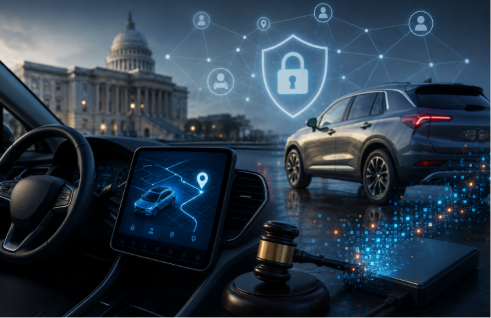
California authorities launched the investigation after concerns emerged about how General Motors handled information gathered through its OnStar connected services platform. Specifically, officials said the company shared detailed personal information with third-party data brokers between 2020 and 2024.
According to investigators, GM shared:
- Driver names and contact details
- Precise vehicle locations
- Driving behavior information
- Speed and braking patterns
- Trip history and movement tracking
Furthermore, investigators discovered that OnStar collected the information before GM shared it with companies including Verisk Analytics and LexisNexis Risk Solutions. These firms provide data services to insurers and other businesses.
California Attorney General Rob Bonta also stated that consumers never received clear explanations about how GM planned to use their information. As a result, regulators argued the automaker violated state privacy requirements and misled customers.
Car Loan Compensation: FCA Faces Major Legal Battle
Why GM Driver Data Matters to Consumers
The GM Driver Data settlement highlights how connected vehicles can expose deeply personal information. For example, location tracking can reveal where people live, work, shop, worship, or seek medical care. In addition, companies can combine driving habits with location history to create detailed consumer profiles.
Privacy advocates also warn that many drivers do not fully understand how much information modern vehicles collect every day. In many cases, connected services begin gathering data automatically once drivers activate certain features.
Because of this, consumers now question whether automakers should profit from customer information without clear permission. Meanwhile, consumer groups continue pushing for stronger transparency rules and better privacy protections.
Digital rights organizations like Electronic Frontier Foundation have repeatedly called for stricter protections around vehicle data collection. Car Loan Scheme Faces Legal Challenge in UK Market.
GM Driver Data Settlement Details Explained
Under the settlement, General Motors agreed to pay $12.75 million in civil penalties and accept major restrictions on future data practices. Additionally, regulators said the agreement sends a strong message to the automotive industry.
The GM Driver Data settlement includes several important conditions:
- GM cannot sell driving data to consumer reporting agencies for five years
- The company must improve consumer consent procedures
- GM must delete most stored driving information within 180 days
- Drivers must receive clearer explanations about data collection
- Consumers will gain stronger rights to opt out of tracking
Moreover, officials described the agreement as one of the largest privacy-related settlements involving connected vehicle technology in California history.
The settlement also reinforces rules under the California Consumer Privacy Act, which gives residents more control over personal information collected by businesses.
How GM Driver Data Was Used
Authorities said companies could use the collected information to create risk profiles for insurance providers. Although California limits how insurers use driving behavior data, privacy experts warn that drivers in other states may face different consequences.
The GM Driver Data issue also raised fears that consumers could experience:
- Higher insurance premiums
- Increased targeted advertising
- Reduced privacy protections
- Expanded commercial surveillance
- Long-term storage of personal driving history
Although GM claimed the data supported business analytics and related services, critics argued the company never gave consumers meaningful choices about participation.
Consequently, regulators now plan to watch automakers more closely as connected vehicle technology expands.
GM Driver Data Reflects a Bigger Industry Trend
The GM Driver Data controversy does not stand alone. Instead, it reflects a wider shift across the automotive industry. Automakers now install more software and tracking systems in modern vehicles every year. Features like navigation tools, emergency assistance, predictive maintenance, and smartphone integration all depend heavily on data collection.
At the same time, industry analysts say connected car services have created major revenue opportunities for automakers. Companies can earn money through subscriptions, analytics partnerships, and data sharing agreements. However, regulators now demand clearer limits between innovation and consumer privacy.
Recent reports also show growing public concern about automotive surveillance. In fact, many drivers only discover extensive tracking practices after reading privacy policies or seeing media investigations.
What Drivers Should Do About GM Driver Data Concerns
The GM Driver Data settlement reminds consumers to review privacy settings inside their vehicles carefully. Since many connected services activate during setup, drivers often agree to data collection without fully understanding the consequences.
Therefore, experts recommend several important steps:
- Review your car’s connected services agreement
- Disable unnecessary tracking features
- Check app permissions linked to your vehicle
- Request data deletion where possible
- Stay informed about state privacy laws
In addition, drivers should review updated privacy policies regularly because automakers frequently revise their terms over time.
As vehicles become more connected, digital privacy will likely become just as important as physical vehicle safety.

I’m an Online Media & PR Strategist at BusinessFits, passionate about digital storytelling and media impact. As a journalist, blogger, and SEO specialist, I create content that connects, informs, and ranks.