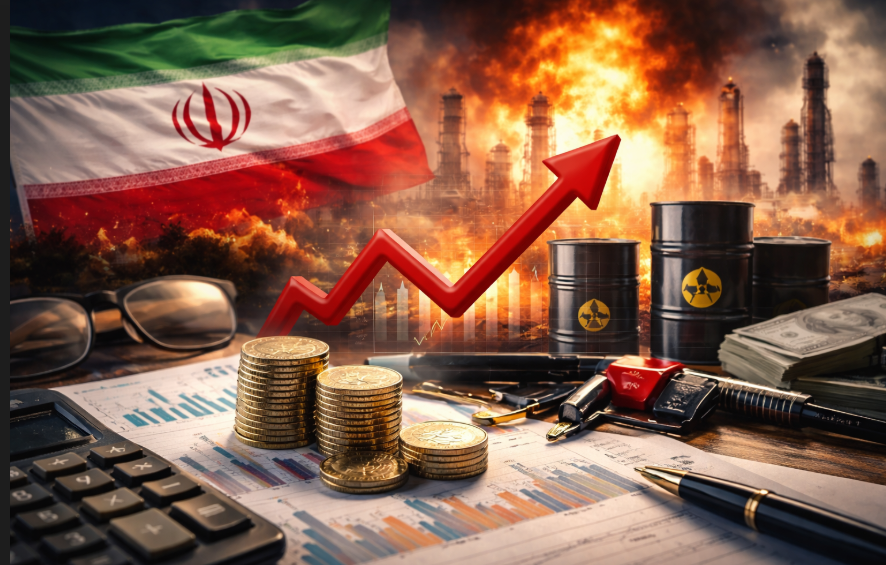
The Iran war rates situation is reshaping the UK economy as rising oil prices ripple through inflation and borrowing costs. With global tensions disrupting supply chains, households are already feeling the pressure through higher fuel, food, and mortgage expenses.
Oil price spikes following Middle East conflict have forced policymakers to pause planned rate cuts. Instead of relief, borrowers now face prolonged high interest rates, while inflation risks remain elevated across the economy.
Iran War Rates Force Bank of England to Hold
The Iran war rates effect has led the Bank of England to hold its base interest rate at 3.75%. Originally, markets expected a rate cut to ease financial pressure, but geopolitical instability changed the outlook quickly.
Oil prices surged by more than 40%, with gas and transport costs rising sharply. This created a supply-driven inflation shock, making it difficult for the central bank to justify lowering rates.
Rather than reacting too quickly, policymakers are choosing to wait and assess how long the crisis lasts. A prolonged conflict could even push rates higher if inflation continues climbing.
Mortgage markets have already responded. Two-year fixed mortgage rates now average around 5.30%, increasing monthly payments for homeowners and buyers alike.
Learn more from the official Bank of England.
Iran War Rates Increase Household Costs
The Iran war rates impact is most visible in everyday spending. Higher fuel costs quickly translate into increased prices for food, transport, and utilities.
For many households, especially those on lower incomes, budgets are becoming harder to manage. Rising grocery bills combined with expensive energy create a double burden.
Savings accounts offer limited relief. While interest rates are relatively high, many banks do not pass on the full benefit to savers. Meanwhile, credit cards and personal loans remain costly, limiting consumer spending power.
This combination keeps inflation above target levels and slows economic recovery.
Iran War Rates Show Limits of Monetary Policy
The Iran war rates crisis highlights a key challenge: interest rate changes cannot fully solve supply-driven inflation.
Unlike demand-based inflation, which central banks can control, this situation stems from disrupted oil supplies. Raising rates may reduce spending but does not fix shortages or lower energy costs directly.
Past crises have shown similar patterns. Rapid rate hikes did little to stabilize energy-driven inflation and often slowed economic growth instead.
This means relying solely on interest rates could worsen conditions without addressing the root cause.
Iran War Rates and Price Controls as a Solution
The Iran war rates scenario has renewed discussion around alternative policies like price controls. Governments can cap essential costs such as energy or transport to protect consumers.
Spain previously used this strategy during energy crises with some success. By limiting price increases, governments can prevent companies from passing full costs onto households.
The UK has already introduced targeted support, such as assistance for rural heating oil users. Expanding these measures could provide faster relief than monetary policy alone.
Iran War Rates Highlight Need for Public Ownership
Another response to the Iran war rates crisis is increased public ownership in energy sectors. This approach can improve long-term resilience and reduce reliance on volatile global markets.
Countries that have invested in public energy systems often experience more stable pricing and better control over supply.
Public ownership also supports investment in renewable energy, reducing exposure to geopolitical risks in the future.
When combined with stable interest rates, this strategy can help build a more secure and sustainable economy.
Iran War Rates Impact on Mortgages and Businesses
The Iran war rates environment is especially challenging for borrowers and businesses.
Homeowners face higher mortgage repayments, while new buyers struggle with affordability. Fixing a mortgage rate now may provide stability, but at a higher cost than previously expected.
Businesses also deal with rising input costs, particularly in transport and manufacturing. Many companies must decide whether to pass these costs onto customers or reduce expenses elsewhere.
This uncertainty slows investment and economic growth across multiple sectors.
Iran War Rates Outlook and Future Risks
Looking ahead, the Iran war rates outlook depends heavily on how long the conflict continues.
A short conflict could ease oil prices and allow interest rate cuts later in the year. However, prolonged instability may keep inflation high and delay economic recovery into next year.
Markets are watching central bank signals closely. Any shift in inflation trends could quickly change policy direction.
For now, steady rates provide some stability, but uncertainty remains high.
Iran War Rates: What You Should Do Now
In the current Iran war rates climate, households and businesses must plan carefully.
-
Review mortgage options and consider fixing rates if suitable
-
Monitor fuel and food costs closely
-
Adjust budgets to account for rising living expenses
-
Stay informed on economic updates and policy changes
Careful financial planning can help reduce the impact of ongoing uncertainty.
Final Thoughts on Iran War Rates
The Iran war rates situation shows how global events can quickly influence local economies. While interest rates remain steady for now, they are only part of the solution.
Policies like price controls, targeted support, and public ownership may play a bigger role in addressing the root causes of inflation.
For households, the key is preparation. With uncertainty likely to continue, managing finances wisely is more important than ever.

I’m an Online Media & PR Strategist at BusinessFits, passionate about digital storytelling and media impact. As a journalist, blogger, and SEO specialist, I create content that connects, informs, and ranks.