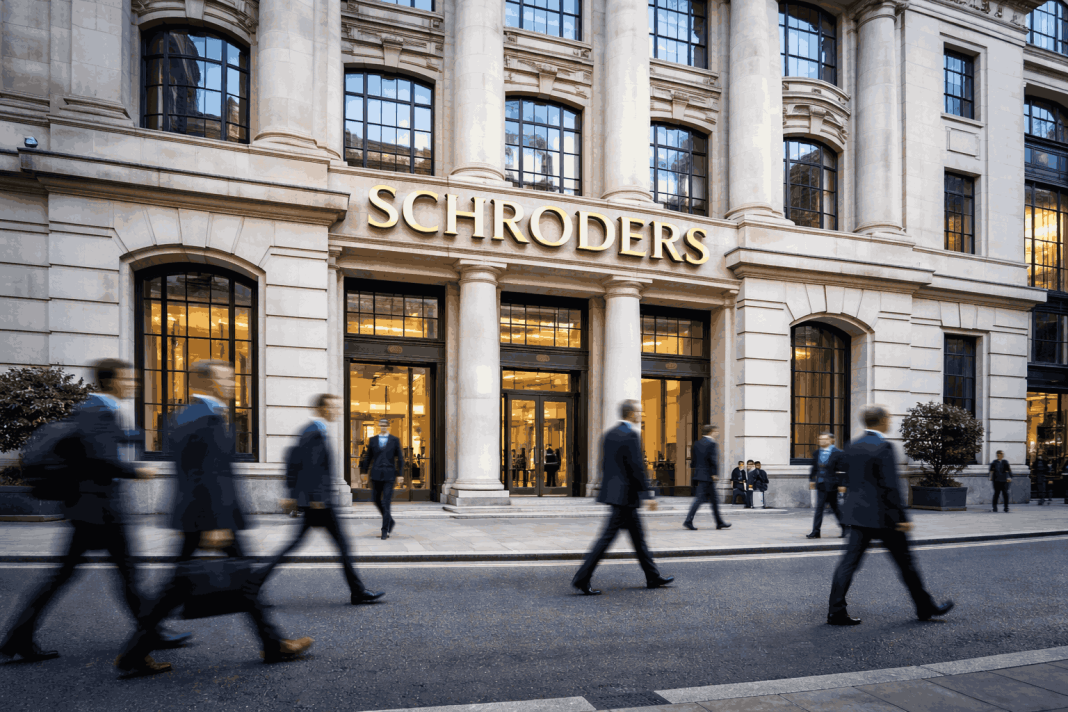
The Schroders takeover deal has sent shockwaves through the global asset-management industry, marking the end of more than 200 years of family influence at one of Britain’s most historic financial institutions. The £9.9 billion acquisition by US investment giant Nuveen represents not only a significant strategic shift for Schroders but also a wider signal that consolidation across global asset managers is accelerating. Investors reacted immediately, driving shares up roughly 30% after the announcement, highlighting the market’s belief that scale and global reach will define the next era of fund management.
According to the official announcement, Nuveen will acquire Schroders at 612p per share, including 590p in cash and a 22p dividend payout. This price offered a substantial premium over the company’s previous closing value and reflects growing pressure on active asset managers to merge resources and expand internationally.
See the official announcement details at Schorders global.
History behind the Schroders takeover deal and family legacy
Founded in London in 1804, Schroders began as a merchant bank before evolving into a major global investment house. Over the decades, it survived economic upheavals, wars, and market revolutions while remaining deeply tied to the Schroder family. The firm listed publicly in 1959 and later pivoted away from traditional banking in 2000 to focus entirely on asset management.
Before the acquisition, the family held around 44% of the company through heiress Leonie Schroder, whose fortune is estimated to exceed £3.9 billion. The latest transaction therefore marks a symbolic turning point, as one of the City of London’s longest-standing dynastic financial institutions transitions into American ownership. Many analysts say this reflects a broader trend in which historic UK firms seek strategic partnerships to remain competitive on a global stage.
Financial terms of the Schroders takeover deal explained
The structure of the acquisition illustrates the scale of ambition behind the move. Nuveen’s offer represents roughly a one-third premium over Schroders’ pre-announcement valuation, signaling confidence in future growth opportunities. If approved by shareholders and regulators, the transaction is expected to complete by late 2026.
Under the new structure, Schroders will keep its brand identity, London headquarters, and much of its workforce, including around 3,100 staff in the UK. Combined, the companies will manage close to $2.5 trillion in assets, placing them among the largest global investment managers. This level of scale could strengthen their ability to compete against passive investment giants such as BlackRock, which have increasingly dominated the industry with low-cost index funds.
Strategic reasons driving the Schroders takeover deal
Several structural challenges pushed Schroders toward a partnership. Rising competition from passive funds has squeezed margins for traditional active managers, forcing firms to cut costs and rethink growth strategies. Schroders itself implemented a £150 million cost-reduction program last year and withdrew from certain markets, including Brazil and Indonesia.
Chief Executive Richard Oldfield emphasized that the merger accelerates long-term expansion by combining complementary capabilities. He noted that operating at greater scale can improve efficiency, broaden product offerings, and enhance technology investments. Industry observers believe that such partnerships may become increasingly common as firms seek to balance innovation with profitability in a rapidly changing financial landscape.
Market reactions to the Schroders takeover deal across the City
Reactions in London’s financial district have been mixed. While many investors welcomed the premium valuation and strategic vision, some commentators expressed sadness at the loss of independence for a historic British institution. The share price surge suggests optimism that the combined business could unlock new opportunities, particularly in North America and Asia.
Analysts also highlight that the transaction reflects wider economic realities. Weak domestic markets and the rise of US capital have made British companies more vulnerable to overseas takeovers. Recent consolidation across investment management shows that companies must evolve or risk losing market relevance.
Industry trends shaping the Schroders takeover deal era
The asset-management sector has undergone dramatic transformation over the past decade. Low-fee exchange-traded funds and automated investment platforms have disrupted traditional strategies, pushing firms to innovate or merge. Large institutions with diversified revenue streams now hold a competitive advantage, encouraging strategic partnerships like this one.
The combined organization is expected to leverage both UK heritage and US capital strength, potentially creating a powerful hybrid model. Experts suggest that similar transactions could follow, particularly among mid-sized European asset managers seeking growth beyond their domestic markets.
Future outlook after the Schroders takeover deal completion
Looking ahead, clients may benefit from expanded investment choices, enhanced research capabilities, and broader global reach. Employees could gain access to new career opportunities within a larger international network, though integration challenges remain. Cultural alignment, technology integration, and regulatory approvals will all play critical roles in determining the long-term success of the partnership.
Ultimately, the transformation signals a new chapter for Schroders. The company’s legacy as a family-controlled institution has ended, but its global influence may grow stronger within a larger organization. Whether the move represents a necessary evolution or a loss of tradition will likely remain a topic of debate across the financial world.