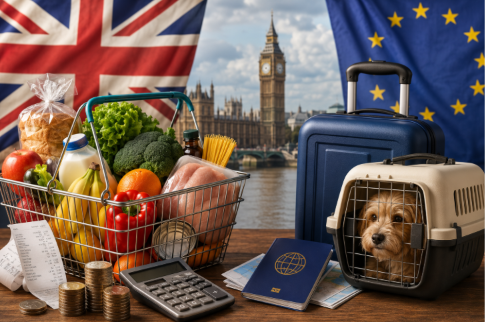
The Brexit Wallet Impact remains noticeable for millions of households across the UK. A decade after the referendum, many families continue to face higher grocery bills, increased travel expenses, and additional paperwork costs. While some new agreements may reduce pressure in the future, many everyday expenses remain higher than before. Understanding these changes can help consumers manage their budgets more effectively.
Brexit Wallet Impact on Supermarket Food Prices
One of the biggest effects of Brexit has been the increase in food costs. Since the UK left the European Union’s single market, businesses have faced additional customs checks, paperwork, and border procedures.
These new trade barriers increased the cost of importing goods from Europe. Retailers often pass those extra expenses to consumers through higher shelf prices. As a result, food inflation linked to post-Brexit trade changes has affected households across the country.
Research from the London School of Economics found that food prices rose significantly because of new trading arrangements. Some studies estimate that the average family paid hundreds of pounds more for groceries between 2019 and 2023. London School of Economics Research on Food Prices.
Households with lower incomes have been hit hardest. Food takes up a larger share of their monthly spending, making price increases more difficult to absorb.
Brexit Wallet Impact and Future Food Agreements
There may be some relief on the horizon. The UK and EU have recently discussed measures aimed at reducing checks on certain food products.
These proposals focus on products such as meat, dairy, and agricultural goods. If implemented successfully, businesses could face fewer administrative costs when importing products.
Lower operating costs could eventually lead to more competitive prices in supermarkets. However, experts caution that any meaningful savings may take time to reach consumers.
For now, shoppers continue to feel the effects of higher import-related expenses. UK Post-Brexit Trade Trends Shaping 2026 Markets.
Brexit Wallet Impact on Pet Travel Costs
Traveling abroad with pets has become considerably more expensive since Brexit.
Previously, UK residents could use an EU pet passport for repeated trips to European destinations. The process was relatively simple and affordable, making pet travel straightforward for many families.
Today, pet owners must obtain an Animal Health Certificate before each trip. This certificate must be issued by a qualified veterinarian within a specific timeframe before departure.
The document is only valid for a limited period, meaning frequent travelers may need multiple certificates throughout the year. Veterinary fees and administrative costs have increased the overall expense of taking pets abroad.
Many pet owners now pay more than three times what they spent before Brexit to meet travel requirements.
Brexit Wallet Impact for Online Shopping and Parcels
Online shopping from European retailers has also become more complicated.
Many purchases now require customs declarations and may be subject to VAT, duties, or handling fees. Consumers often discover additional charges after placing an order.
For example, a product advertised at £200 may end up costing significantly more once taxes and import charges are added. Delivery times can also be longer because packages must clear customs inspections.
Gift parcels sent between the UK and EU can face similar requirements. In some cases, recipients must pay additional fees before receiving their items.
These changes have reduced some of the convenience that consumers previously enjoyed when buying from European sellers.
UK Inflation Rise Explained: Causes, Impact, and Outlook
Brexit Wallet Impact and Mobile Roaming Charges
Another noticeable change affects mobile phone users traveling across Europe.
Before Brexit, EU roaming regulations protected UK travelers from excessive charges while using their phones abroad. Those protections no longer automatically apply.
Bringing your pet dog, cat or ferret to Great Britain
Many network providers have reintroduced daily roaming fees for customers visiting European countries. While some premium plans still include roaming allowances, many standard contracts now charge extra.
Families on holiday may face unexpected costs for calls, texts, and mobile data if they fail to check their provider’s policy before departure.
Ofcom advises consumers to review roaming charges carefully and monitor their usage while abroad. Taking a few minutes to check network rules can prevent expensive surprises later. Ofcom Mobile Roaming Advice.
Brexit Wallet Impact Through Passport Changes
Passport requirements have become another source of additional expense.
Many travelers are unaware that EU countries now apply stricter passport validity rules to UK visitors. A passport must usually be less than ten years old on the date of entry and remain valid for at least three months after departure. UK Passport Validity Checker.
This catches some travelers by surprise, especially those whose passports include extra months from previous renewal rules.
As a result, many people have needed earlier passport renewals than expected. Current renewal fees add another cost to holiday planning.
Checking passport validity before booking travel has become more important than ever.
Brexit Wallet Impact and Holiday Spending
While some travel expenses have increased, there are a few benefits available to UK travelers.
Duty-free shopping returned for certain international journeys. Travelers can purchase limited quantities of alcohol and tobacco products without paying some taxes.
In addition, the Global Health Insurance Card (GHIC) continues to provide access to necessary state healthcare in many European countries. Although it replaced the EHIC system, it still offers valuable protection for holidaymakers.
These benefits help offset some travel costs, but they do not fully compensate for higher fees related to roaming, pet travel, and passport renewals.
Brexit Wallet Impact on Education Opportunities
Brexit also affected educational exchange programs.
For several years, UK students lost access to the Erasmus+ scheme, which supported study opportunities across Europe. This change limited options for some young people seeking international experience.
However, plans for renewed participation in future exchange arrangements offer hope for students and educational institutions.
Improved cooperation could create more opportunities and reduce barriers for future generations.
Final Thoughts on Brexit Wallet Impact
The Brexit Wallet Impact continues to shape everyday spending decisions across the UK. Higher supermarket prices, additional travel requirements, roaming fees, and import costs have all contributed to increased household expenses.
Some upcoming agreements may ease pressure on food prices and improve trade efficiency. However, many of the financial effects of leaving the EU remain visible today.
Families who understand these changes can plan more effectively, compare costs carefully, and avoid unexpected expenses. As policies continue to evolve, keeping informed remains one of the best ways to protect household budgets.

Hello there! I’m Online Media & PR Strategist at BusinessFits | Passionate Journalist, Blogger, and SEO Specialist