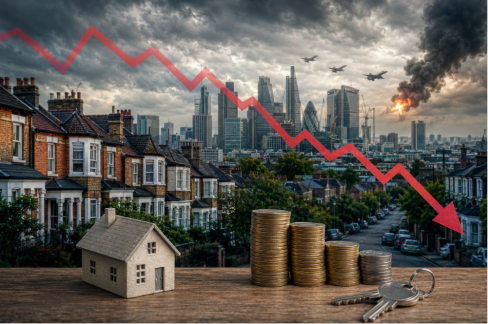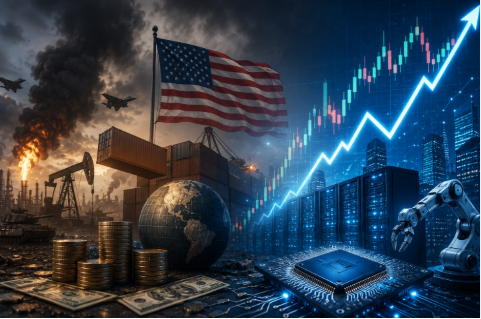
The AI Market Rally continues to push US stocks higher even as war tensions, inflation, and tariffs pressure the wider economy. Oil prices are climbing after conflict involving Iran disrupted markets. At the same time, inflation is rising again while new tariff threats from President Donald Trump increase uncertainty for businesses and consumers.
Yet Wall Street keeps celebrating.
Major indexes continue moving toward record highs. Investors appear confident that technology growth, especially artificial intelligence, will outweigh economic pain felt by ordinary Americans. This growing disconnect between Wall Street and Main Street is becoming one of the biggest financial stories of 2026.
For many households, daily expenses remain difficult to manage. Food, fuel, rent, and insurance costs continue to strain budgets. However, the stock market tells a completely different story.
Why the AI Market Rally Keeps Recovering
Markets faced heavy pressure earlier this year. Fighting in the Middle East caused energy prices to jump sharply. Investors feared inflation would spiral again, pushing the Dow Jones and Nasdaq into correction territory during March.
However, the recovery happened surprisingly fast.
By May, the Nasdaq had climbed more than 11% for the year. Investors once again brushed aside geopolitical fears and focused on future growth opportunities instead. Many traders now believe the market can survive almost any short-term crisis.
A major reason behind this confidence is the belief that policymakers will eventually soften aggressive economic measures.
AI Market Rally and the “Taco” Theory
Many analysts now discuss the so-called “Taco” theory, which stands for “Trump Always Chickens Out.” The phrase refers to investor expectations that President Trump may announce harsh tariffs or trade restrictions but later delay or weaken them.
Recent examples helped strengthen this belief.
Trump threatened major tariffs on European imports and additional taxes on Chinese goods. However, several deadlines were pushed back after market pressure increased. Investors interpreted these moves as signs that the White House will avoid policies that could trigger a major financial crash.
This expectation encourages traders to keep buying stocks during periods of uncertainty.
Economists also point to another important factor. Investors believe the Federal Reserve and the US government will intervene if financial conditions worsen dramatically. Emergency actions during the banking turmoil of 2023 reinforced this confidence.
Still, critics warn that relying too heavily on government support may encourage risky behavior across financial markets.
For more on Federal Reserve policy, visit Federal Reserve.
The AI Market Rally Highlights America’s Economic Divide
Although stock indexes remain strong, many Americans do not feel optimistic about the economy. Inflation cooled from its 2022 highs, but prices started rising again during early 2026. Fuel costs increased sharply after global oil markets reacted to war fears.
This situation created what economists call a “K-shaped” recovery.
Higher-income households continue spending heavily on luxury travel, entertainment, and premium products. Meanwhile, lower-income families are cutting back on essentials and delaying purchases.
The divide becomes even clearer when examining stock ownership.
The wealthiest 10% of Americans own most of the stock market. Therefore, rising share prices mainly benefit affluent households rather than average workers. This helps explain why Wall Street remains strong even while consumer confidence surveys stay weak.
Airlines, hotels, and luxury brands continue reporting healthy profits because wealthy consumers still spend freely. Corporate earnings from these sectors help support broader market gains.
Meanwhile, smaller businesses and middle-class households face growing pressure from borrowing costs and inflation. US Inflation Data Bureau of Labor Statistics.
How the AI Market Rally Became the Market’s Biggest Driver
Artificial intelligence is now the single most powerful force behind the market surge. Technology giants continue investing hundreds of billions of dollars into AI infrastructure, data centers, cloud computing, and semiconductor production.
This spending boom acts almost like a private-sector stimulus package for the economy.
Companies such as NVIDIA, Microsoft, Amazon, and Meta are racing to dominate the AI industry. Their enormous investments continue attracting investors looking for long-term growth.
Nvidia remains one of the biggest winners. Demand for its AI chips continues to explode as businesses rush to build advanced AI systems and data centers.
Today, just seven major technology companies account for roughly 30% of the S&P 500’s total value. Because of this concentration, strong performance from AI-related firms can lift the entire market higher even if other sectors struggle. Nvidia Quarterly Results Reveal Massive AI Growth and Future.
Many investors also believe AI could significantly improve productivity across industries. If AI boosts economic growth, the Federal Reserve may eventually lower interest rates without causing another inflation crisis. Federal Reserve Economic Data
That expectation adds even more fuel to the current rally.
Hidden Risks Behind the AI Market Rally
Despite the optimism, several warning signs remain visible.
History shows that powerful technology booms can eventually turn into dangerous bubbles. During the late 1990s, internet stocks soared before collapsing during the dot-com crash.
Some analysts now fear the AI sector may follow a similar path.
Massive valuations for AI companies continue growing rapidly. Investors are pouring money into startups with limited profits simply because they are linked to artificial intelligence. Planned IPOs for several AI firms could further increase speculation.
Consumer sentiment also remains fragile.
Many Americans blame tariffs and rising prices for weakening their financial stability. Polls show concerns about economic management continue growing despite strong stock performance.
Additionally, geopolitical tensions remain unpredictable. Any major escalation involving Iran, China, or global trade disputes could quickly shake investor confidence.
High debt levels across governments and businesses add another layer of risk as well.
What the AI Market Rally Means for Investors
The current rally reflects more than simple optimism. It shows how strongly investors believe artificial intelligence will reshape the future economy.
Wall Street sees AI as the next industrial revolution. Investors expect automation, machine learning, and advanced computing to create enormous profits over the next decade.
However, the broader economy still faces genuine challenges.
Inflation pressures continue hurting households. Tariff uncertainty affects businesses. Global conflicts threaten energy markets and supply chains. These risks have not disappeared simply because technology stocks are climbing.
For now, investors continue betting that AI growth will outweigh economic weakness.
Whether that confidence proves correct remains uncertain. Markets have survived inflation shocks, pandemics, and geopolitical crises before. Still, every bull market eventually faces a serious test.
The biggest question now is whether the AI Market Rally represents sustainable innovation or another financial bubble waiting to burst. AMD Data Center Growth Powers Strong AI Revenue Surge.

I’m an Online Media & PR Strategist at BusinessFits, passionate about digital storytelling and media impact. As a journalist, blogger, and SEO specialist, I create content that connects, informs, and ranks.