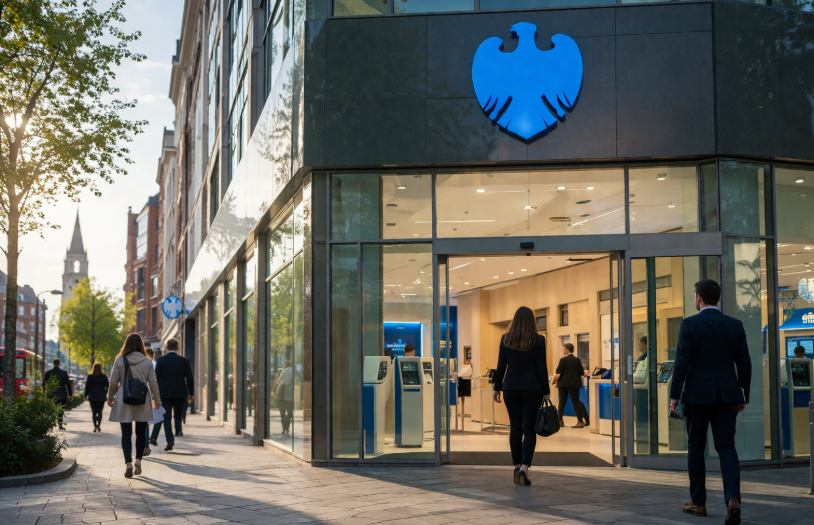
The Barclays Branch Network is back in focus after a surprising reversal in strategy. After years of cutting physical locations, Barclays has paused closures and is now expanding again. This shift matters for millions of customers who still value face-to-face banking alongside digital convenience.
In this article, we explore what changed, why it happened, and what it means for the future of banking in the UK. We will also look at how this move fits into wider industry trends and what customers can expect next.
Barclays Branch Network Closures Over the Last Decade
To understand the shift, we need to look back. The Barclays Branch Network shrank dramatically over the past ten years. Around 800 branches were closed, leaving just over 200 locations nationwide.
This was not unique to Barclays. The entire UK banking sector moved in the same direction. Between 2015 and 2024, roughly 6,000 branches disappeared across the country.
The main driver was digital adoption. Customers increasingly used mobile apps and online services instead of visiting branches. Digital-first banks like Monzo and Revolut gained popularity, accelerating the shift away from physical banking.
From a business perspective, maintaining underused branches became expensive. Lower foot traffic meant lower returns, making closures seem inevitable at the time.
Barclays Branch Network U-Turn Explained
The turning point came when new CEO Vim Maru stepped in during 2023. One of his first major decisions was to stop further closures and rethink the role of branches.
Speaking to The Times, he emphasized that customers still value human interaction. Many people were frustrated with automated systems and wanted easier access to real support.
The Barclays Branch Network is now shifting from decline to growth. Barclays plans to open new standalone branches and extend opening hours across existing locations. The bank has already added over 33,000 extra hours of in-person service.
This move reflects a broader realization: digital convenience cannot fully replace human service.
How Barclays Branch Network Will Evolve
The future Barclays Branch Network will not look exactly like the past. Instead, it will combine traditional service with modern technology.
For example, Barclays is reintroducing familiar roles like “bank managers” to create a more personal experience. Customers often prefer dealing with someone they can recognize and trust.
At the same time, branches will integrate digital tools. Customers may see:
- Video banking support inside branches
- Faster connections to mobile services
- Staff trained in both digital and in-person assistance
This hybrid model ensures that customers can switch seamlessly between online and offline banking.
UK Bank App Glitch Exposes Customer Data in Banking Apps
Visit the official Barclays site for updates on branch locations
Barclays Branch Network Impact on Customers
For customers, the changes to the Barclays Branch Network bring clear benefits.
First, accessibility improves. Around 20 million Barclays customers will have more opportunities to get face to face help. This is especially important for:
- Elderly individuals
- People handling complex financial matters
- Customers less comfortable with digital tools
Second, convenience increases. Extended hours and relocated branches mean services are closer to where people live and work.
Finally, confidence in banking may improve. Many customers feel more secure when they can speak directly to a human rather than relying entirely on apps or chatbots.
Barclays Branch Network and High Street Revival
The Barclays Branch Network expansion could also help revive UK high streets.
When banks close, local economies often suffer. Fewer visitors mean reduced foot traffic for nearby shops and services. By reopening or expanding branches, Barclays may help bring activity back to some areas.
While this will not fully reverse years of decline, it signals a shift away from total digital dependence. It also shows that physical presence still has economic value.
Other major banks like Lloyds Banking Group, Halifax, and Bank of Scotland are still planning closures, but Barclays’ move may influence future decisions across the sector.
Technology and Barclays Branch Network Working Together
Interestingly, the renewed Barclays Branch Network does not mean a step backward in technology.
Instead, Barclays is investing in both digital and physical channels. The goal is to create a seamless experience where customers can:
- Start a task on an app and finish it in a branch
- Get in-person help for digital issues
- Access consistent services across all platforms
This dual approach highlights an important truth: technology works best when combined with human support, not when it replaces it entirely.
Future Outlook for Barclays Branch Network
Looking ahead, the Barclays Branch Network will likely continue evolving based on customer behavior.
Barclays plans to review usage patterns regularly. This means new branches could appear in areas where demand is growing, such as commuter towns or suburban regions shaped by hybrid work trends.
The focus will remain on:
- Convenience
- Accessibility
- Personal service
This strategy reflects a broader industry lesson: digital-only banking has limits, and customers still value real-world interaction.
Key Takeaways on Barclays Branch Network
The Barclays Branch Network represents a major shift in UK banking strategy. After years of closures, the bank is now expanding again to meet customer demand.
Key points include:
- Closure plans have been halted
- New branches and longer hours are being introduced
- Customers gain more flexibility and support
- High streets may benefit from increased activity
Ultimately, this move shows that balance matters. Digital innovation is essential, but human interaction remains just as important.
FAQs
What changed in the Barclays Branch Network?
Barclays stopped closing branches and is now expanding its network with new locations and longer opening hours.
How many branches does Barclays currently have?
There are just over 200 branches, with more expected to open in the near future.
Why is Barclays expanding again?
Customer demand for in-person support and dissatisfaction with fully digital service played a major role.
Will other banks follow Barclays?
Possibly. Competitors like Lloyds and Halifax are still closing branches, but Barclays’ strategy may influence future decisions.
When will new branches open?
Exact timelines and locations have not been fully announced yet, but expansion is already underway.

Hello there! I’m Online Media & PR Strategist at BusinessFits | Passionate Journalist, Blogger, and SEO Specialist