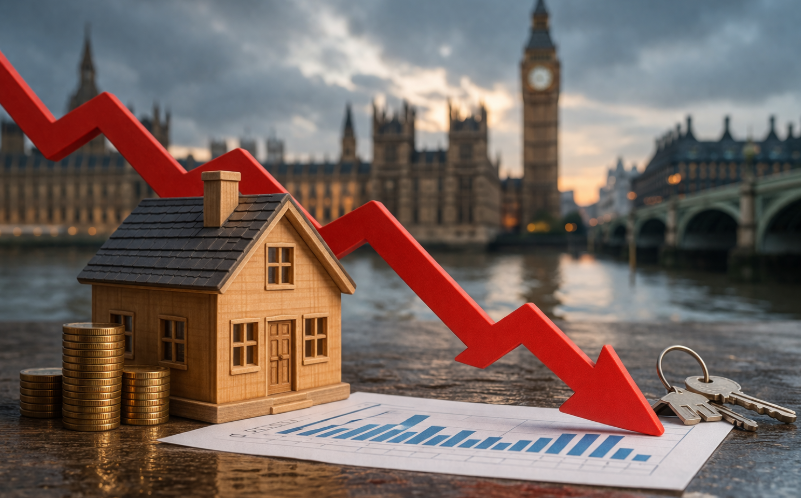
The latest data reveals a notable shift in UK house prices, raising concerns among buyers and sellers alike. As global tensions rise and borrowing costs increase, the housing market is beginning to show signs of cooling during what is typically a busy spring season.
In March, UK house prices fell unexpectedly, catching many analysts off guard. The average property value dropped by 0.5% compared to February, bringing the typical home price down to £299,677. This marks a return below the £300,000 threshold, reversing gains seen earlier in the year.
Annual growth has also slowed significantly. Prices increased by just 0.8% year-on-year, compared to 1.2% in the previous month. This indicates a clear slowdown in market momentum, driven largely by economic uncertainty and higher borrowing costs.
What Is Driving UK House Prices Decline
Several key factors explain why UK house prices are now falling. One of the biggest influences is the rise in energy costs, which has been fueled by ongoing tensions in the Middle East. These global developments have pushed inflation higher and created uncertainty in financial markets.
As a result, mortgage rates have risen sharply. Many lenders withdrew competitive deals, reducing options for buyers. The average two-year fixed mortgage rate climbed to 5.84%, the highest level since mid-2024.
Although the Bank of England held interest rates steady in March, expectations of future increases remain. Even with temporary easing in global tensions, uncertainty continues to weigh heavily on the housing market.
UK House Prices and Rising Mortgage Pressure
Higher borrowing costs are having a direct impact on affordability. For first-time buyers, saving for a deposit is already challenging, and rising mortgage rates make homeownership even more difficult.
The drop in UK house prices may seem like an opportunity, but many buyers are hesitant. They are waiting to see whether mortgage rates will stabilize or decline before making commitments.
Existing homeowners are less affected for now, especially those locked into fixed-rate deals secured in previous years. However, as these deals expire, more households may feel the pressure of higher repayments.
Despite these challenges, the current rise in rates is less severe than previous spikes. Still, it has been enough to reduce buyer confidence and slow down market activity.
Regional Trends in UK House Prices
The impact of falling UK house prices varies significantly across different regions. Some areas continue to show resilience, while others are experiencing sharper declines.
Northern Ireland remains the strongest performer, with prices rising by 8.7% annually to an average of £224,809. Scotland also recorded solid growth, with a 4.4% increase bringing average prices to £222,716.
Wales saw a modest rise of 1.6%, with average property values reaching £230,909. These regions benefit from relatively lower prices and stronger local demand.
In contrast, southern England has seen more pronounced declines. The South East recorded a 1.9% drop, while London experienced a 1.2% decrease. Higher property values and affordability pressures contribute to these regional differences.
What UK House Prices Mean for Buyers and Sellers
The recent fall in UK house prices presents both opportunities and challenges. Buyers may benefit from slightly lower prices, but higher mortgage rates offset these gains.
For sellers, pricing strategies become more important. Overpricing properties in a cooling market can lead to longer selling times and reduced interest from buyers.
Experts suggest that anyone entering the market should carefully assess their financial situation. Comparing mortgage deals and seeking professional advice can help secure better terms.
For more insights on interest rates, visit the Bank of England. And explore Iran War Rates Impact UK Economy and Households Now.
For additional housing market updates, you can also read related insights on property trends and economic forecasts.
Future Outlook for UK House Prices
Looking ahead, the direction of UK house prices will largely depend on global and domestic economic conditions. If geopolitical tensions ease and inflation stabilizes, mortgage rates could begin to fall, supporting market recovery.
However, continued uncertainty may keep pressure on borrowing costs and limit buyer activity. The housing market remains highly sensitive to global events, making predictions difficult.
Overall, the current decline in UK house prices should be viewed as a market adjustment rather than a major downturn. While activity has slowed, demand still exists, especially in more affordable regions.
Navigating UK House Prices in Uncertain Times
The recent changes in UK house prices highlight how closely the housing market is linked to global events and economic conditions. Buyers and sellers must stay informed and adapt to shifting trends.
Whether you are planning to buy, sell, or invest, understanding the factors influencing UK house prices will help you make smarter decisions. As the market evolves, patience and careful planning will be key to success.