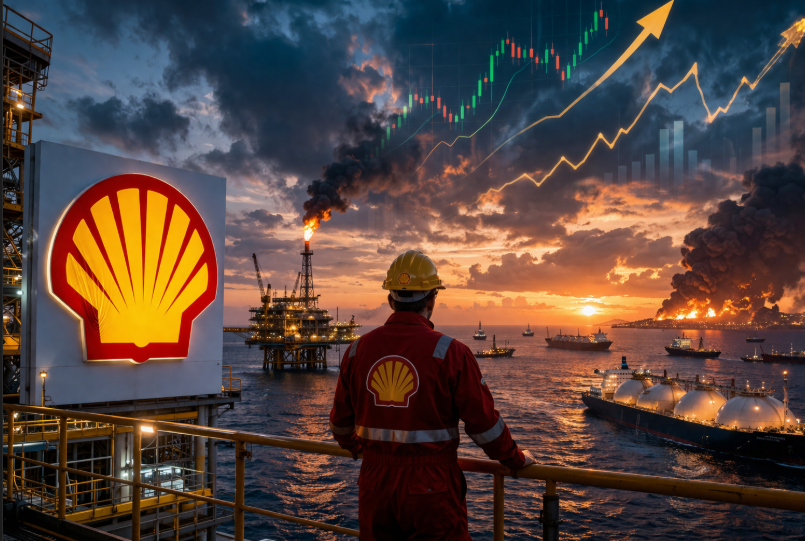
Shell Trading Profits have surged dramatically in the latest quarter, driven by volatility caused by the Iran conflict and global energy disruptions. While trading desks are generating strong returns, operational challenges especially gas production losses in Qatar paint a mixed picture for Shell plc.
This contrast highlights how geopolitical instability can simultaneously create profit opportunities and operational setbacks for global energy giants.
Shell Trading Profits Benefit from Market Volatility
The biggest driver behind rising Shell Trading Profits is the sharp increase in energy market volatility. Price swings in oil and gas markets triggered by geopolitical tensions—have created ideal conditions for commodity traders.
Shell’s trading division, particularly within its chemicals and products segment, has capitalized on these rapid price movements. When markets fluctuate unpredictably, trading operations can exploit short-term price differences to generate higher returns.
In addition, Shell’s renewable energy trading arm has delivered impressive growth. Earnings in this segment are projected to reach between $200 million and $700 million, a significant jump from the previous quarter.
For more financial insights, visit Shell’s official investor page.
Iran Conflict Drives Shell Trading Profits Higher
The Iran conflict has played a central role in boosting Shell Trading Profits. Tensions involving Iran, the United States, and Israel disrupted key shipping routes and energy infrastructure across the Gulf region.
At one point, oil prices surged over 50% compared to the previous year. Although prices later stabilized below $100 per barrel following a temporary ceasefire, uncertainty remains high.
This kind of instability is exactly what trading desks thrive on. Rapid price swings create arbitrage opportunities, allowing companies like Shell to generate substantial profits without increasing production.
Learn more about the Shell Denies £60bn Move as BP Confirms Shell Bid Silence
Qatar Disruptions Impact Shell Trading Profits Balance
Despite strong trading performance, Shell Trading Profits are partially offset by production challenges. Gas output has dropped by approximately 5% due to damage at Qatar’s Ras Laffan LNG facility.
Production levels are now expected to range between 880,000 and 920,000 barrels of oil equivalent per day, down from 948,000 in the previous quarter.
The disruption was caused by a strike linked to ongoing regional tensions, highlighting how geopolitical risks can directly impact physical energy infrastructure.
This situation demonstrates a key reality: while trading profits rise, operational disruptions can still weigh heavily on overall performance.
LNG Canada Supports Shell Trading Profits Stability
To counterbalance production losses, Shell is relying on new projects like LNG Canada. This initiative is gradually ramping up production and helping stabilize overall output. www.lngcanada.ca
Although this project provides some relief, it cannot fully compensate for the losses in Qatar. Still, it plays an important role in maintaining long-term production resilience.
The ability to diversify production sources is critical for sustaining Shell Trading Profits in uncertain global conditions.
Global Energy Risks Threaten Shell Trading Profits Outlook
Shell CEO Wael Sawan has warned about broader risks that could impact Shell Trading Profits in the coming months. According to him, prolonged disruptions in key shipping routes could lead to fuel shortages, particularly in Europe.
The crisis has already affected several regions:
- South Asia experienced early supply shocks
- Southeast Asia and Northeast Asia followed
- Europe is now facing increasing pressure
Some countries have even introduced energy rationing measures. These developments highlight the interconnected nature of global energy markets.
Shell continues to work with governments and partners to mitigate these risks, but uncertainty remains a major factor.
Shell Trading Profits Highlight Industry Dual Reality
The current situation perfectly illustrates the dual nature of the energy business. On one side, Shell Trading Profits are rising due to market volatility. On the other, real-world production is being disrupted by geopolitical events.
This balance between trading success and operational challenges defines the modern energy landscape.
Investors closely monitor these dynamics because they reveal how effectively a company can navigate both financial markets and physical supply chains.
What Shell Trading Profits Mean for Investors
For investors, rising Shell Trading Profits signal strong short-term financial performance. However, declining gas output introduces uncertainty about long-term stability.
Key takeaways include:
- Trading divisions can offset production losses
- Geopolitical risks remain a major variable
- Diversification across projects is essential
Shell’s ability to maintain profitability despite disruptions demonstrates its resilience, but continued volatility will test this strength.
Future Outlook for Shell Trading Profits
Looking ahead, Shell Trading Profits will likely remain strong as long as market volatility persists. However, the company must address production challenges to ensure balanced growth.
The coming weeks will be critical:
- Ceasefire developments could stabilize markets
- Further disruptions could increase volatility
- Energy demand trends will shape pricing dynamics
Ultimately, Shell’s performance will depend on how well it manages both trading opportunities and operational risks. European Oil Crisis Shakes Stocks and Global Energy
Conclusion: Shell Trading Profits Reflect Market Tension
In summary, Shell Trading Profits have surged due to geopolitical instability, but production setbacks in Qatar reveal the vulnerabilities of global energy systems.
This quarter tells a clear story:
- Crisis can drive profits
- But it also exposes operational risks
As global tensions continue, Shell and the broader energy market will remain under close watch.