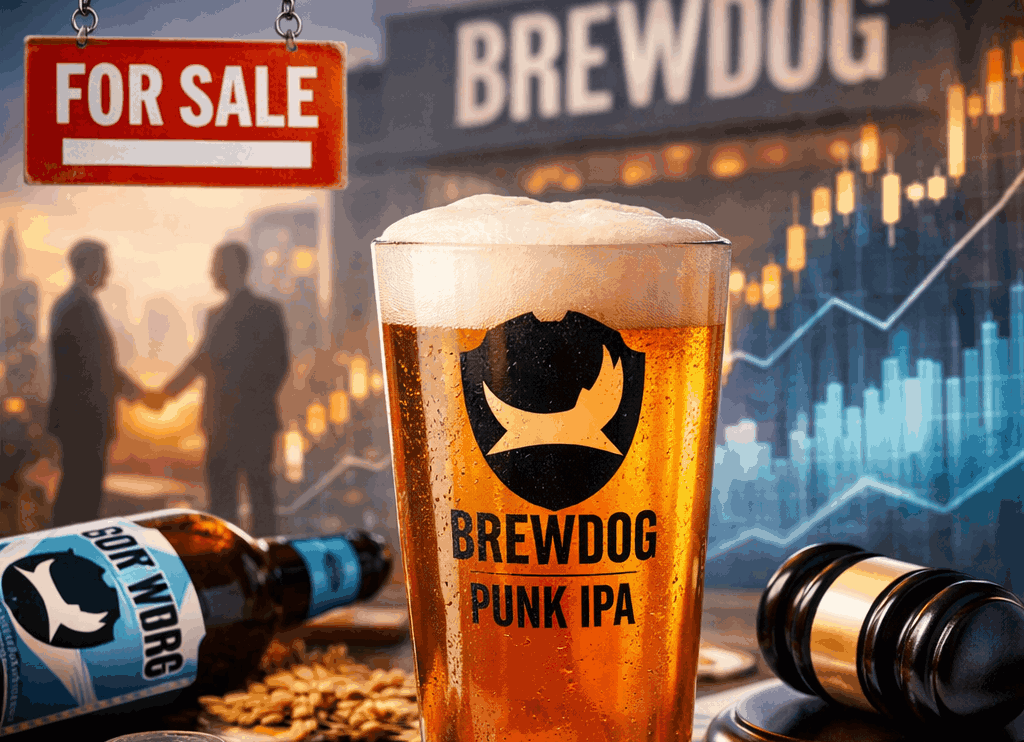
The BrewDog Sale Process has become one of the biggest talking points in the craft beer world this year. The Scottish brewer behind the famous Punk IPA is officially exploring new ownership, with founders James Watt and Martin Dickie reportedly ready to step away after nearly two decades of building a rebellious beer empire. For fans and investors alike, the news feels like the end of an era but also the start of a new chapter for one of the UK’s most recognizable independent brands.
Founded in 2007 in a small garage in Scotland, BrewDog quickly rose to fame by challenging traditional brewing norms. Its bold branding, high-energy marketing, and loyal community turned a startup into a global phenomenon. Now, as the BrewDog Sale Process unfolds, questions about the company’s future direction are growing louder.
Early Growth Behind the BrewDog Sale Process Story
Long before today’s headlines, BrewDog gained attention through its innovative “Equity for Punks” crowdfunding model. Over 220,000 investors joined the journey, contributing millions of pounds and helping the brand expand internationally. Many early supporters invested modest sums around £400 on average hoping to share in the success of a disruptive craft beer pioneer.
By 2017, a major investment deal valued the company at roughly $1 billion, signaling peak optimism for the brand. Bars opened across multiple continents, and production facilities spread from Scotland to Ohio, Australia, and Germany. Punk IPA became a staple in UK supermarkets, capturing a strong share of the craft beer category.
This rapid expansion laid the foundation for the current BrewDog Sale Process, as the company evolved from a small rebel brewer into a complex global business with significant operational costs.
Financial Pressures Driving the BrewDog Sale Process Forward
Despite its strong brand recognition, BrewDog has faced serious financial challenges in recent years. Reports of losses exceeding £37 million on annual revenues of more than £350 million highlighted the strain many independent brewers now feel. Economic pressures, rising production costs, and intense competition from larger beverage companies have squeezed margins across the industry.
Several UK bar closures, job reductions, and halted spirit production added to the pressure. These steps were framed as part of a broader restructuring effort designed to stabilize the company and prepare it for long-term growth. However, for many observers, they also signaled that a major shift such as the BrewDog Sale Process was becoming inevitable.
Industry analysts note that the craft beer market has matured significantly. What once felt like a fast-growing niche now requires sustainable profitability and operational efficiency to survive.
Leadership Changes Shape the BrewDog Sale Process Timeline
Leadership transitions have played a crucial role in shaping the company’s current direction. James Watt stepped down as CEO after facing criticism over company culture, while Martin Dickie moved away from daily operations for personal reasons. These changes marked a turning point, with BrewDog focusing more on corporate stability and less on its earlier rebellious image.
Advisory firm AlixPartners is reportedly managing the structured auction, inviting interest from private equity groups, strategic buyers, and even potential comeback investors linked to the founders themselves. While details remain confidential, the BrewDog Sale Process is expected to attract strong attention due to the brand’s global recognition and loyal customer base.
Some analysts believe that a full company sale is only one option. A breakup scenario where bars, breweries, or intellectual property are sold separately could also emerge depending on offers received.
What the BrewDog Sale Process Means for Investors and Fans
For early “Punks” who invested during the crowdfunding era, the current situation brings mixed emotions. Some early backers previously achieved strong returns when shares were partially sold, while newer investors may face uncertainty depending on the final valuation. Transparency around the BrewDog Sale Process will be key in maintaining trust within the community that helped build the brand.
Beer enthusiasts are equally curious about what new ownership could mean for product identity. Will Punk IPA keep its independent spirit, or could it become part of a larger corporate portfolio? BrewDog has reassured customers that day-to-day operations remain unchanged, with breweries continuing production and bars serving customers worldwide.
For readers interested in broader brewing trends, External industry data such as the UK beer market report also shows how changing consumer habits influence strategic decisions like this sale.
Global Market Trends Influencing the BrewDog Sale Process
The timing of the BrewDog Sale Process reflects larger shifts happening across the beverage industry. Craft beer, once fueled by explosive growth, now faces saturation in many regions. Major multinational brewers have expanded their premium offerings, making it harder for independent brands to secure shelf space.
At the same time, consumer preferences are evolving toward low-alcohol options, premium lagers, and non-beer beverages. BrewDog’s decision to halt certain spirit lines highlights how diversification strategies can sometimes stretch resources too thin during uncertain economic periods.
Experts believe that any buyer involved in the BrewDog Sale Process will likely focus on streamlining operations while preserving the brand’s strong marketing identity a key factor that differentiates BrewDog from more traditional brewers.
Future Outlook After the BrewDog Sale Process Concludes
As bidding progresses, several possible outcomes remain on the table. Private equity ownership could bring operational discipline and cost optimization, while a strategic buyer from within the beverage industry might focus on expanding distribution networks. There is even speculation that the founders could attempt a return with new financial partners.
Regardless of the final result, the BrewDog Sale Process marks a pivotal moment in the evolution of craft brewing. From a garage startup to a global brand, BrewDog has reshaped how independent beer companies engage with their communities and investors. The next phase will determine whether that pioneering spirit continues under new leadership or evolves into a more traditional corporate structure.
For now, bars remain open, beer continues to flow, and fans around the world watch closely as this high profile transition unfolds. One thing is certain: the outcome of the BrewDog Sale Process will influence not only BrewDog’s future but also the direction of the wider craft beer industry for years to come.