Table of Contents
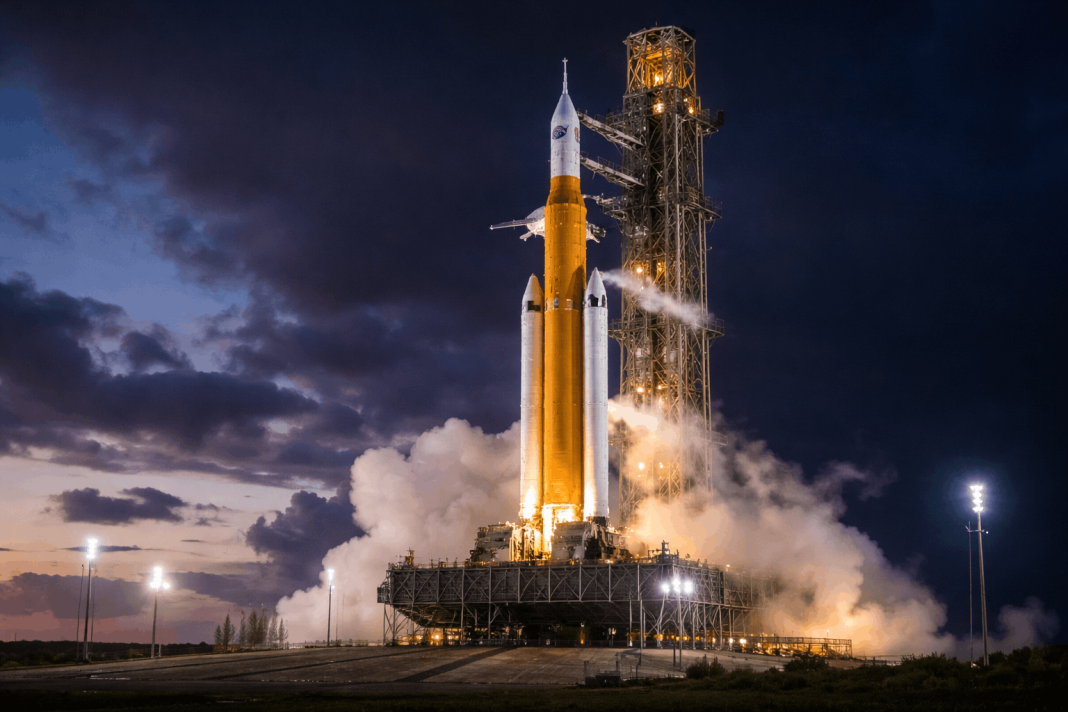
ToggleThe Artemis II Rehearsal reached a major milestone on February 19, 2026, as NASA successfully completed a full wet dress rehearsal with its Space Launch System rocket. The test simulated real launch procedures, allowing engineers to evaluate fueling systems, safety checks, and countdown operations before astronauts fly around the Moon. This achievement signals strong progress toward humanity’s return to deep space exploration and strengthens confidence in upcoming missions.
NASA began the test early in the morning by preparing the rocket with inert nitrogen gas, ensuring safe conditions before introducing cryogenic fuels. Teams carefully monitored every step, knowing that earlier rehearsals faced delays due to hydrogen leaks. This time, the improved seals and updated procedures proved effective, keeping operations smooth throughout the day.
Artemis II Rehearsal Timeline Shows Step-by-Step Progress
The day’s activities followed a precise schedule designed to mimic real launch conditions. Engineers configured the rocket systems first, confirming that communication networks and ground support equipment worked properly. Around mid-morning, controllers approved the start of fueling, beginning with slow fill procedures to protect the rocket’s sensitive tanks.
Liquid hydrogen and oxygen are extremely cold, so teams cooled the fuel lines before loading began. Slow fill transitioned to fast fill as technicians confirmed stable conditions. By early afternoon, replenish mode kept tank levels steady against natural boil-off, a key part of long countdown sequences.
A planned one-hour hold allowed crews to close the Orion spacecraft hatch and inspect seals. The final countdown ran twice to test scrub scenarios and emergency pauses. Even when a minor communication glitch appeared, backup systems kept operations on track, demonstrating the reliability NASA aims for during real missions.
Artemis II Rehearsal Solves Previous Hydrogen Leak Challenges
Hydrogen leaks were the biggest obstacle during earlier attempts. The tail service mast, where fueling lines connect to the rocket, caused repeated delays because hydrogen escapes easily at low temperatures. Engineers replaced seals, adjusted connection points, and refined temperature procedures to prevent future problems.
During this latest test, no major leaks exceeded safety limits. NASA briefly warmed the lines before cooling them again, helping seals settle into place. Experts in cryogenic engineering say hydrogen offers powerful thrust but requires extremely tight control. Improved handling methods during this rehearsal show how lessons learned from past failures can lead to safer outcomes.
Material science also played a role. Seals made with Teflon perform well in freezing conditions but must withstand rapid temperature changes. Each new rocket behaves differently, so continuous testing remains essential. The successful rehearsal demonstrates that the team’s technical adjustments are working as intended.
Artemis II Mission Delays: Wet Dress Rehearsal Updates
Artemis II Rehearsal Strengthens Astronaut Safety and Mission Goals
Safety remains the core focus of every Artemis mission. Four astronauts Commander Reid Wiseman, pilot Victor Glover, mission specialist Christina Koch, and Canadian Space Agency astronaut Jeremy Hansen will fly around the Moon during this historic journey. Their mission will test the Orion spacecraft’s life-support systems and navigation capabilities in deep space for the first time since Apollo.
The rehearsal verified that ground teams can manage fueling operations without unexpected stops. Stable tanks, accurate temperature control, and reliable communication systems all contribute to crew safety. By simulating real countdown events, NASA ensures that astronauts face fewer unknown risks once the rocket leaves the launch pad.
You can explore more about the rocket design on NASA’s official Space Launch System page.
Artemis II Rehearsal Highlights Engineering Innovation and Challenges
Political decisions and engineering heritage shaped the SLS rocket design. Many components reuse Space Shuttle technology, making the system both familiar and complex. While this approach increases costs, it also builds on decades of proven experience.
Cryogenic fuels present unique engineering hurdles. Hydrogen’s low density provides strong efficiency for long-distance missions, but it demands strict temperature control and durable materials. Engineers monitor thermal stress closely, as extreme cold can cause tiny fractures or seal failures.
The rehearsal showed how incremental improvements refine the vehicle over time. Each fueling cycle offers valuable data that helps engineers adjust procedures and prevent issues during future launches. Continuous testing not only improves reliability but also accelerates the learning curve for deep-space missions.
Artemis II Rehearsal Builds Momentum Toward Future Moon Landings
This successful test moves NASA closer to its long-term Artemis goals. Artemis II will orbit the Moon and return safely to Earth, paving the way for Artemis III, which aims to land astronauts near the lunar south pole. Data gathered during this mission will shape future spacecraft designs, mission timelines, and international collaborations.
Crew training continues alongside technical preparations. Simulators, underwater rehearsals, and emergency drills help astronauts prepare for the unique challenges of deep space travel. As technology evolves, these missions inspire new generations of scientists and engineers around the world.
Learn more about the Orion spacecraft and astronaut training here.
Artemis II Rehearsal Signals a New Era of Space Exploration
The success of this rehearsal reflects NASA’s persistence and problem-solving approach. Overcoming hydrogen leaks boosted morale across the program and demonstrated how collaboration between engineers, technicians, and astronauts drives progress. With the launch scheduled no later than April 2026, excitement continues to grow among space enthusiasts and experts alike.
Beyond technical achievements, the mission carries cultural significance. Just as the Apollo era inspired a generation, today’s Artemis program aims to spark curiosity and innovation worldwide. Children watching these milestones may become tomorrow’s scientists, pilots, or mission planners.
In summary, this rehearsal achieved its main objectives without major issues, proving that the rocket, ground systems, and procedures are ready for the next phase. As NASA prepares for humanity’s return to lunar exploration, each successful test brings the dream of sustainable Moon missions closer to reality.