Grimsby Hall Restoration Begins in November 2026
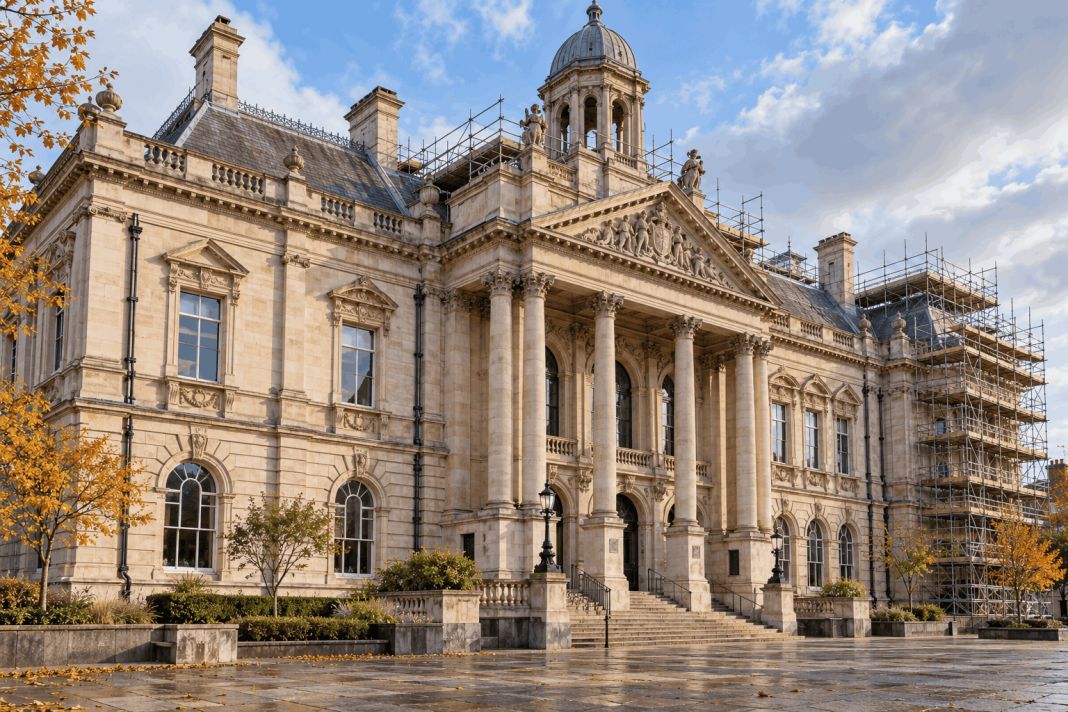
Grimsby Hall Restoration is scheduled to begin in early November 2026, bringing essential roof repairs and conservation work to Grimsby Town Hall. The project will also cover historic cast iron drainage, masonry and carpentry. These improvements aim to protect the landmark’s fabric and support its future as a working civic building. NELC
The announcement marks another stage in the care of one of the town’s most recognisable public buildings. Earlier maintenance included asbestos removal from the basement and external repairs. Now, attention turns to several roofs and other parts of the exterior that need specialist work.
For residents, the project highlights a practical challenge: keeping historic public buildings in good condition while preserving the features that make them distinctive.
Grimsby Hall Restoration: What the Repairs Include
The upcoming programme combines roof repairs and replacement with work on the building’s external features. Cast iron rainwater goods will receive conservation attention, while carpentry and masonry repairs will take place across several elevations.
The published conservation works tender also identifies lead work, timber repairs and decoration within the wider scope. It describes the property as a Grade II listed building, underlining the need for an approach suited to its historic character. uk.eu-supply.com
These tasks address different parts of the same protective shell. Roof coverings help keep rain outside, drainage carries it away, and sound external materials limit opportunities for moisture to enter.
Together, the repairs are intended to support the building’s continued use. The work should therefore be understood as an investment in its condition, rather than simply a change to its appearance.
Grimsby Hall Restoration: Why Roofs and Drainage Matter
A roof is one of a building’s main defences against the weather. However, roof coverings depend on working gutters, outlets and downpipes to move rainwater away safely. A weakness in one part of that system can affect other areas.
For example, overflowing gutters may repeatedly soak nearby walls. Over time, water penetration can contribute to timber decay and damage to building materials. This explains why roof work and drainage conservation often need to be considered together.
Guidance on resilient rainwater systems explains how effective drainage helps prevent deterioration. It also stresses that maintenance, design and adequate capacity all influence performance. Historic England
For this project, restoring cast iron components connects a practical maintenance need with heritage care. The aim is to help the drainage function while respecting its place within the building’s exterior.
Grimsby Hall Restoration: Preserving Historic Materials
Historic buildings gain much of their character from individual details. Gutters, downpipes, masonry and timber features may seem secondary to a grand entrance or civic chamber. Nevertheless, they contribute to how the whole building looks and performs.
Traditional rainwater fittings can have architectural value as well as a practical purpose. Their shape, material and position may form part of the original design. Consequently, decisions about repairs or replacement need careful consideration.
Conservation guidance on rainwater goods recommends respecting significant materials and matching original profiles where appropriate. It also notes that well-maintained cast iron and lead components can have long service lives. Historic England
This provides useful context for the planned conservation work. Preserving suitable existing features can help maintain visual continuity, while necessary repairs support the building’s ability to withstand everyday exposure to the weather.
Grimsby Hall Restoration: Building on Earlier Maintenance
The November programme follows earlier work that included basement asbestos removal and previous external repairs. These activities address different maintenance needs, but they share a common purpose: caring for an ageing public asset.
Large historic buildings rarely depend on a single repair campaign. Their roofs, drainage, walls and timber elements can require attention at different times. As a result, completing one phase does not remove the need for future inspections or maintenance.
Regular checks are particularly useful after severe weather. They can reveal blocked drainage, damaged fittings or signs that water is escaping where it should not. Guidance on inspection and repair of rainwater systems recommends reviewing maintenance schedules and ensuring suitable access for checks. Historic England
The wider lesson is straightforward. Restoration works best when it forms part of continuing care, with routine attention helping protect the value of more substantial repairs.
Grimsby Hall Restoration: Protecting a Working Civic Landmark
A town hall carries meaning beyond its construction materials. It represents local decision-making, public service and the relationship between residents and their elected representatives. Preserving such a building therefore has both practical and cultural value.
Grimsby’s landmark also provides a visible connection between the town’s past and its present. Maintaining its exterior helps retain that familiar presence, while conservation work supports the survival of features that distinguish it from newer buildings.
However, heritage protection requires more than keeping a recognisable frontage. Roofs, drainage and less visible structural materials all contribute to the condition of the property. Their care helps support the preservation of the building as a whole.
Readers interested in similar projects can explore our coverage of UK heritage and regeneration. Such projects show how communities approach the ongoing responsibility of maintaining important public places.
Grimsby Hall Restoration: What Residents Should Watch For
The key confirmed milestone is the planned start in early November 2026. Residents can read the official project announcement for the published scope and timing.
Anyone planning a visit, attending a meeting or arranging an appointment should check the latest venue information beforehand. A construction announcement alone does not establish whether individual entrances, events or services will be affected.
Further updates will be useful for understanding progress and any practical arrangements during the works. Clear information can help residents plan visits while giving the community a better understanding of the conservation taking place.
The immediate priority is the care of the roofs and exterior materials. Over the longer term, continued inspection and maintenance will remain important in protecting this familiar landmark and supporting its place in Grimsby’s civic life.
Grimsby Hall Restoration starts in November 2026, with roof, stonework and drainage repairs protecting the historic landmark.

Nuwan Wackwella is a digital creator passionate about technology, creativity, and sharing inspiring moments from everyday life.