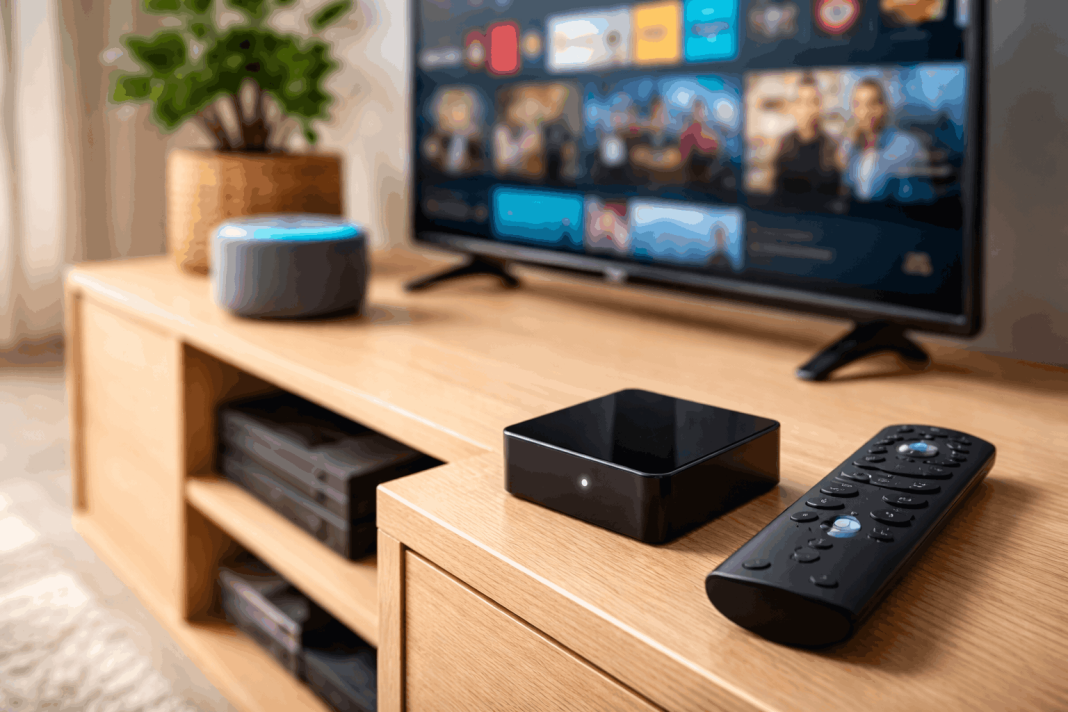
The Fire TV Blaster shutdown has become one of the most talked-about smart home developments, surprising thousands of Amazon customers worldwide. Imagine waking up to discover that a device you paid for simply no longer works not because it’s broken, but because it was remotely disabled. That is exactly what Amazon plans to do by March 2026, marking a major shift in how post purchase device support is handled.
This decision highlights the growing dependence on cloud-connected hardware and raises serious questions about device ownership, longevity, and consumer trust in the smart home ecosystem.
What Is the Fire TV Blaster and Why It Mattered
The Fire TV Blaster was introduced in 2019 as a companion device for Amazon’s Fire TV ecosystem. Its main appeal was hands-free control. By using infrared (IR) signals combined with Alexa voice commands, users could power on TVs, adjust volume levels, and even switch cable channels without touching a remote.
Designed to pair with Fire TV Sticks and Echo speakers, the device filled an important gap for older TVs and sound systems that lacked smart connectivity. For many households, it simplified daily entertainment and added genuine convenience to living rooms.
Why Amazon Is Ending Fire TV Blaster Support
Amazon has cited declining demand as the primary reason for discontinuing the Fire TV Blaster. From the beginning, sales were modest, partly due to its somewhat complex setup process. Many users struggled with placement, calibration, and compatibility with certain TV models.
At the same time, television technology has evolved rapidly. Most modern TVs now support HDMI-CEC, allowing basic control functions like power and volume through connected streaming devices. As a result, the Blaster became increasingly redundant. Amazon officially stopped selling it in early 2025, signaling the end was approaching.
Fire TV Blaster Shutdown Timeline Explained
Amazon began notifying customers via email in January 2026. According to those notices, the Fire TV Blaster will start losing functionality in the weeks that follow, with a complete shutdown scheduled for the end of March 2026.
Once disabled, the device will no longer function in any capacity. Unlike other discontinued Amazon products that continue working offline, this shutdown involves a remote software update that permanently renders the hardware unusable.
How the Fire TV Blaster Shutdown Affects Users
When the Fire TV Blaster stops working, users will lose voice-controlled access to their TVs, soundbars, and cable boxes. Commands like “Alexa, turn on the TV” or “Alexa, change the channel” will no longer work.
This decision affects users globally, including those in the US, UK, and other major markets. Many customers purchased the device relatively recently, making the shutdown feel especially abrupt. It’s also the first time Amazon has fully “bricked” a smart home device after sale, setting a concerning precedent.
What This Means for Smart Home Device Ownership
The Fire TV Blaster situation highlights a larger issue: cloud dependency. Many smart devices rely on ongoing server support to function. When that support ends, so does the product regardless of its physical condition.
For consumers, this raises important questions about long term value, sustainability, and digital ownership. It may also influence how buyers evaluate future smart home purchases, placing greater emphasis on longevity and offline functionality.
Amazon’s Recycling and Upgrade Options
To soften the impact, Amazon is offering free recycling for the Fire TV Blaster. Users can request a prepaid shipping label through Amazon’s official recycling program.
In addition, Amazon is providing discounts on replacement devices. Customers can receive $60 off the Fire TV Cube, bringing the price down significantly until March 31, 2026. The Fire TV Cube includes built-in Alexa and infrared control, effectively replacing the Blaster’s functionality in a single device.
Best Alternatives After Fire TV Blaster Shutdown
If you’re affected by the Fire TV Blaster shutdown, you still have several solid alternatives:
-
Fire TV Cube – The most seamless upgrade with voice control and IR built in.
-
HDMI-CEC – Enables basic power and volume control directly through your Fire TV Stick.
-
Universal Remotes – Brands like Logitech Harmony (where available) offer advanced control options.
Each option varies in complexity and cost, so users should choose based on their home setup and preferences.
Lessons from the Fire TV Blaster Shutdown
The end of the Fire TV Blaster serves as a wake-up call for smart home users. It underscores the importance of understanding product life cycles and the risks of cloud-dependent devices. While innovation continues to improve user experiences, it also shortens the lifespan of older technology.
For Amazon, this move allows greater focus on integrated, modern devices. For users, it’s a reminder to stay informed, monitor end-of-life announcements, and plan upgrades proactively.
Final Thoughts: Moving Forward After Fire TV Blaster
The Fire TV Blaster may soon be gone, but its impact will be felt long after March 2026. It has sparked meaningful conversations about consumer rights, sustainability, and the future of smart home technology.
By taking advantage of discounts, recycling responsibly, and choosing future-proof devices, users can turn this disruption into an opportunity. Change is inevitable in tech—but informed users are always better prepared.

I’m an Online Media & PR Strategist at BusinessFits, passionate about digital storytelling and media impact. As a journalist, blogger, and SEO specialist, I create content that connects, informs, and ranks.