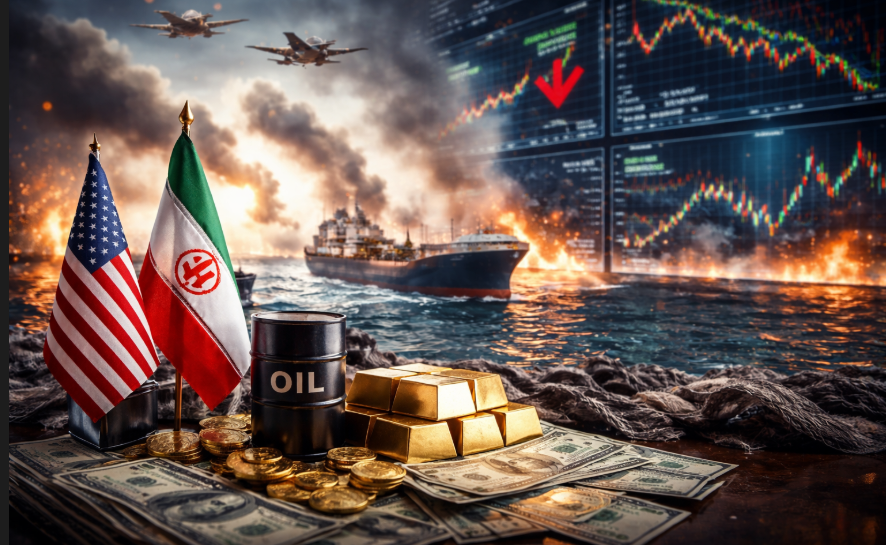
Global markets experienced sharp movements today as Trump Iran tensions sent shockwaves across stocks, oil, and commodities. The uncertainty began after escalating geopolitical developments between the United States and Iran, with investors reacting instantly to every update.
In the early hours, fear dominated trading floors. However, sentiment shifted quickly when diplomatic signals emerged. President Trump announced a delay in military action, describing ongoing discussions with Iran as “productive.” This statement eased immediate concerns and helped markets stabilize.
The Trump Iran tensions originated from a critical disruption—Iran’s closure of the Strait of Hormuz, a vital global oil route responsible for transporting nearly 20% of the world’s oil supply. This move intensified fears of supply shortages and rising energy costs.
Iran Tensions Drive Strait of Hormuz Crisis Concerns
The Strait of Hormuz plays a crucial role in global energy flow, making it a focal point in the ongoing Trump Iran tensions. When Iran restricted access to the route, markets quickly priced in the risk of severe supply disruptions.
Initially, the U.S. response appeared aggressive. President Trump issued a 48-hour ultimatum demanding the reopening of the passage. This heightened fears of a potential military confrontation, causing investors to pull back from riskier assets.
However, the situation evolved rapidly. Trump later announced a temporary delay in planned strikes, allowing diplomatic negotiations to continue. This shift reduced immediate panic but did not eliminate underlying uncertainty.
For more on global oil supply routes, visit oilprice.com
Trump Iran Tensions Cause Sharp Stock Market Swings
Stock markets worldwide reacted strongly to Trump Iran tensions, reflecting investor anxiety and rapid sentiment changes.
European markets initially dropped but later recovered. France’s CAC index gained around 1%, while Germany’s DAX rose nearly 2% by the end of the session. This rebound showed how quickly confidence can return when geopolitical risks ease.
Asian markets, however, faced deeper losses. Japan’s Nikkei index fell more than 3% during early trading, and South Korea experienced even steeper declines. Investors in these regions reacted more cautiously due to their heavy reliance on energy imports.
In the UK, markets dipped before stabilizing. Energy and industrial stocks were particularly sensitive, reflecting concerns about rising costs and supply disruptions tied to Trump Iran tensions.
Iran Tensions Impact Oil Prices Dramatically
Oil markets saw some of the most dramatic reactions to Trump Iran tensions. Prices surged initially as fears of supply disruption intensified.
Brent crude briefly climbed above $113 per barrel, while U.S. crude crossed the $100 mark. These spikes reflected the market’s immediate response to the Strait of Hormuz closure.
However, once diplomatic signals emerged, prices reversed sharply. Brent crude dropped about 7% in a single day, settling near $103. Gas prices also declined by approximately 5%, offering short-term relief to consumers and industries.
Despite the drop, analysts warn that Trump Iran tensions could keep oil prices volatile in the coming weeks. Any escalation or breakdown in talks could push prices higher again.
Trump Iran Tensions Push Gold Prices Lower
Interestingly, gold traditionally a safe-haven asset did not behave as expected during the Iran tensions. Instead of rising, gold prices declined.
Gold fell to around $4,300 per ounce, marking a notable drop during a period of geopolitical uncertainty. This unusual trend reflects broader economic factors influencing investor behavior.
Higher energy costs may drive inflation, which in turn could lead to higher interest rates. As a result, investors shifted away from gold toward assets that benefit from rising rates.
Additionally, a stronger U.S. dollar reduced gold’s appeal globally. Together, these factors outweighed the typical safe haven demand linked to Iran tensions.
View live gold prices here: www.kitco.com
Signals for Investors
The overall market response to Trump Iran tensions remains mixed. While some stock indexes recovered, uncertainty continues to influence investor decisions.
Spain’s stock market rose over 1%, showing resilience. Other markets remained flat, reflecting cautious optimism rather than full confidence.
Major financial institutions have adjusted their forecasts. Many now expect oil prices to average around $85 per barrel this year higher than previous estimates but still below recent peaks.
This outlook highlights how Trump Iran tensions continue to shape expectations across global markets. Iran War Rates Impact UK Economy and Households Now
Trump Iran Tensions Raise Global Energy Concerns
Energy security has become a central issue as Iran tensions persist. Governments and industry leaders are closely monitoring developments.
In the UK, officials held emergency meetings to assess potential risks. Analysts warn that household energy bills could rise by up to 20% if disruptions continue.
Global energy authorities have compared the current situation to past oil shocks, combined with ongoing gas supply challenges. Countries like Japan and South Korea are particularly vulnerable due to their dependence on imported energy.
The broader impact of Trump Iran tensions could include higher transportation costs, increased manufacturing expenses, and rising prices for everyday goods.
Trump Iran Tensions: What Investors Should Watch Next
Looking ahead, Trump Iran tensions remain the key factor influencing global markets. Investors should monitor several critical indicators:
- Oil and gas price movements
- Updates on diplomatic negotiations
- Central bank responses to inflation risks
- Currency fluctuations, especially the U.S. dollar
Market volatility is likely to continue. Even small developments related to Trump Iran tensions can trigger rapid price changes across multiple sectors.
While gold may remain subdued in the short term, it could rebound if uncertainty escalates further. Similarly, stock markets may experience continued fluctuations as investors react to new information.
Conclusion
The ongoing Trump Iran tensions demonstrate how geopolitical events can quickly influence global financial systems. From oil price swings to stock market volatility and unexpected movements in gold, the impact is widespread.
As negotiations continue, the world watches closely. The outcome will not only affect regional stability but also determine future trends in energy prices, investment strategies, and economic growth.
For now, staying informed and cautious is essential. The situation remains fluid, and Iran tensions will likely continue to drive market behavior in the days ahead.