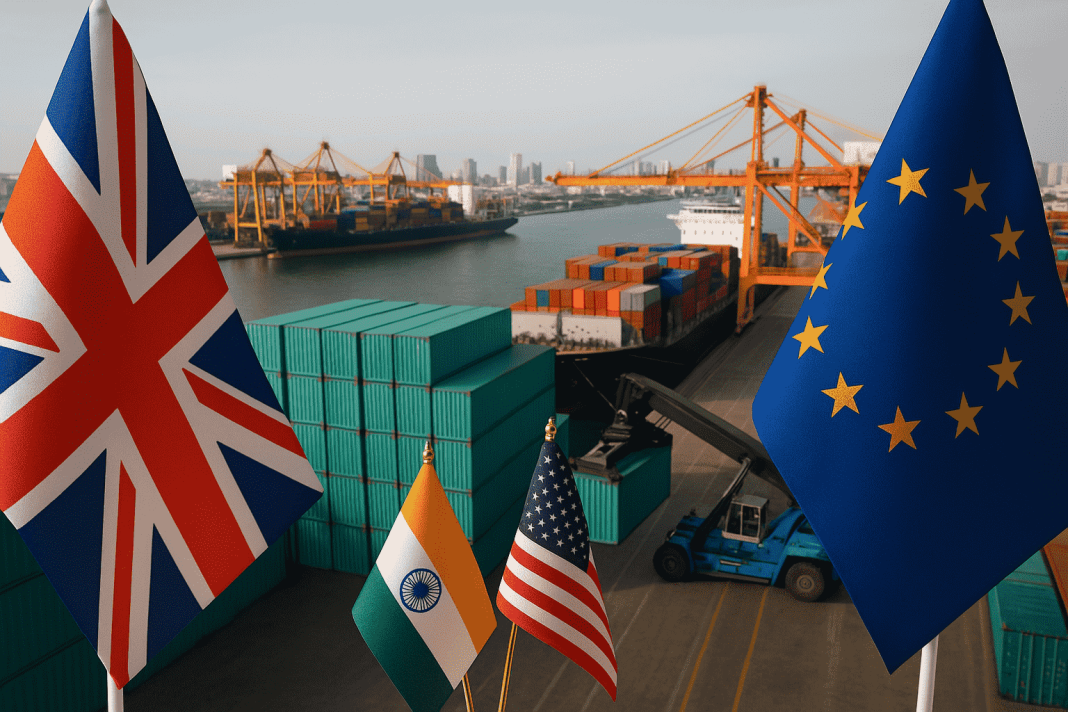
Post Brexit Trade continues to redefine how UK B2B businesses operate in 2025, five years after the UK formally exited the European Union. What began as a political shift has evolved into a long term commercial transformation affecting supply chains, services, compliance, and market access.
For UK B2B firms, the challenge is no longer uncertainty it’s execution. Customs checks, regulatory divergence, and new trade deals have reshaped daily operations. This article explores how businesses are responding, where opportunities lie, and how to build resilience in a changing global trade environment.
Post Brexit Trade and EU Market Barriers
The EU remains the UK’s largest trading partner, yet Post Brexit Trade with the bloc is more complex than ever. Since the Trade and Cooperation Agreement (TCA), non tariff barriers have increased costs and slowed movement.
Goods exports to the EU declined by nearly 19%, while imports dropped over 23% as firms struggled with rules of origin, customs declarations, and border checks. For B2B exporters, these frictions translate into delayed deliveries, higher logistics costs, and reduced competitiveness.
Services trade has also felt the impact. UK services exports remain 4–5% below pre-Brexit levels. Nearly half of exporting firms cite licensing, visa, and residency restrictions as major obstacles especially in professional and financial services.
Key EU Challenges Under Post Brexit Trade
Daily operational barriers define Post Brexit Trade for many UK B2B firms. The most common challenges include:
-
Customs procedures: Around 45% of firms report border delays as their biggest cost driver.
-
Regulatory divergence: The loss of mutual recognition has disrupted engineering, legal, and consulting services.
-
Documentation burden: Increased paperwork disproportionately affects SMEs with limited compliance resources.
In late 2025, new EU customs duties targeting smaller exporters intensified these pressures. However, progress is underway. The May 2025 UK-EU summit reopened talks on a sanitary and phytosanitary (SPS) agreement, which could significantly reduce agri food checks by 2027.
How UK Firms Adapt to Post Brexit Trade Pressures
Despite the challenges, UK businesses are adapting strategically to Post Brexit Trade realities rather than retreating.
Many companies are restructuring supply chains. Around 20% of UK B2B firms plan to establish EU-based hubs to maintain market access. Distribution centres in the Netherlands and Ireland are increasingly popular, reducing border friction while preserving customer relationships.
Market diversification is another key response. Approximately 9% of firms have shifted focus toward non EU markets. Manufacturing and industrial suppliers, in particular, are leveraging digital platforms to reach Asia Pacific and Middle Eastern buyers.
Technology plays a growing role. Automated customs software and AI driven compliance tools now reduce declaration errors and processing time. According to the British Chambers of Commerce, firms using digital trade tools report up to 25% efficiency gains.
Actionable Strategies for Post Brexit Trade Success
To operate effectively within Post Brexit Trade, UK B2B firms should focus on practical, phased improvements:
-
Audit EU exposure: Identify high-cost trade routes and assess whether local EU partners can reduce friction.
-
Strengthen EU presence: Joint ventures or third party logistics partnerships can lower compliance risks. Support is available via UK Export Finance.
-
Monitor regulatory talks: Firms in food, chemicals, and life sciences should prepare early for SPS and regulatory alignment opportunities.
These steps help stabilize operations while positioning firms for long-term growth.
Global Growth Opportunities in Post Brexit Trade
While EU trade has become more complex, Post Brexit Trade has also accelerated global outreach. The UK’s 2025 Trade Strategy targets £1 trillion in exports by 2035, emphasizing high-growth markets.
The UK-India Free Trade Agreement, signed in May 2025, is a major milestone. It is expected to add £4.8 billion annually to the UK economy through reduced tariffs on automotive, engineering, and consumer goods. UK exports to India rose 15% in Q3 2025 alone.
The US remains another strategic focus. Although digital trade provisions stalled in late 2025, steel tariffs were reduced to 10%, benefiting UK manufacturers. Meanwhile, Canada and CPTPP member states offer expanding opportunities, particularly for services and technology firms.
UK Industrial Strategy: Fueling Innovation in B2B Sectors
Case Studies: Post Brexit Trade in Practice
Real-world examples show how firms can succeed within Post Brexit Trade frameworks.
A London-based fintech lost EU passporting rights but redirected efforts toward the US market, doubling its client base and increasing revenue by 22%. Meanwhile, a Yorkshire food exporter leveraged the India FTA to secure £2 million in new contracts, offsetting EU-related losses.
Key lessons include maintaining a balanced market mix and actively using government support services such as the Export Support Service.
Future Outlook for Post Brexit Trade
Looking ahead, Post Brexit Trade will remain dynamic. Potential shifts in US tariff policy and ongoing EU regulatory negotiations will continue to shape the landscape. Encouragingly, talks on linking UK-EU emissions trading systems could halve compliance costs for carbon-intensive industries by 2026.
Although non-tariff barriers have reduced long term productivity, services trade shows signs of recovery. Firms investing in skills, automation, and compliance infrastructure are best positioned to lead.
For further insight, see this ECB analysis on EU-UK trade impacts. You may also explore our internal Taxes & Policies hub for regular regulatory updates.
Conclusion
In summary, Post Brexit Trade presents undeniable challenges for UK B2B firms, particularly in EU markets. Yet it also unlocks global growth through new trade agreements and diversified partnerships.
Businesses that adapt by embracing technology, expanding globally, and leveraging government support are already turning disruption into advantage. The key is agility, informed decision making, and long term strategy.
How is your business responding to these changes? Now is the time to reassess, realign, and act confidently in the evolving world of UK trade.