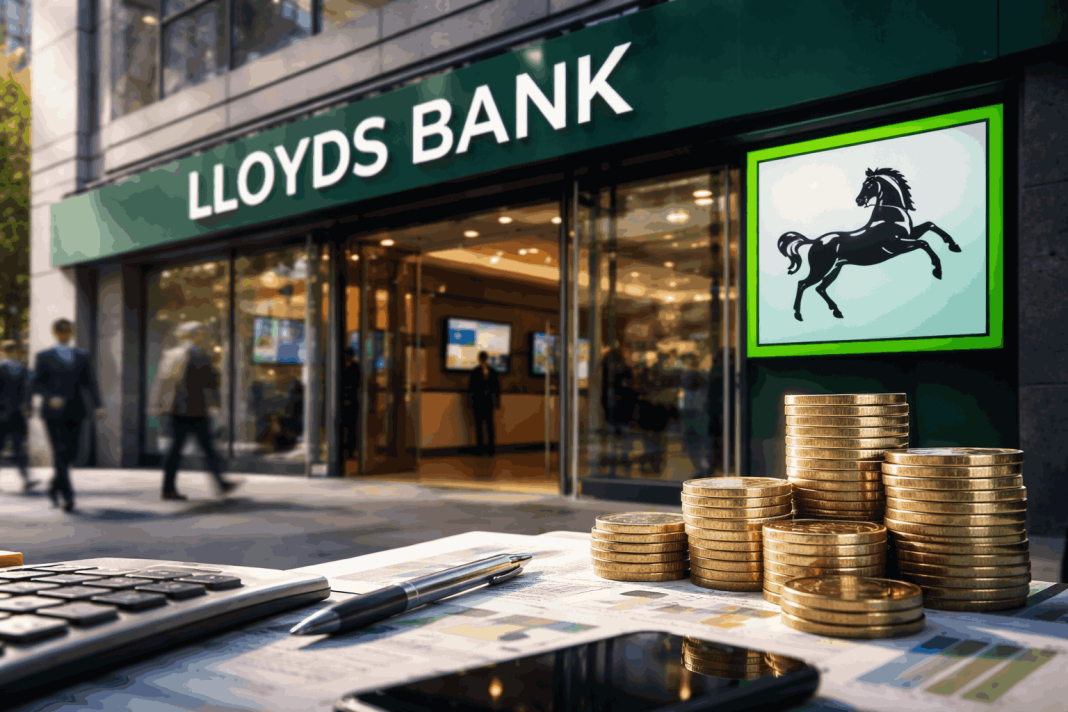
The Lloyds Bank Buyback announcement has delivered a clear message to investors: the UK’s largest high-street lender is confident in its financial strength and future growth. The bank reported a strong earnings beat for 2025, followed swiftly by a £1.75 billion share repurchase programme that underscores robust capital generation and disciplined cost control.
This strategic move places Lloyds firmly among leading UK banks prioritising shareholder returns while maintaining balance sheet resilience.
Lloyds Bank Buyback Driven by 12% Profit Growth in 2025
The Lloyds Bank Buyback comes after the group posted pre-tax profits of £6.7 billion for the full year, marking a 12% increase compared with 2024. This result exceeded market expectations of approximately £6.4 billion and reflected a particularly strong finish to the year.
Fourth-quarter profits more than doubled to £1.98 billion, supported by rising income and stable operating performance. The results highlight Lloyds’ ability to navigate a higher-rate environment while keeping costs and credit risks under control.
According to analysts, the earnings beat provided the financial flexibility needed to launch a large-scale capital return programme without weakening the bank’s capital ratios.
Lloyds Bank Buyback Supported by Rising Net Interest Income
A key contributor to earnings strength was net interest income, which rose 6% year-on-year to £13.6 billion. Higher interest rates continued to support lending margins, particularly across mortgages and commercial banking.
Despite intense competition for deposits, Lloyds managed to protect its net interest margin while expanding its customer base. This balance between growth and pricing discipline has been central to the bank’s recent performance.
For broader context on interest rate impacts across the sector, readers can explore our internal analysis on Lloyds Share Outlook: Stress Test Lift and Path to £1 in 2026.
Lloyds Bank Buyback Comes Despite Higher Remediation Costs
While profitability improved, the year was not without challenges. Remediation charges climbed to £968 million, largely linked to ongoing motor finance regulatory reviews. Impairment charges also increased to £795 million, reflecting cautious provisioning amid economic uncertainty.
Importantly, Lloyds stressed that credit quality remains strong, with bad debt levels still low relative to historical averages and peer banks. Management believes the bulk of motor finance provisions have now been addressed, reducing the risk of future surprises.
For regulatory background, see guidance from the
UK Financial Conduct Authority
Lloyds Bank Buyback Complements £3.9bn Total Shareholder Payout
The Lloyds Bank Buyback is part of a broader shareholder return strategy that will distribute approximately £3.9 billion in total. Alongside the £1.75 billion repurchase, Lloyds increased dividends by 15%, taking the full-year payout to 3.65 pence per share.
The final dividend of 2.43 pence per share reflects management’s confidence in earnings sustainability. For income-focused investors, the combination of dividends and buybacks enhances total return while supporting earnings per share growth.
You can review Lloyds’ official capital return policy on the Lloyds Banking Group investor relations site.
Lloyds Bank Buyback Signals Capital Strength and Market Confidence
A Lloyds Bank Buyback reduces the number of shares in circulation, effectively increasing each remaining shareholder’s ownership stake. This often leads to improved earnings per share and can support share price performance over time.
Buybacks are typically favoured when management believes the stock is undervalued or when excess capital cannot be deployed more profitably elsewhere. In Lloyds’ case, analysts see the programme as a sign of confidence in medium-term earnings visibility and balance sheet resilience.
Lloyds Bank Buyback Backed by CEO Strategy and Execution
Chief Executive Charlie Nunn highlighted strong momentum across the business, citing disciplined execution of Lloyds’ multi-year strategy. Cost efficiency, balance sheet growth, and customer expansion have all contributed to improved returns.
Nunn emphasised that Lloyds remains focused on supporting customers while delivering sustainable shareholder value. The successful delivery of strategic priorities has also allowed management to upgrade forward guidance, reinforcing confidence among institutional investors.
Lloyds Bank Buyback Aligns With Upgraded 2026 Outlook
Looking ahead, Lloyds upgraded its 2026 outlook, forecasting underlying net interest income of £14.9 billion, up from £13.6 billion in 2025. This improved guidance suggests continued earnings momentum even as interest rates stabilise.
The bank plans to outline its next strategic phase in 2026, building on the foundations laid over the past five years. Customer deposits and lending volumes continue to grow steadily, providing a solid platform for future returns.
For a broader view on UK economic conditions, see analysis from Bank of England monetary policy updates.
Lloyds Bank Buyback Reflects Broader UK Banking Trends
The Lloyds Bank Buyback mirrors a wider trend among UK banks returning surplus capital through dividends and repurchases. Strong profitability, improving asset quality, and conservative lending practices have allowed major lenders to reward shareholders while maintaining regulatory buffers.
Despite macroeconomic risks, Lloyds’ results indicate resilience across its core businesses. Stable credit performance and diversified income streams help mitigate downside risks, even as consumer conditions remain under scrutiny.
Lloyds Bank Buyback Marks a Milestone for Investors
In summary, the Lloyds Bank Buyback caps a year of solid financial delivery. A 12% profit increase, higher dividends, and upgraded guidance all point to a bank in strong operational health.
While risks remain particularly around regulation and economic shifts Lloyds appears well-positioned to manage challenges and continue delivering value. For long-term investors, the combination of income, capital returns, and strategic clarity makes Lloyds a standout name within the UK banking sector.