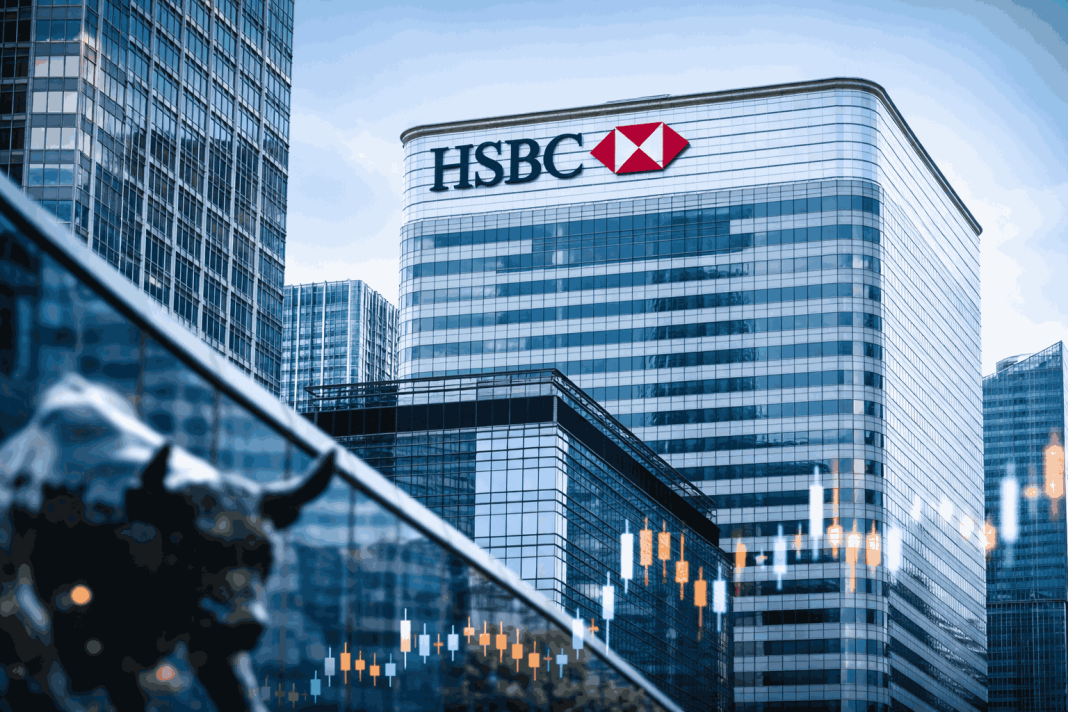
The HSBC profits drop became one of the biggest financial headlines of 2025 as the banking giant reported a decline in annual pre-tax earnings while pushing forward with a sweeping restructuring strategy. Although profits slipped by 7% to $29.9 billion, the broader picture reveals a company attempting to reinvent itself for a new era of digital banking and global competition. Investors reacted cautiously but saw signs of resilience as revenue climbed and management promised stronger long-term performance. Readers following our Banking News will notice this trend reflects wider industry shifts toward efficiency and innovation.
HSBC’s leadership emphasized that short-term pressure is part of a larger transformation. CEO Georges Elhedery described the year as one of rapid action and decisive restructuring, aimed at creating a leaner and more agile organization. The strategy focuses on cost discipline, targeted investments, and stronger performance across key markets.
Financial Performance and Revenue Growth
Despite the headline decline in earnings, revenue told a more optimistic story. Total income rose 4% to $68.27 billion, showing that the bank’s core operations remain strong even during restructuring. The fourth quarter was especially impressive, with revenue jumping 42% to $16.4 billion thanks to improved trading activity and higher interest margins.
However, operating expenses increased by 8% in the final quarter. Spending on technology upgrades, compliance, and staff restructuring contributed to higher costs. These investments are designed to modernize the bank’s infrastructure and enhance customer experience. Analysts noted that while rising expenses weighed on profits, the upgrades could support stronger growth in future years.
Employee numbers fell slightly as the bank streamlined operations. Staff declined from 221,000 to 218,000, yet compensation and benefits still rose to $21.5 billion, reflecting retention efforts and leadership incentives.
Restructuring Strategy and Leadership Vision
Restructuring remained the central theme of the year. The bank recorded $4.9 billion in one-time charges tied to write-offs, legal expenses, and organizational changes. These costs affected short-term profitability but were presented as necessary steps toward a more efficient business model.
Elhedery reorganized the institution along east-west regional lines, closing or exiting eleven businesses worldwide. Some investment banking units in the United States and Europe were scaled back as HSBC sharpened its focus on Asia and emerging markets. According to insights from the official HSBC corporate website, the goal is to align operations with growth regions while reducing complexity.
Senior management positions were trimmed, and payroll expenses could fall by up to 8% in coming years. The leadership team believes a flatter structure will speed up decision-making and allow faster adaptation to economic changes.
HSBC profits drop: Impact of China Market Challenges
China played a significant role in the bank’s financial story. Mainland profits plunged 66% to $1.1 billion, largely due to a $2.1 billion impact linked to holdings and economic pressures in the region. Slower property markets and regulatory uncertainty created headwinds that affected many international lenders.
Even so, the bank made strategic moves to strengthen its regional position. The privatization of Hang Seng Bank, completed for $13.6 billion, is expected to generate long-term efficiency gains. Management estimates the deal could deliver about $900 million in benefits by 2028 while preserving Hang Seng’s strong local brand identity.
Analysts remain divided on the outlook in China, but many believe that HSBC’s deep regional experience could help it navigate future volatility better than competitors.
HSBC profits drop: Investor Reaction, Dividends, and Capital Strength
Market response to the results was surprisingly positive. Shares listed in Hong Kong rose around 4% after the announcement, and London-traded stock had already gained nearly 50% during 2025. Investors appeared encouraged by stable dividends and a clear restructuring roadmap.
The bank maintained its fourth-quarter dividend at $0.45 per share, bringing the yearly total to $0.75. However, share buybacks remain paused until the CET1 capital ratio improves from its current 14.9% level. Leadership emphasized that maintaining strong capital buffers is essential while transformation continues.
Return on tangible equity reached 13.3% in 2025, and management aims to push this figure above 17% by 2028. Revenue growth targets stand near 5%, while expense growth is expected to slow to just 1% in 2026 a sign of tighter cost control.
Future Outlook and Strategic Direction
Looking ahead, HSBC believes the most challenging phase of its overhaul is nearly complete. The bank is positioning itself as a more focused international lender with stronger digital capabilities and a streamlined structure. Leadership says the organization now feels more agile and better prepared for rapid changes in global finance.
Challenges remain, particularly in managing costs and navigating uncertain economic conditions in Asia. Yet, the bank’s improved revenue momentum and disciplined capital strategy suggest a potential rebound in the coming years. With a market value hovering around $300 billion, many investors see room for growth if execution remains consistent.
In conclusion, the transformation behind the HSBC profits narrative highlights both risk and opportunity. The restructuring has temporarily weighed on earnings, but rising revenue, stable dividends, and strategic realignment point toward a longer-term recovery story that will likely shape the bank’s direction through 2026 and beyond.